
Room Decor Ideas
Bedroom ideas: a step-by-step plan for a calm, working bedroom
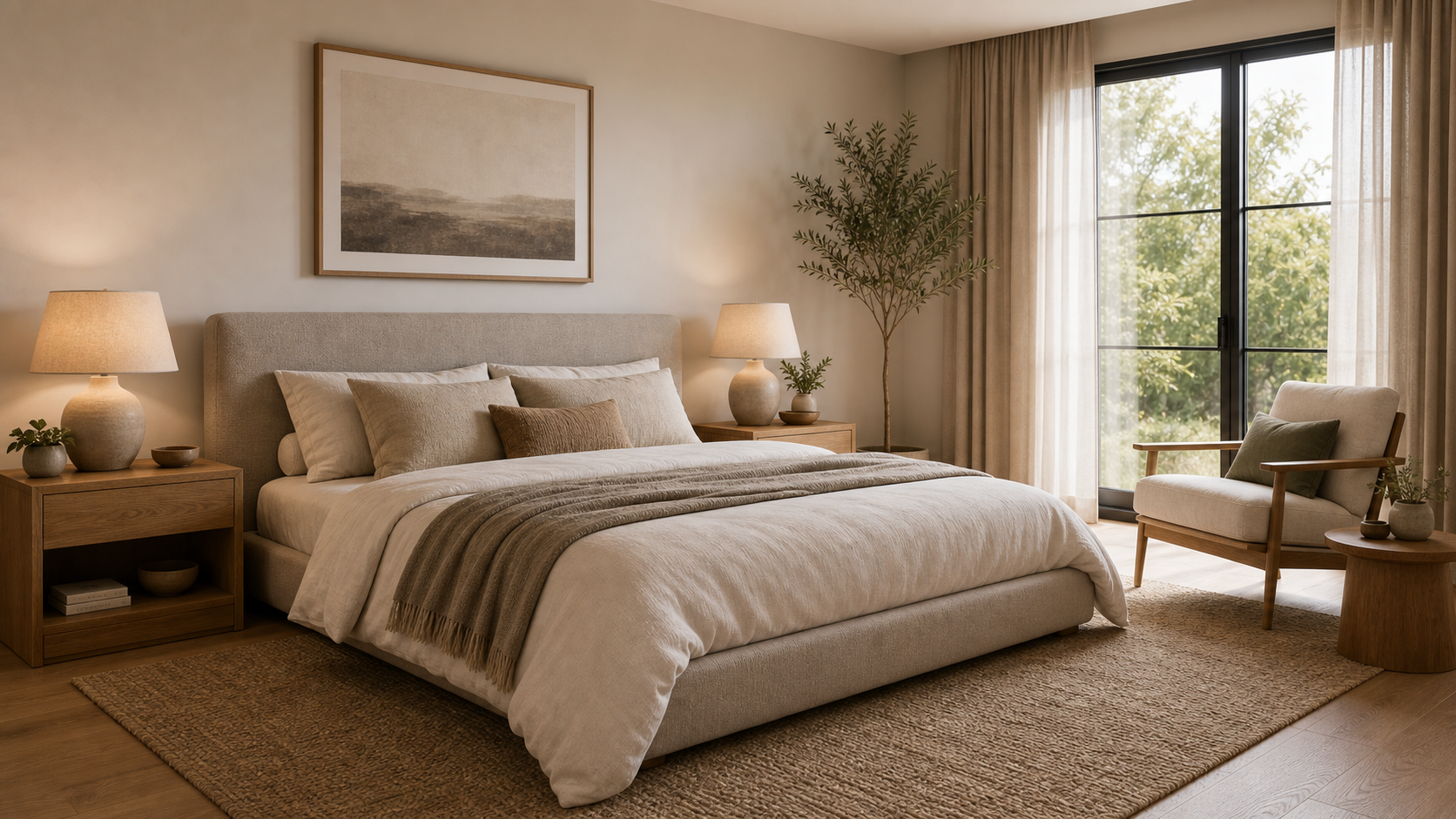
Start with how the room needs to work. The best bedroom ideas begin with the jobs the room handles every day: sleep first, then getting dressed, then the extras such as reading in bed or a chair by the window. When those jobs have the right space in the right order, the room feels calm before a single pillow is chosen.
The plan below follows a full-size bedroom in the order the decisions depend on each other. The bed wall comes first, then the clearances around it, then lighting, color, storage and the rug, and last the conditions that help the room work for sleep. Each step gives the measurements that matter.
It assumes a normal-size bedroom with space for a queen or king bed, the kind found in many ranch houses, split-levels and suburban builds. Studios and very small rooms need a different approach.
Bedroom ideas start with how the room needs to work
Before measuring anything, write down what happens in the room on an ordinary weekday. Most bedrooms carry several jobs. Sleep is always first. Dressing usually comes second, because it decides where the dresser goes and how wide the path to the closet must be.
After those two come the optional jobs: reading in bed, a desk for occasional work, a chair and a place for laundry to land. Rank them. The top two get the best wall space and the clearest paths, while a job near the bottom of the list may not need furniture at all. A hook or a lidded basket often handles it.
When you are unsure whether a bench or a second dresser belongs in the room, the ranking answers the question.
Where the bed goes
The bed is the largest piece in the room, so its wall decides almost everything else. In most bedrooms there are three good options.
The first is the position many people know from feng shui, sometimes called the command position. From the bed you can see the door, but the bed is not directly in line with it. Feng shui is a tradition that some people follow and others do not. The practical reasons for this spot hold up either way, since you can see who comes in and the door does not swing toward your feet.
The second option is the longest solid wall. A solid wall behind the headboard leaves room for a nightstand on each side and keeps the bed away from drafts. In many rooms the command position and the longest solid wall turn out to be the same wall.
The third option is under a window, and it works best only in larger rooms or where the window is wide enough to frame the bed. A headboard can block daylight and the window may be drafty in winter. Privacy is harder too, so it suits rooms where the other walls are broken up by doors and closets.
Each option, and how to choose between them in an awkward room, is covered step by step in bedroom furniture arrangement ideas.

How much space you need around a bed
Once the bed wall is chosen, check the space around it. Designers commonly recommend these ranges by bed size:
- Twin or full bed: about 18 to 24 in on each side and 24 to 30 in at the foot. Aim for 24 in on any side someone uses every day.
- Queen bed: about 24 to 30 in on each side and 30 to 36 in at the foot.
- King or California king bed: about 30 to 36 in on each side and 36 to 42 in at the foot.
For a full-size bedroom, plan on about 30 in along each side you walk and at the foot, with 24 in as the minimum where the room is tight. For a queen, that is the top of the side range and the start of the foot range; a king is more comfortable with a little more on each side and at the foot.
The other clearances in a bedroom follow the furniture. Leave about 36 in in front of a dresser so the drawers open while someone stands there. A closet with hinged doors needs about 36 in of clear floor in front of it, and sliding doors need 24 to 30 in. Nightstands work best with their tops within about 2 in of the mattress height, placed about 2 to 6 in from the side of the bed. Finally, open the bedroom door all the way and make sure it clears the bed, the dresser and anything on the wall behind it.
A lighting plan for evening and sleep
A single ceiling fixture cannot handle getting dressed, reading and winding down. Plan three layers instead. The ceiling light covers cleaning and dressing. A bedside lamp or wall light for each sleeper handles reading, with the bottom of the shade near chin height when you sit up in bed. A low, soft source such as a floor lamp in a corner gives the room a gentle glow in the evening.
Bulb color matters most at night. Use warm 2700K bulbs in the lamps and up to 3000K in the ceiling light. A 2026 lab study in Scientific Reports measured 52 home lamps and estimated how much each might suppress melatonin, the hormone that rises before sleep. Cool white LED lamps came out at a median of 12.3 percent and warm white LED lamps at 3.6 percent. Tunable lamps dropped from about 10 percent at a 5700K setting to 0.1 percent at 2100K. These are estimates from light measurements, not results from people sleeping, but they point the same way as the warm bulbs designers already use.
Dimmers help the same plan cover morning and night. The full layering plan, including where wall lights go and the plug-in options for renters, is in bedroom lighting ideas.
Choosing a calm color palette
Pick one main color for the largest surfaces, usually the walls. A common split is about 60 percent main color, 30 percent secondary color (bedding, curtains or a large rug) and 10 percent accent. Calm bedrooms usually keep the main color soft and the contrast low, with warm whites, muted greens, soft blues and earthy neutrals among the most common choices.
Light changes paint more in a bedroom than in most rooms, because you see the walls in the morning and again by lamplight at night. Test large samples on at least two walls and look at them in the morning, afternoon and evening, next to the floor and the bedding you plan to keep. Palettes, undertones and a simple testing routine are covered in bedroom color ideas.
Bedroom storage that keeps the floor clear
Storage decides whether a bedroom stays calm after a busy week. Work through it in order. Start with the closet, because it holds the most and costs nothing to rearrange. Then size the dresser to the clothes that do not fit in the closet. Under-bed storage comes third, for seasonal clothes and spare bedding. The bed wall comes last, with nightstands that have a drawer and perhaps a shelf above.
Fill drawers and shelves to about 80 percent so things go back in easily. A room with a place for every daily item stays tidy with a few minutes of reset at night.
Tall dressers and bookcases need one safety step. The U.S. Consumer Product Safety Commission counted 234 deaths from tip-overs of dressers and other clothing storage units between 2000 and 2022, most of them children. A federal stability standard has applied to new dressers since September 2023, and the agency still advises anchoring dressers to the wall. Use the anchor kit, follow the maker's instructions and check your lease before drilling. Closet, dresser and under-bed ideas are covered in more depth in bedroom storage ideas.

What size rug goes under a queen bed
A rug gives you a soft first step in the morning and ties the bed to the rest of the room. For a queen bed, an 8 x 10 ft rug placed under the lower two-thirds of the bed usually works. It leaves about 12 to 24 in of rug showing on each side, and 18 in is a good target. A king bed needs about 9 x 12 ft. Where a large rug does not fit, a runner along each side of the bed does the same job.
Set the rug after the bed and nightstands are in place. The nightstands can sit on the floor above the rug's top edge, which keeps them level.
A room that helps you sleep
A plan for the bedroom is also a plan for sleep, and a few conditions matter more than any decor. The Sleep Foundation suggests a bedroom temperature of about 65 F, with most doctors recommending somewhere between 65 and 68 F. A cooler room may help you fall asleep more easily.
Darkness matters too. Evening light can delay the body's internal clock, so lined or blackout curtains are worth considering, especially in rooms that face a streetlight. Cover small standby lights on chargers and devices, and keep phones and televisions out of the bedroom where you can. For trips to the bathroom at night, a low motion-sensor night light keeps the path safe without flooding the room with light.
Noise is the third piece. Loud noise can break up sleep, so the quietest bedroom in the house usually makes the best main bedroom. Heavy curtains and a large rug may soften sound a little. None of this replaces medical advice, and anyone with ongoing sleep problems should talk to a doctor.
Bedroom ideas in order: the step-by-step checklist
When the measuring is done, the order of decisions matters more than any single choice. Work through the room like this:
- List the jobs the room must do and rank them.
- Choose the bed wall.
- Check the clearances around the bed, the dresser, the closet and the door.
- Place the big pieces: bed, dresser and any chair.
- Plan storage, starting with the closet, and anchor tall furniture.
- Add the three lighting layers with warm bulbs.
- Choose and test the main color.
- Size and place the rug.
- Make the bed and add a few personal pieces last.
Bedding and decor come at the end on purpose. A well-made bed with a calm duvet and two sleeping pillows each looks right once the layout works, while the same bed in a crowded room still feels unsettled. After the room is set up, live with it for a week before you buy more. Most rooms need one thing removed before they need one thing added.
Frequently asked questions
What things should be in a bedroom?
Every bedroom needs a bed, a nightstand and lamp for each sleeper, enough closed storage for clothes and a window covering that darkens the room. A rug, a chair or a bench are useful additions when the room has space for them without blocking a walking path.
Where should the bed go in a bedroom?
Usually on the longest solid wall, where you can see the door from the bed without being directly in line with it. Under a window works mainly in larger rooms with wide windows.
How do you plan a bedroom layout before buying furniture?
Measure the room, mark the doors, windows and closet on paper, then draw the bed with its clearances around it. Tape the outline of any new piece on the floor and walk around it before you order.
What temperature should a bedroom be for sleep?
The Sleep Foundation suggests about 65 F, and most doctors recommend roughly 65 to 68 F. A cool, dark and quiet room may help, but ongoing sleep problems are a question for a doctor.
Related guides
Room Decor Ideas
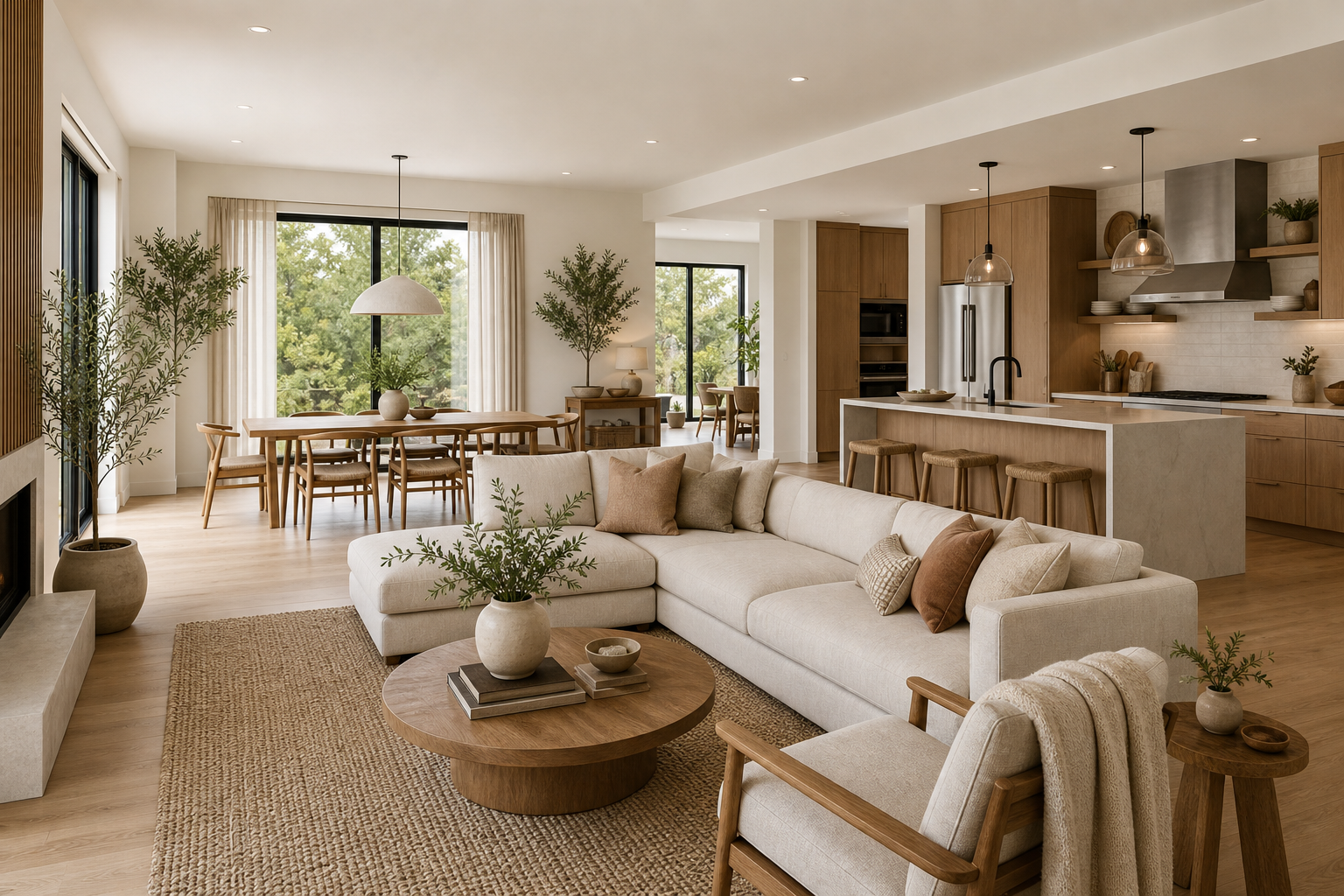
Functional home decor: a room-by-room plan for a home that works
Functional home decor in a clear order: daily routes, zones, storage at the point of use, lighting you control, and smart home decor ideas that hide the tech.
Room Decor Ideas
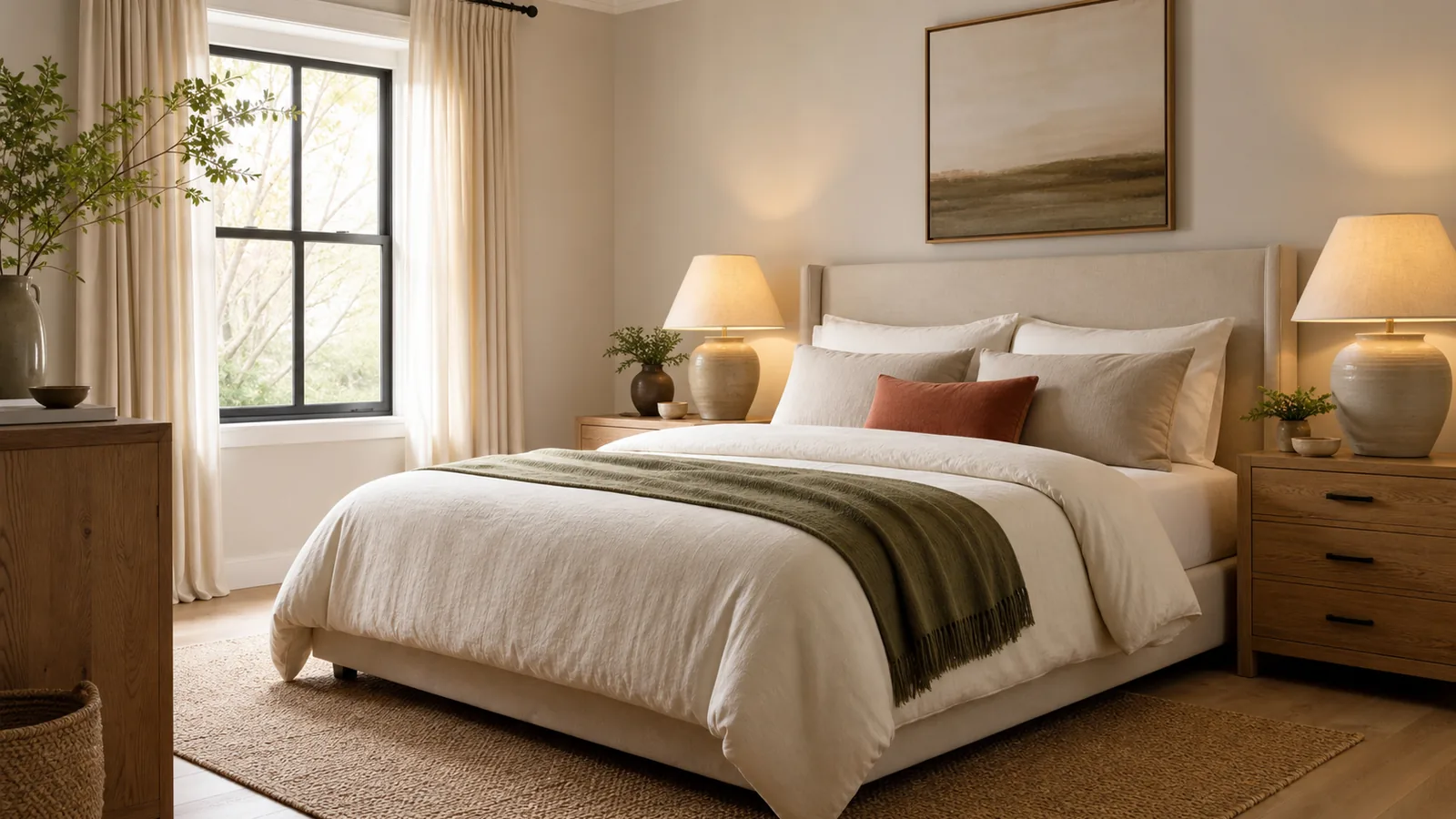
Bedroom color ideas: calm palettes and how to test them
Bedroom color ideas for a calm room: one main color, warm neutrals and soft greens or blues, real paint examples and a simple way to test samples.
Room Decor Ideas
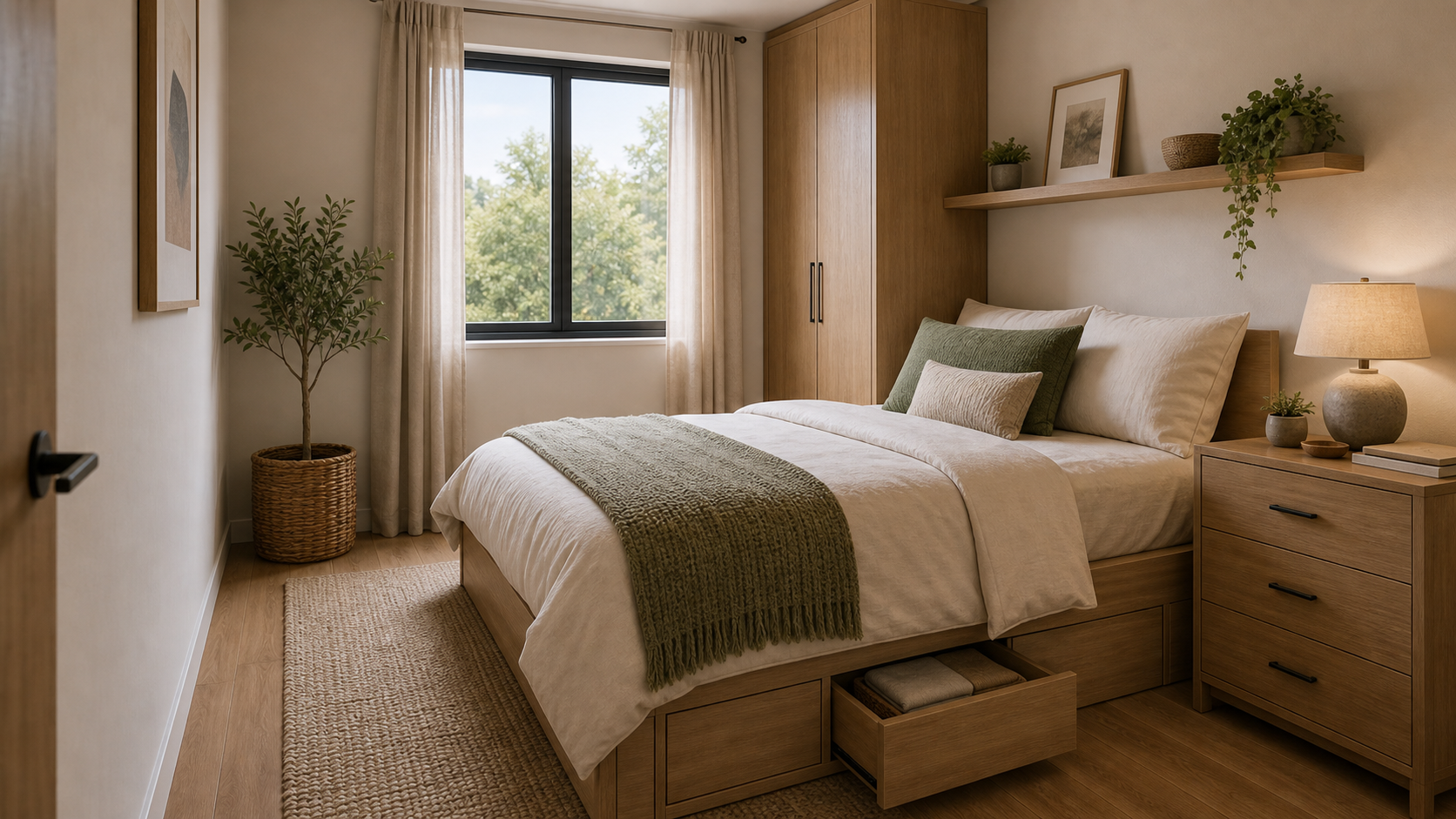
Bedroom storage ideas: closet, dresser and under-bed storage that stay tidy
Bedroom storage ideas in order: closet first, then the dresser and under-bed storage, with closet clearances, lidded boxes and safe dresser anchoring.