
Room Decor Ideas
Bedroom storage ideas: closet, dresser and under-bed storage that stay tidy
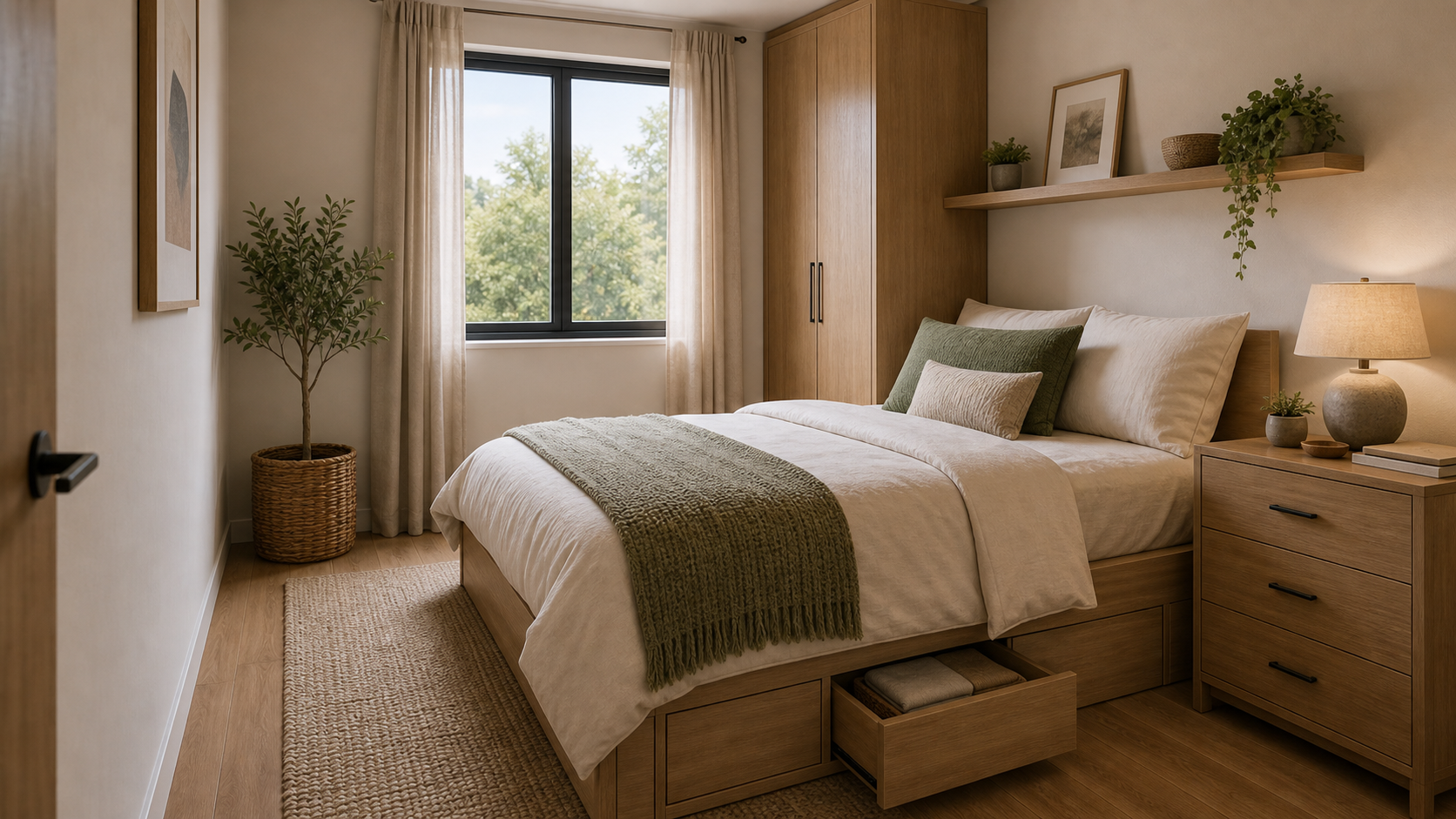
A bedroom stays calm when every item that enters it has a place to go back to: clothes, spare bedding, chargers, books and the bag you drop at the door. Good bedroom storage ideas give each of those a spot in the right order, starting with the storage you already have.
Storage is one part of the full bedroom plan, alongside the bed wall, clearances, lighting and color in the bedroom ideas plan. The steps here go deeper on the closet, the dresser and the space under the bed in a normal-size bedroom.
Bedroom storage ideas start with the closet
The closet holds more than any other piece in the room, and rearranging it costs almost nothing. Start there before buying furniture.
Take everything out, then put back only what you wear this season. Hang what wrinkles and fold what does not. A second hanging rod below the first adds a second row of hanging space for shirts and folded pants, and a shelf above the rod takes boxes for things you use a few times a year. Slim hangers of one type also save room and make the rail easier to read at a glance.
Keep the floor of the closet for shoes and a laundry basket only. When the closet floor fills with bags and boxes, the overflow ends up on the bedroom chair.
How much space in front of a closet and dresser
Storage needs standing room, because you use it with doors and drawers open. A closet with hinged doors needs about 36 in of clear floor in front of it, enough to open the doors and let someone pass behind you. Sliding doors need less, about 24 to 30 in.
A dresser needs about 36 in in front so the drawers open fully while someone stands there. If the dresser and the closet face each other, measure the gap with a drawer pulled all the way out. That is often where a bedroom feels tight, and if the gap will not work, the wall options for each piece are in bedroom furniture arrangement ideas.

Bedroom storage ideas for clothes: the dresser
Size the dresser to what is left after the closet is sorted, not to the wall. A wide, low dresser suits a room with a long empty wall and gives you a surface for a lamp and a tray. A tall, narrow chest suits a room where the walking path matters more than surface space.
Fill drawers to about 80 percent. A drawer packed to the top is hard to close and impossible to search, and the extra items end up on top of the dresser. Small dividers or boxes inside the top drawer keep socks, belts and accessories from mixing.
Place each kind of storage where the habit happens. Pajamas and the next day's clothes belong in the drawer nearest the bed or the closet door. Watches and jewelry go in the top drawer or a small tray on the dresser. The hamper sits beside the closet, not in a far corner, because clothes that have to travel across the room tend to stop on the floor or the chair along the way.
Anchor the dresser to the wall
A loaded dresser can tip if drawers are pulled out and weight goes on them. The U.S. Consumer Product Safety Commission counted 234 deaths from tip-overs of dressers and other clothing storage units between January 2000 and April 2022, and 199 of them were children.
Since September 1, 2023, new dressers and similar units made or imported for sale in the United States have had to meet a mandatory federal stability standard. The agency still advises anchoring dressers and other tall furniture to the wall. Many new dressers include an anchor kit, and installing one is a simple job with a drill and a stud finder. Follow the maker's instructions, use anchors rated for your wall and check your lease before drilling. The agency also suggests keeping heavier items low, so load the bottom drawers first.
Under bed storage ideas that stay neat
The space under the bed suits things you need a few times a year: out-of-season clothes, spare sheets and blankets, and gift wrap. It works best when it stays organized and easy to pull out.
Choose containers with lids or zippered covers, which keep dust and pests out of the contents. Boxes on wheels, or old drawers with casters added, roll out without scraping the floor. Large zippered bags suit bulky bedding, and vacuum bags shrink spare duvets and pillows further.
If you want the boxes out of sight, a bed skirt or a valance hides them. Fabric baskets with lids or wooden boxes look tidier than plain plastic when the bed is open underneath. A storage bed with built-in drawers is another option, though it needs clearance at the sides to open.
How to choose under bed storage that fits
Measure before you buy. Check the height from the floor to the lowest part of the bed frame, including any center rail or support legs, because those often sit lower than the side rails. Then choose containers whose total height, lid and wheels included, is a little under that number.
Measure the depth too. Two shallow boxes from each side of the bed are easier to use than one long box you have to reach for. Bed risers can lift a frame a few inches to make room for taller boxes. Use risers that fit your bed's legs and follow the maker's weight limits.
Is it bad to store things under your bed?
Not if the space stays easy to clean. The floor under a bed collects dust like any other floor, and closed boxes on wheels let you pull everything out and vacuum in a few minutes. Problems start when loose items fill the space and nobody moves them for a year.
Keep the under-bed zone for a short list of things, and leave a clear strip along the edge for the vacuum. Skip food, anything damp and items you need every day. Daily items belong in the dresser or on a hook, where they are faster to reach.
Extra storage ideas for the bedroom wall
Once the closet, dresser and bed are sorted, the bed wall can take what is left. Nightstands with a drawer hide chargers, glasses and medication, so the top holds only a lamp and a book. A shelf above the headboard can take a few books if it is fixed securely and kept light.
Hooks on the back of the bedroom door or inside the closet handle robes and bags. A storage bench at the foot of the bed holds spare blankets, as long as the clearance at the foot allows it. These smaller pieces work best when each one has a single job.
A nightly reset, common mistakes and the order of steps
Storage only works if things go back. A short reset at night keeps the room calm: clothes into the hamper or back on hangers, cups out of the room and surfaces cleared to their one or two items.
A few mistakes undo good storage. A dresser placed where its open drawers block the closet door turns every morning into a shuffle. Boxes bought before measuring often catch on the center rail of the bed frame. A chair used as a second closet means the closet itself needs sorting, not that the room needs more furniture.
To set up the storage in order:
- Sort and arrange the closet.
- Check the clearances in front of the closet and dresser.
- Size or rearrange the dresser and fill drawers to about 80 percent.
- Anchor the dresser and any tall furniture.
- Measure under the bed and add lidded boxes on wheels.
- Add nightstand drawers, hooks and a bench only where they solve a real problem.
Live with it for a week before you buy more. The items that still land on the chair show you which storage is missing.
Frequently asked questions
What should you store under the bed?
Things you use a few times a year: seasonal clothes, spare bedding, extra pillows and gift wrap. Keep them in lidded boxes or zippered bags that roll out easily.
How do I keep bedroom storage from looking cluttered?
Use closed storage for most things, keep surfaces to one or two items and fill drawers to about 80 percent so everything has room to go back.
Do I need to anchor a dresser if there are no children at home?
Yes, it is still worth doing. The advice to anchor dressers and other tall furniture is not limited to homes with children, the job is simple, and children visit even homes where none live.
How much space should be in front of a closet?
About 36 in for hinged doors and 24 to 30 in for sliding doors.
Related guides
Room Decor Ideas
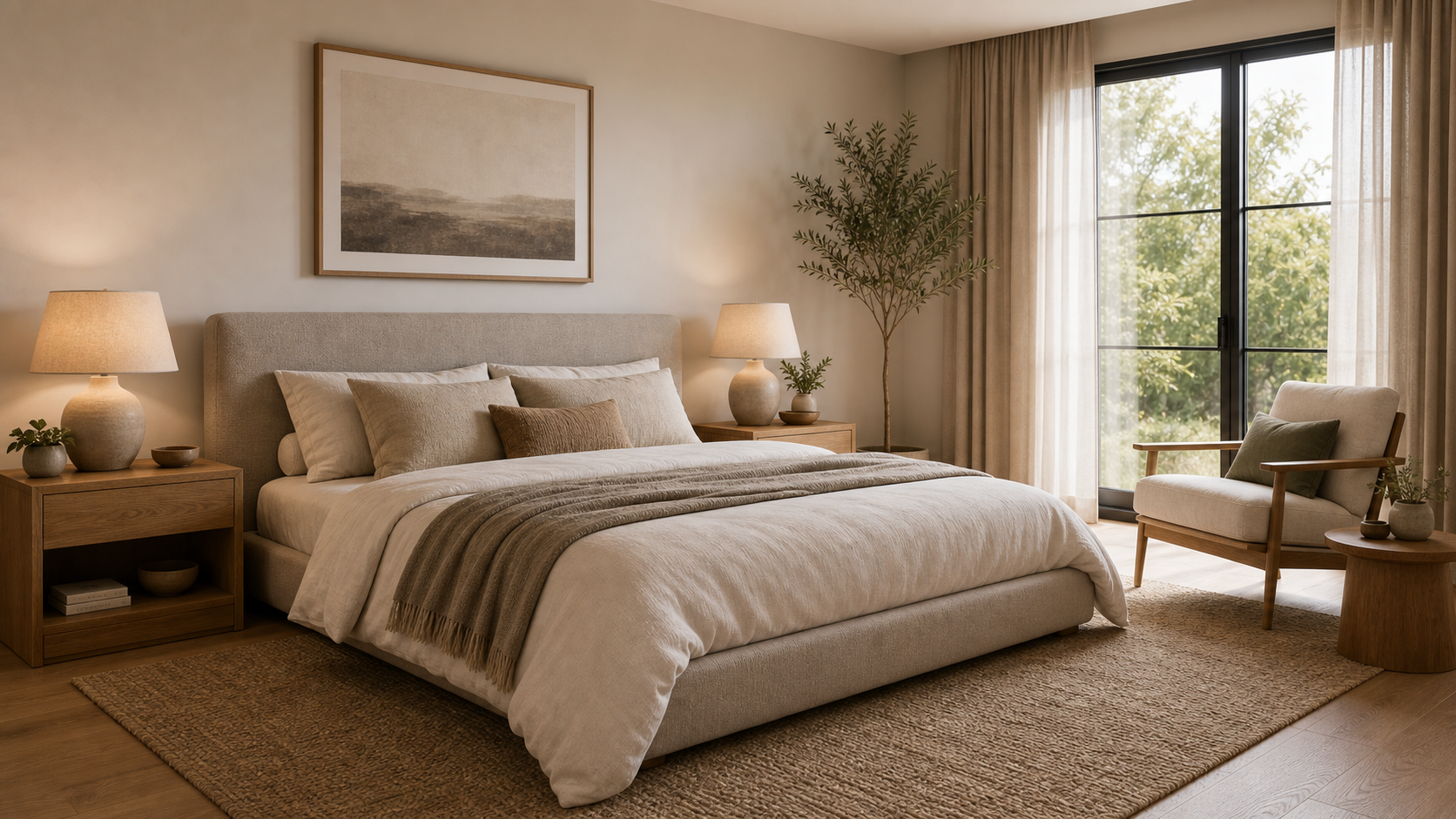
Bedroom ideas: a step-by-step plan for a calm, working bedroom
Bedroom ideas planned in order: where the bed goes, clearances by bed size, lighting, color, storage, rug size and a room set up for better sleep.
Room Decor Ideas
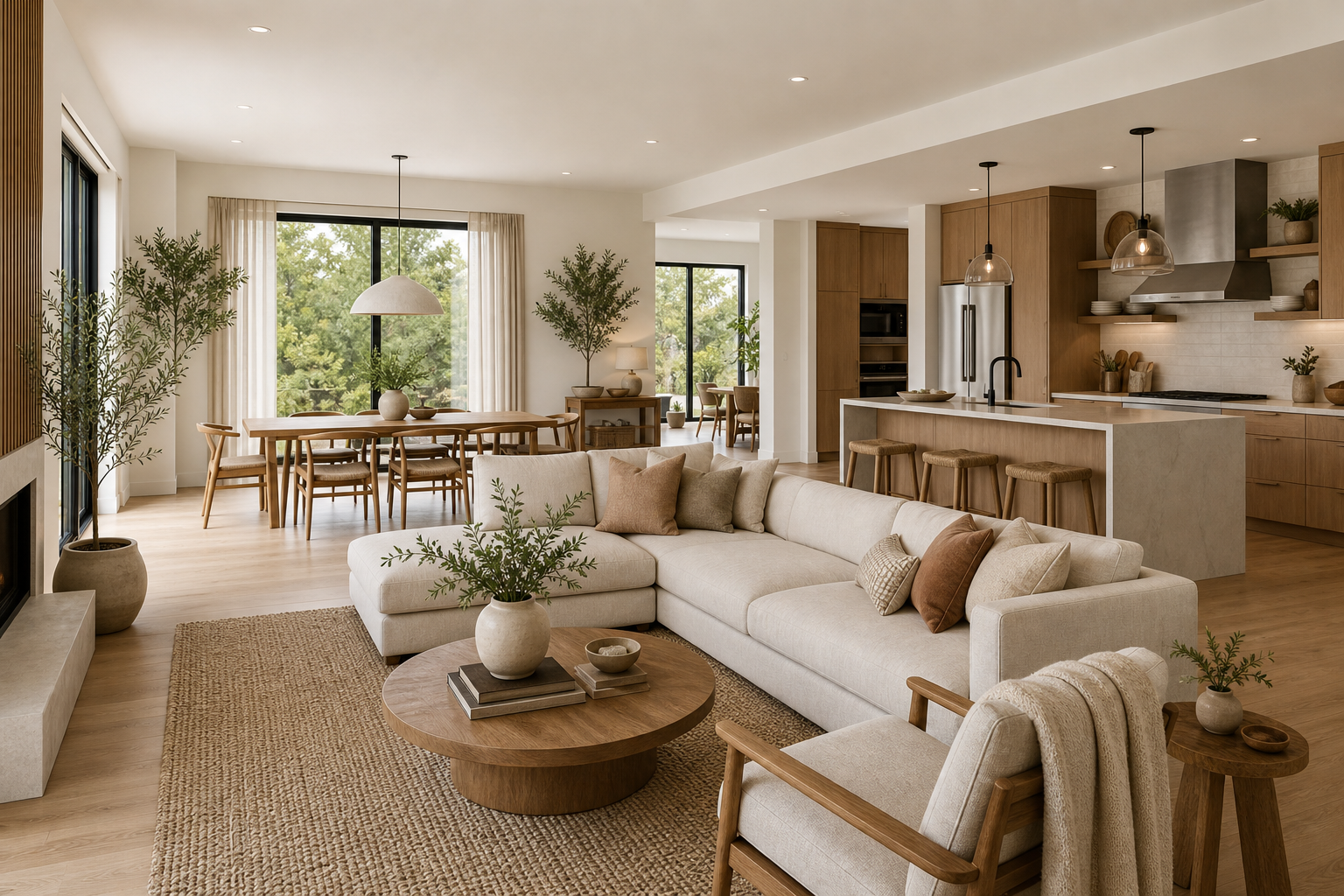
Functional home decor: a room-by-room plan for a home that works
Functional home decor in a clear order: daily routes, zones, storage at the point of use, lighting you control, and smart home decor ideas that hide the tech.
Room Decor Ideas
Bedroom color ideas: calm palettes and how to test them
Bedroom color ideas for a calm room: one main color, warm neutrals and soft greens or blues, real paint examples and a simple way to test samples.