
Room Decor Ideas
Bedroom lighting ideas: layers, warm bulbs and a darker room for sleep
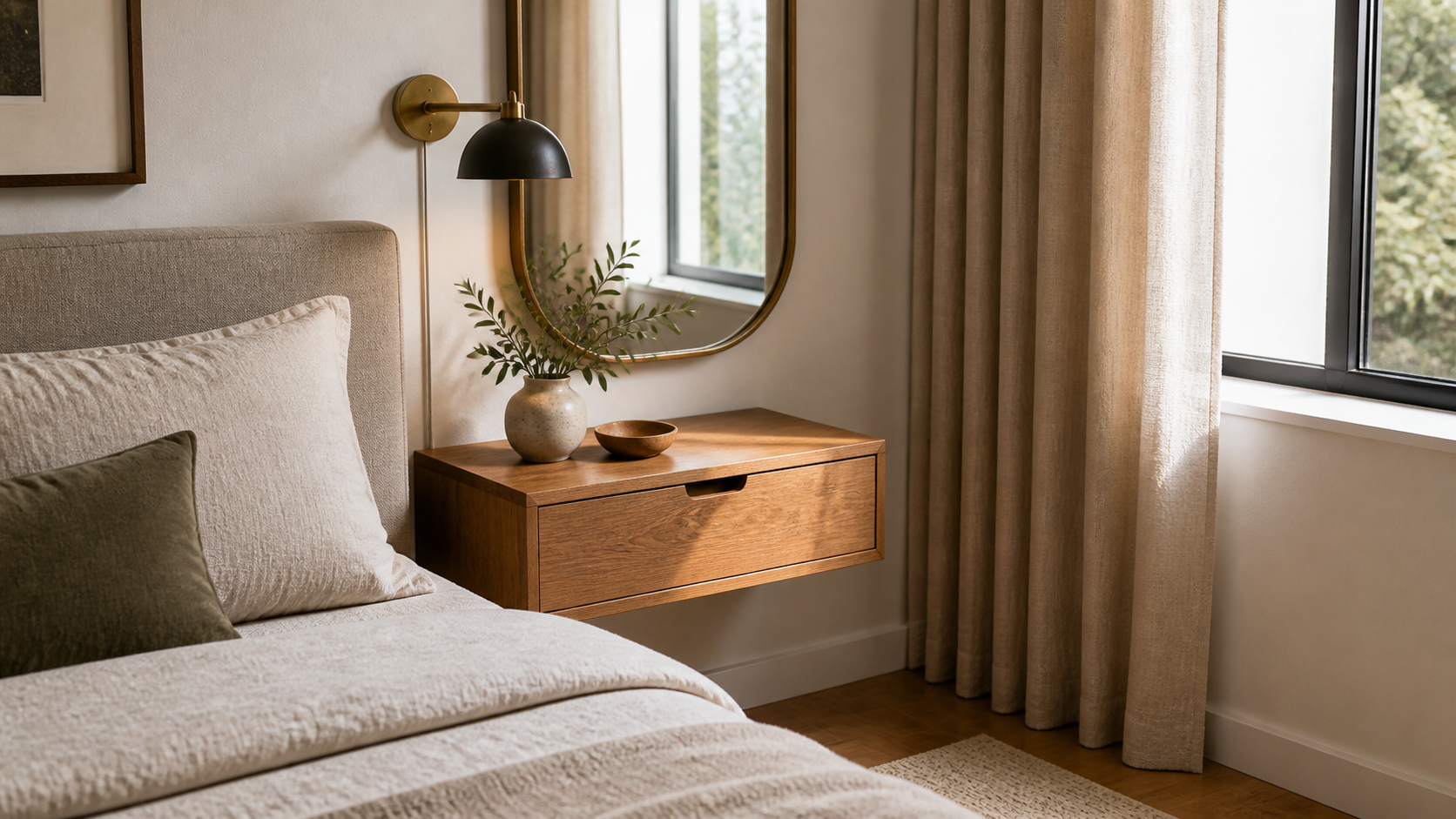
A bedroom needs bright, even light for ten minutes in the morning and soft, low light for an hour or two at night. Most bedroom lighting ideas fail because one ceiling fixture is asked to do both jobs. The fix is a plan with separate layers, warm bulbs and controls you can reach from the bed.
Lighting is one layer of the full bedroom plan, which also covers the bed wall, clearances, color and storage in the bedroom ideas plan. The steps here go deeper on the lights themselves, in the order you would plan them for a normal-size bedroom.
What type of lighting is best for a bedroom
The best bedroom lighting uses three layers, each with its own job.
General light comes from the ceiling, either a flush fixture, a semi-flush fixture or a fan light. It is for cleaning, making the bed and getting dressed. Task light sits where you read and dress: a lamp or wall light for each sleeper, and good light near the closet and mirror. Soft light is the evening layer, such as a floor lamp in a corner, a lamp on the dresser or a small light on a shelf.
Each layer should work on its own, with its own switch or control. In the morning the ceiling light may be enough. In the evening the ceiling light stays off, and the bedside lamps and one soft lamp carry the room.
How to plan bedroom lighting from the doorway
Walk into the room the way you do every night. A switch by the door should turn on a light that gets you safely to the bed, and that light should not be the one you read by. In some homes the switch controls an outlet instead of a ceiling fixture, which makes a corner floor lamp the first light you turn on.
Next, stand at each side of the bed. Each sleeper needs a light they can switch off without getting up, so the lamp switch or a pull cord should be within reach of the pillow. Then check the closet and dresser. Clothes are hard to match under a dim, warm lamp, so the ceiling light or a closet light handles that job.
Should bedroom lamps be tall or short
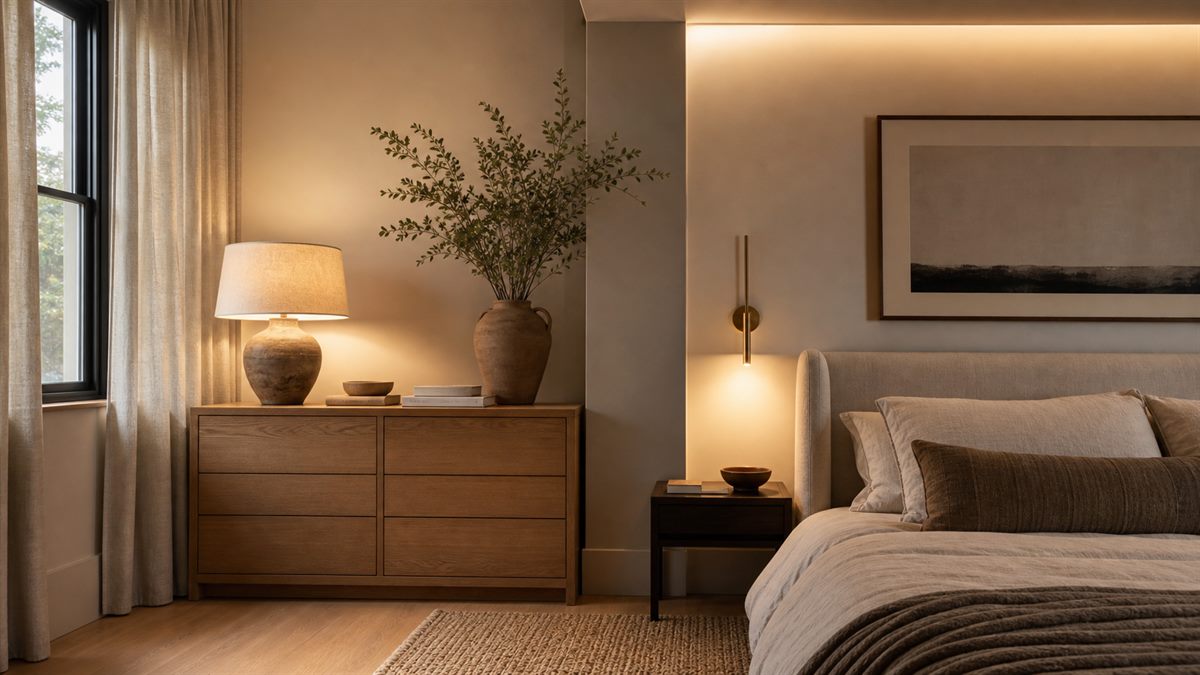
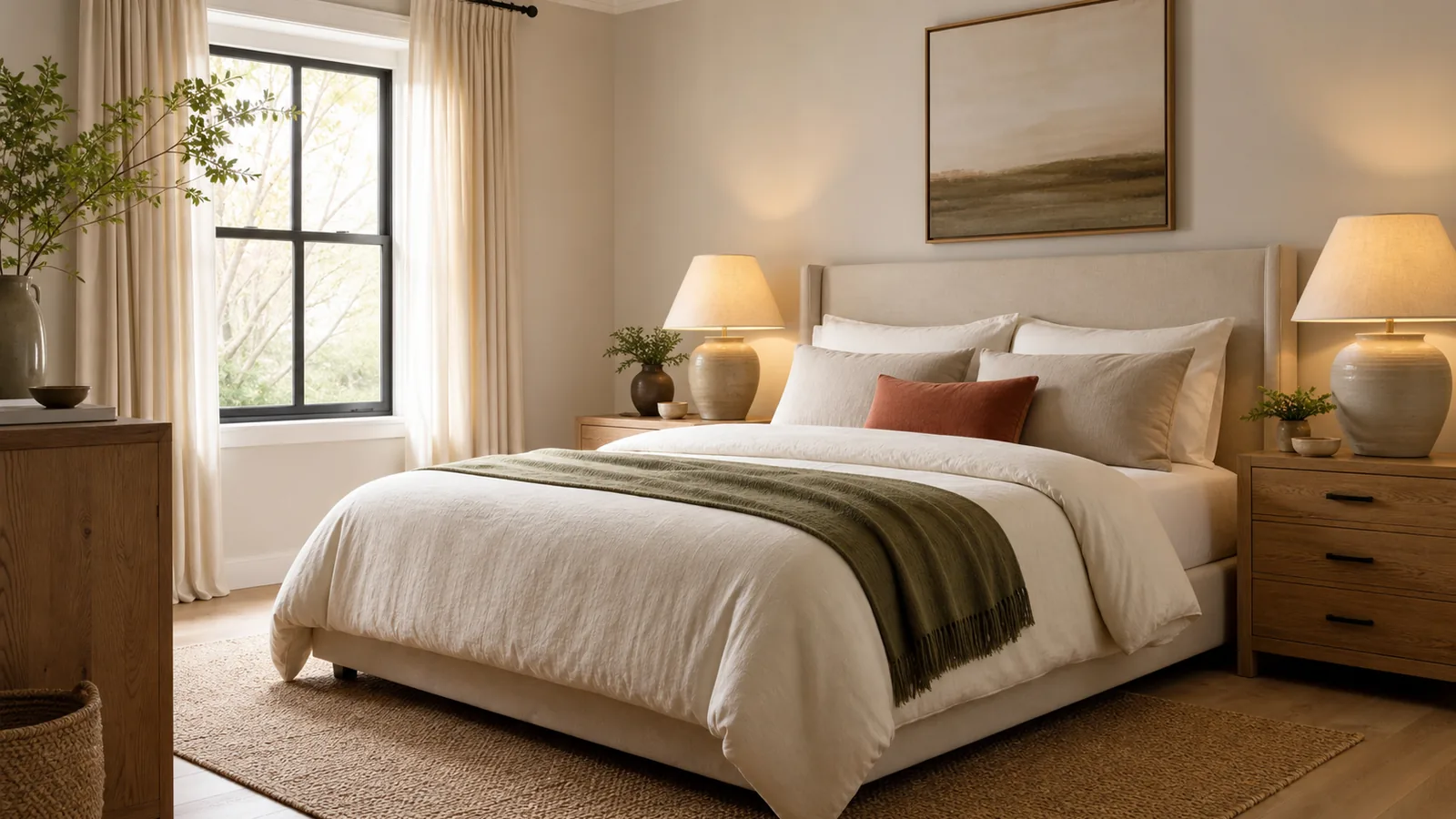
Lamp height depends on the bed and nightstand together. When you sit up in bed against the pillows, the bottom of the lamp shade should sit near your chin. That puts the bulb above the page and keeps it out of your eyes. A tall bed with a short nightstand needs a taller lamp, and a low platform bed usually needs a shorter one.
Shade material matters for evening light. Linen and other fabric shades diffuse the light softly, while open shades and bare bulbs throw glare toward the pillow. Bedside lamps do not need to match. Similar height and similar visual weight keep the bed wall balanced even when the shapes differ.
Bedroom wall lighting ideas for reading in bed
Wall lights free up the nightstand and put light exactly where you read. For renters and anyone who wants to avoid new wiring, plug-in sconces are the simplest choice. The cord runs down the wall to an outlet and can be hidden in a cord cover painted the wall color. Plug-in sconces often cost roughly $40 to $120 each.
Mount each one so the bottom of the shade sits near chin height when you sit up in bed, a little to the outside of the pillow. A swing-arm or adjustable head lets each sleeper aim the light at a book without lighting up the other side of the bed. Hardwired sconces look cleaner but need a licensed electrician, and renters should check the lease before drilling.
Should bedroom lights be warm or cool
Warm light is the better choice for a bedroom. Use 2700K bulbs in lamps and wall lights, and up to 3000K in the ceiling light. Save 3500K to 4000K for task zones elsewhere in the house, such as kitchen counters and desks.
Recent research supports the warm bulb habit. A 2026 lab study published in Scientific Reports measured the light from 52 home lamps and estimated how much each might suppress melatonin, the hormone that rises in the evening before sleep. Cool white LED lamps had a median estimate of 12.3 percent, compared with 3.6 percent for warm white LED lamps. The four tunable LED lamps in the study dropped from about 10 percent at a cool 5700K setting to 0.1 percent at a very warm 2100K.
These figures are estimates from measured light, not results from people sleeping in a lab. They still point in a clear direction: warmer, lower light in the evening is gentler on the body's sleep signals than cool, bright light. Tunable bulbs that shift warmer after dinner are a simple way to use that idea. Warm bulbs also change how paint looks at night, which is why bedroom color ideas has you check paint samples under your evening lamps.
Bedroom lighting ideas for the evening wind-down
Evening light should get lower and warmer as bedtime gets closer. Dimmers make this easy. A dimmable ceiling light, or a plug-in dimmer on a floor lamp, lets the room step down from bright to soft without changing bulbs. Smart bulbs can do the same on a schedule.
Being in a fully lit room right before sleep can delay and shorten the body's melatonin release, according to research summarized by the Sleep Foundation. A practical habit is to switch the ceiling light off an hour or so before bed and use only the bedside lamps and one soft lamp.
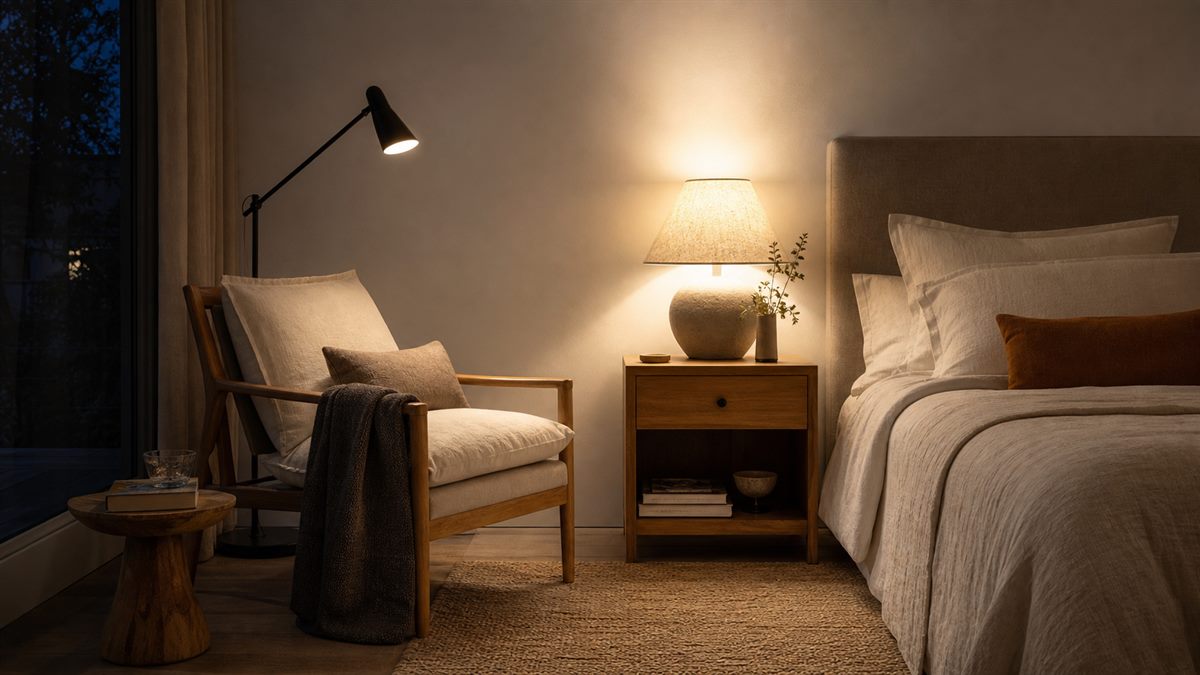
For nights when one person gets up early or goes to bed late, low motion-sensor lights along the floor or inside the closet help. They light the path without filling the room. A small plug-in night light near the door does the same for trips to the bathroom.
Keep the bedroom dark for sleep
A good lighting plan also includes the light you keep out. Evening artificial light can delay the body's internal clock, and light from outside can keep the room brighter than it looks. Lined or blackout curtains help, especially near streetlights and security lights. Close the gaps at the sides of the window with a wider rod or a return on the curtain.
Inside the room, cover or turn away the small standby lights on chargers, televisions and power strips. Phones and screens add light at the worst time, so keep them out of reach of the bed where you can. None of this needs new fixtures. It is a matter of controlling what is already there.
Common bedroom lighting mistakes and the order of steps
The same few mistakes show up again and again. A single ceiling light with a cool bulb runs every evening. One sleeper has to get up to switch off the only lamp. Bedside lamps are so short that the bulb sits at eye level. Bright standby lights stay on all night.
To plan the room in order, work through these steps:
- Note where the switch by the door is and what it controls.
- Choose the general light and give it a dimmer if you can.
- Give each sleeper a bedside lamp or wall light within reach.
- Add one soft evening lamp away from the bed.
- Put warm bulbs in every bedroom fixture.
- Darken the windows and cover standby lights.
Live with it for a week before you buy more. Most rooms only need one more lamp or one dimmer to feel right.
Frequently asked questions
How bright should a bedroom light be?
Bright enough to dress by in the morning and dim enough to relax by at night. A dimmable ceiling light plus lamps at different heights covers both, so the brightness can change through the day.
Are LED lights good for bedrooms?
Yes, when you choose warm white LEDs (about 2700K) for lamps and use dimmers. Cool white LEDs give off more of the light linked to melatonin suppression in the evening.
Do bedroom lamps have to match?
No. Keep them at a similar height and visual weight, and make sure each one lights a book when you sit up in bed.
What color light is best before sleep?
Warm, low light. Use 2700K bulbs or warmer in the evening, dim the room an hour or so before bed and keep screens away from the pillow.
Related guides
Room Decor Ideas
Bedroom ideas: a step-by-step plan for a calm, working bedroom
Bedroom ideas planned in order: where the bed goes, clearances by bed size, lighting, color, storage, rug size and a room set up for better sleep.
Room Decor Ideas
Functional home decor: a room-by-room plan for a home that works
Functional home decor in a clear order: daily routes, zones, storage at the point of use, lighting you control, and smart home decor ideas that hide the tech.
Room Decor Ideas
Bedroom color ideas: calm palettes and how to test them
Bedroom color ideas for a calm room: one main color, warm neutrals and soft greens or blues, real paint examples and a simple way to test samples.