
Small Spaces
Small Entryway Ideas for Apartments and Narrow Hallways
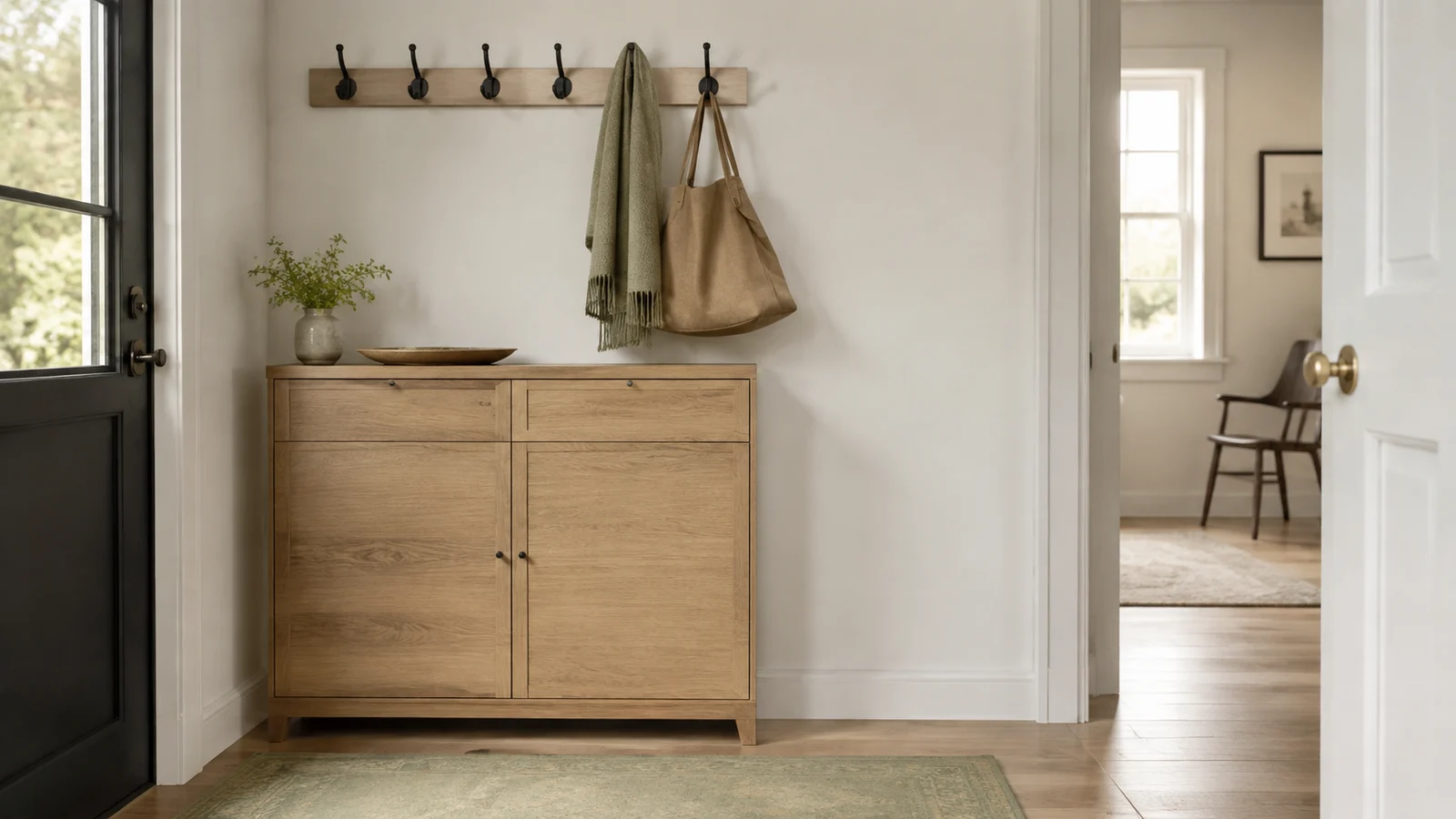
Small entryway ideas work best when they solve the first few moments of the day. You need a place to put down keys, take off shoes, hang a bag, and move past the door without bumping into furniture. That can be difficult in a narrow hall, a small apartment, or a front door that opens straight into the living room.
The goal is not to make a compact entrance look like a large foyer. It is to give a small area a clear job and enough visual calm that it does not become a landing place for everything. With a thoughtful path, a few useful storage decisions, and restrained small entryway decor, even a small entrance can feel settled and welcoming.
Start with how the entry needs to work
Before choosing a bench or a mirror, watch what actually happens at the door. Notice where people stand while unlocking it, where shoes come off, and which items tend to collect on the nearest surface. This tells you more than a saved inspiration photo.
Do a quick entry audit before buying anything: open the door fully, walk in with your usual bag, and list the five items that most often land near the entrance. That short test reveals whether the real need is a clearer path, a landing spot, shoe control, or a better coat system.
A functional entryway usually needs to handle four jobs: arrival, departure, storage, and passage. Arrival means there is a place for keys, mail, bags, and shoes. Departure means coats and everyday items are easy to reach. Storage keeps the overflow from taking over the floor. Passage keeps the door swing and route into the home clear.
Protect the path before adding furniture
Traffic flow is the foundation of good small entryway design ideas. A beautiful console is not useful if the door hits it or everyone has to turn sideways to pass. Start with the route from the front door to the next room, closet, or staircase. That route should feel obvious with a coat on your arm or a grocery bag in each hand.
Check the door swing and the narrowest point
Open the door fully and note the clear floor area around it. Then measure the narrowest point of the hall or entry. This is where deep furniture causes the most trouble. In many small entries, a wall mounted shelf, hooks, or a shallow shoe cabinet works better than a full depth console.
Leave enough space to enter, bend down for shoes, and pass someone coming the other way. If there is no room for a bench, do not force one in. A slim perch, a wall rail, or an open patch of floor may make the entry more useful.
Give the entry a visual boundary
In an open plan home, the entry needs a subtle signal that says where outdoor items stop and the rest of the home begins. A rug placed inside the door can do this. So can a small piece of furniture set against a wall, a change in lighting, or a mirror above a defined landing surface.
The principle is similar to planning a shared room: create a clear route first and let the furniture support it.
Build around the items that arrive every day
Small entryway organization is easier when every daily item has a defined home. You do not need storage for every possible object at the door. You need a system for the things that reliably appear there.
Create a small drop zone for keys and mail
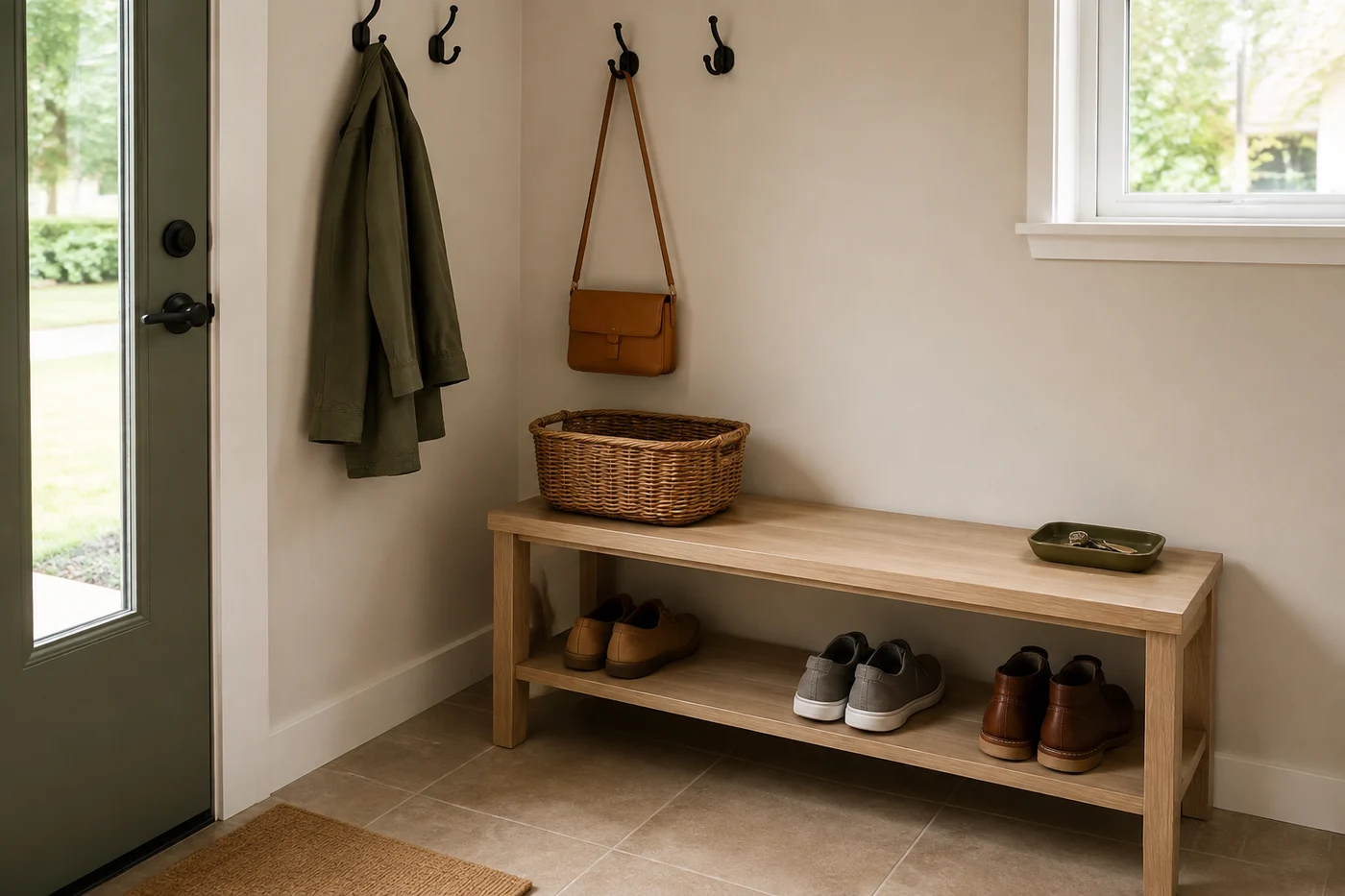
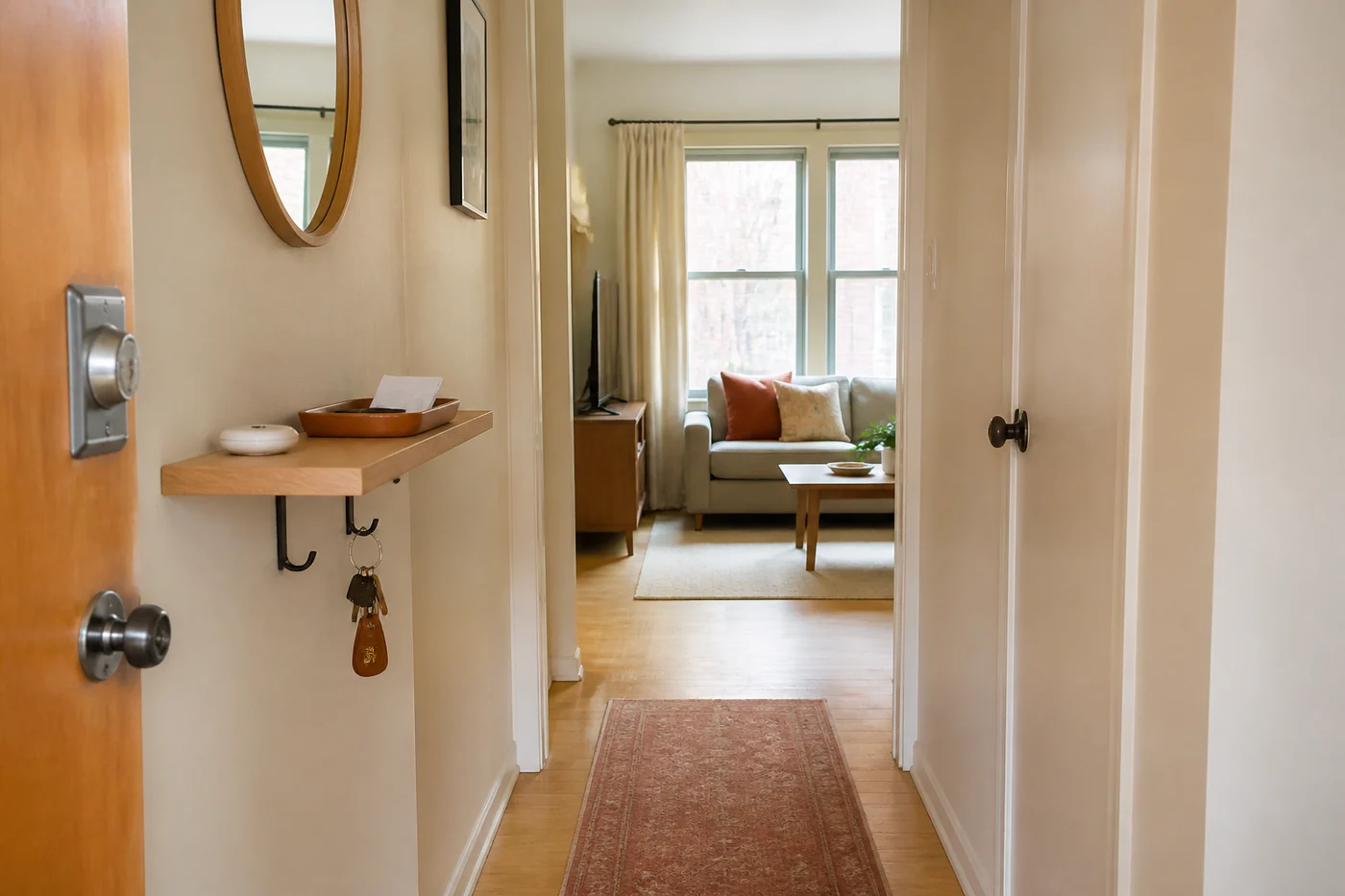
Choose one surface or wall location for keys, wallets, mail, and sunglasses. A shallow shelf with a tray is often enough. A small wall mounted organizer can work when floor space is limited. The important part is that the landing spot sits close enough to the door that people will use it without thinking.
Mail needs a short route through the home. Use one small tray or wall pocket for incoming mail and empty it each week. Packages should move out of the entry quickly because they block the path and make the space feel unfinished.
Keep the surface small on purpose. A large console top invites piles. A tray or bowl creates a clear limit and makes it easier to reset the area at the end of the day.
Plan for shoes without storing every pair at the door
Shoes tend to spread because they are both necessary and awkward to put away. Decide how many pairs need to be available in the entry during a normal week. The rest can live in a closet or bedroom. This keeps a compact entrance from becoming permanent footwear storage.
A shallow cabinet can hide shoes in a narrow hall. An open shelf is easier for households that need quick access. A bench with a lower shelf can work when there is enough depth and it does not interfere with the route. If wet weather is common, add a washable mat or tray that protects the floor and is easy to clean.
Let wet shoes dry before putting them into closed storage. A washable mat or tray can protect the floor without turning the entry into a permanent shoe area.
Choose between closed storage, open shelves, hooks, and baskets by how the door is used. The right solution depends on the depth of the wall and the number of people using the door.
Make coats and bags simple to put away
Hooks are often more effective than a complicated closet system in a small entry. Place them where coats and bags can hang without blocking the door or brushing against a passage. A low hook can help children manage their own backpacks. A higher hook or rail can keep adult outerwear out of the way.
Do not treat hooks as unlimited storage. A crowded wall can feel as messy as a crowded floor. Keep only the current season’s most used items at the entry and move the rest elsewhere.
Choose furniture that earns its footprint
The best small entryway furniture is not necessarily the smallest version of every traditional foyer piece. It is the piece that solves a real problem without taking over the path. Start with the need, then match the furniture to the available wall and depth.
A slim console can provide a landing surface and a place for a lamp, but only when there is room to walk in front of it. A storage bench is useful when people regularly sit to put on shoes. A small stool can be easier to move than a bench. In very tight spaces, a wall shelf may do the work of a console without using the floor at all.
Match the piece to the depth of the wall
Measure from the wall to the edge of the clear walking route rather than guessing from a product photo. Deep drawers and large baskets can quickly consume the usable part of a hall. In a narrow entryway, shallow closed storage often feels calmer than open furniture because it keeps visual clutter behind a door.
Compare benches, stools, consoles, and wall mounted options by function rather than style alone.
Use the walls before filling the floor
Vertical space is especially valuable in apartments and narrow entries. A wall can hold hooks, a small shelf, a mirror, artwork, or a compact cabinet without shrinking the route through the home.
Avoid turning every empty wall into storage. One useful wall system is generally more effective than a shelf, hooks, art, baskets, and a cabinet all competing in the same small zone. Renters can favor reversible solutions such as freestanding narrow storage and suitable removable hooks.
Make a small entrance feel brighter and calmer
Light has an outsized effect in a compact entrance. A dark corner near the front door can make an otherwise organized space feel closed in. You do not need a dramatic fixture to improve it. You need enough useful light to see the lock, find a coat, and enter the room comfortably after dark.
Use a mirror for light and a practical last look
A mirror can reflect available daylight and give people a quick last look before leaving. It works best when it is placed for a real view rather than squeezed into a leftover gap. In a narrow entry, choose a scale that relates to the wall without making the space feel visually busy.
Mirrors do not replace storage or layout. They support a working entry by making it feel brighter and more open once the fundamentals are in place.
Add layered light only where it helps
If the entry has a ceiling fixture, make sure it provides enough broad light. A small table lamp or wall light can add warmth when there is a safe surface or an appropriate wall location. In a dark hall, a brighter bulb and a light reflecting mirror may solve more than a large decorative fixture.
Keep cords clear of the walking path and avoid lamps that crowd a shallow landing surface. Choose fixture scale carefully in low ceilings and dark entrances.
Keep small entryway decor restrained and useful
Small entryway decor should support the atmosphere of the home without making the first few feet feel crowded. One mirror, one piece of art, a runner, or a small natural element can be enough. The goal is not to fill the wall. It is to create a welcoming transition.
Choose materials that can handle everyday contact. A washable runner, a wood tray, a durable basket, and an easy to clean mat work harder than fragile objects that need to be moved every time someone comes through the door. Natural wood, woven texture, matte ceramics, and simple framed art can create warmth without relying on a theme.
When the entry opens into the living room, repeat one or two materials or tones from that room. This makes the spaces feel connected without matching every object. Keep mirrors, runners, and artwork in proportion to the available space.
Adapt the plan to a narrow hall or a door to living room entry
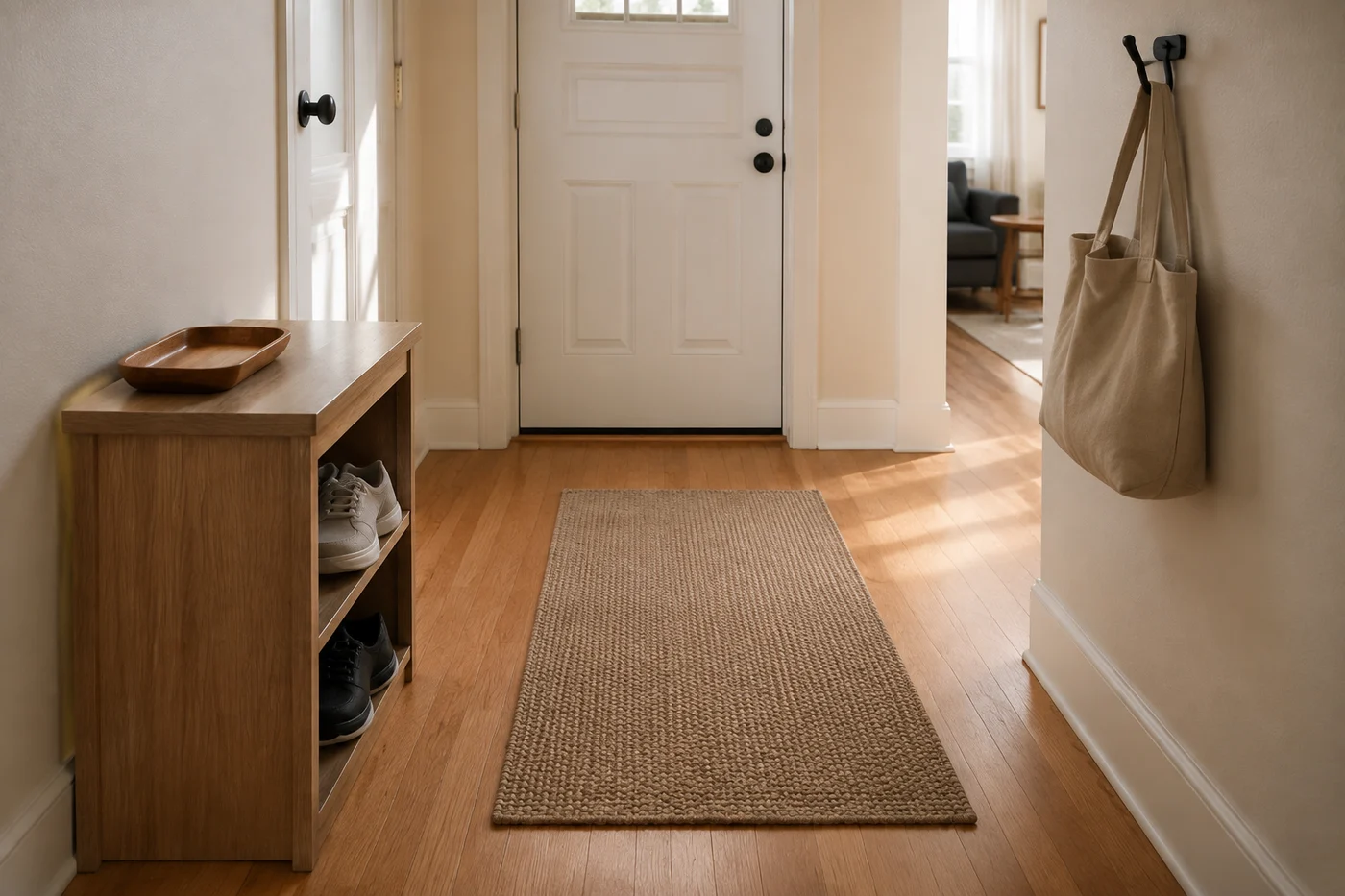
Narrow entryway ideas should focus on clear passage and wall depth. Use a single working wall when possible. Keep the opposite wall visually quiet. A runner can guide the eye through the hall while a shallow cabinet, hooks, or a mirror handles the practical needs.
For a door that opens into a living room, avoid placing the entry system too far from the door. A small zone next to the entrance prevents coats and bags from traveling into the seating area. You can use a compact bench, wall hooks, or a slim shelf to establish that zone, then keep the transition into the living room open.
In both situations, test the entry during a normal week. If shoes still gather on the floor, the system needs a closer or simpler shoe solution. If keys keep landing on the kitchen counter, the drop zone is too far away or too hard to use. Adjusting the system is more useful than adding more decor.
Common mistakes that make a small entry harder to use
Choosing furniture before measuring
Even a slim looking bench or console can block a door swing or the only comfortable route into the home. Measure the wall, the furniture depth, and the available clearance first.
Creating storage that is too complicated
If shoes require opening several doors or bags need to be moved before coats can be hung, people will use the floor instead. Give the daily items the simplest possible route home.
Keeping too much at the front door
The entry should hold current essentials, not every jacket, shoe, umbrella, and bag in the household. A regular reset keeps it from becoming overflow storage.
Treating the entry as decoration only
An entry can look polished in a photograph and fail during a rainy weekday. Prioritize a clear mat, a landing place, useful storage, and adequate light before adding decorative layers.
Filling every wall
Too many hooks, shelves, baskets, and pictures create visual noise. Choose one main functional setup, then leave some wall space open.
Practical small entryway checklist
Before calling the space finished, walk through this list:
- Open the front door fully and confirm it does not hit furniture or storage.
- Walk from the door into the home with bags in hand and remove anything that interrupts the route.
- Give keys, mail, shoes, coats, and bags a home close to where they are used.
- Keep only the shoes and outerwear that need to stay at the door this week.
- Use a mat or tray that can handle dirt and wet shoes.
- Add enough light to enter safely and find daily items after dark.
- Place a mirror only if it improves light or supports a practical last look.
- Choose one or two decor elements that can handle daily life without crowding the space.
- Reset the entry once a week so the system stays useful.
Effective small entryway ideas make leaving and coming home easier. A clear path and a home for each daily item make the entrance feel calm.
Related guides
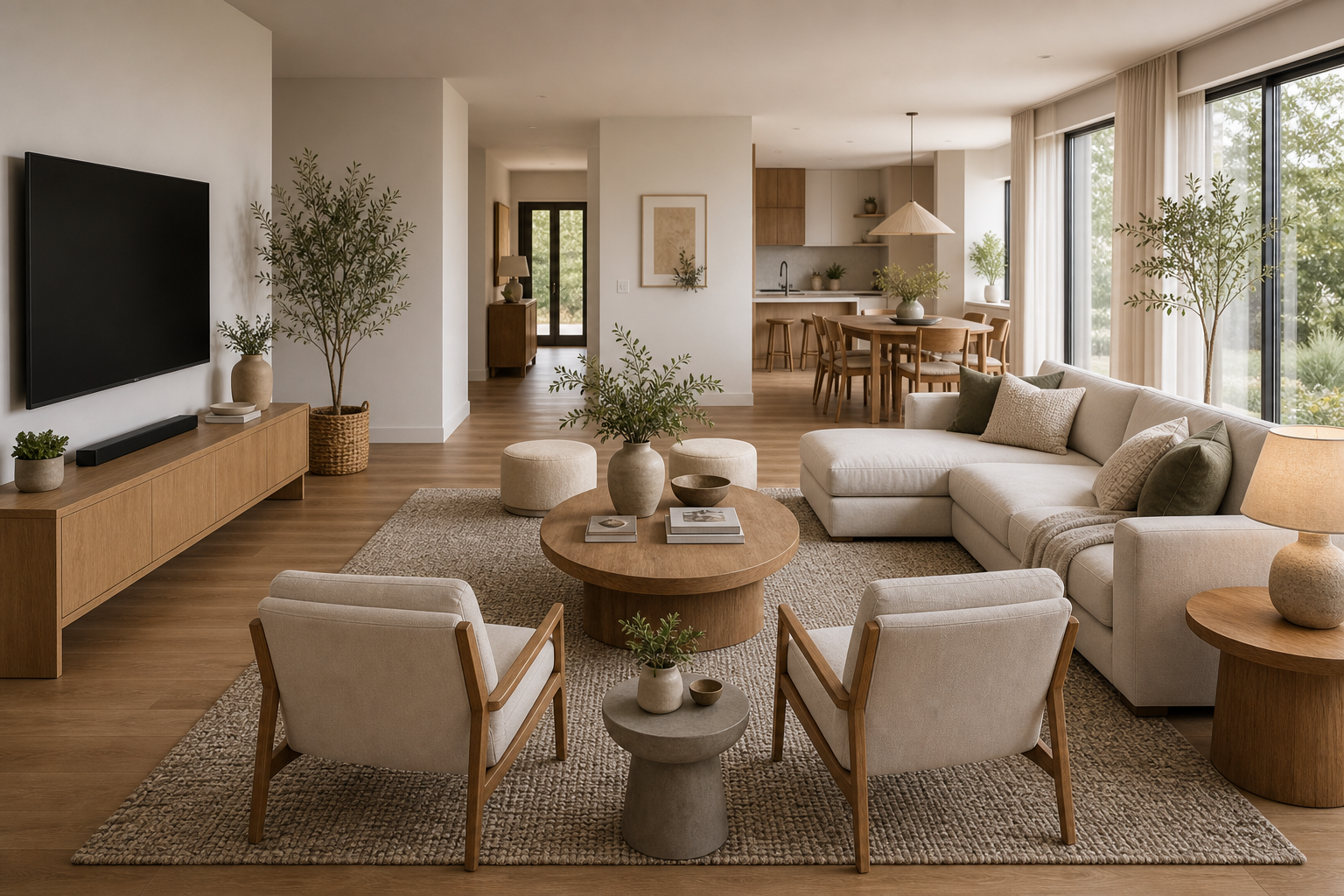
Room Decor Ideas
Living room layout ideas for modern homes
Practical living room layout ideas for modern homes with clear walking paths, comfortable seating, and flexible zones.
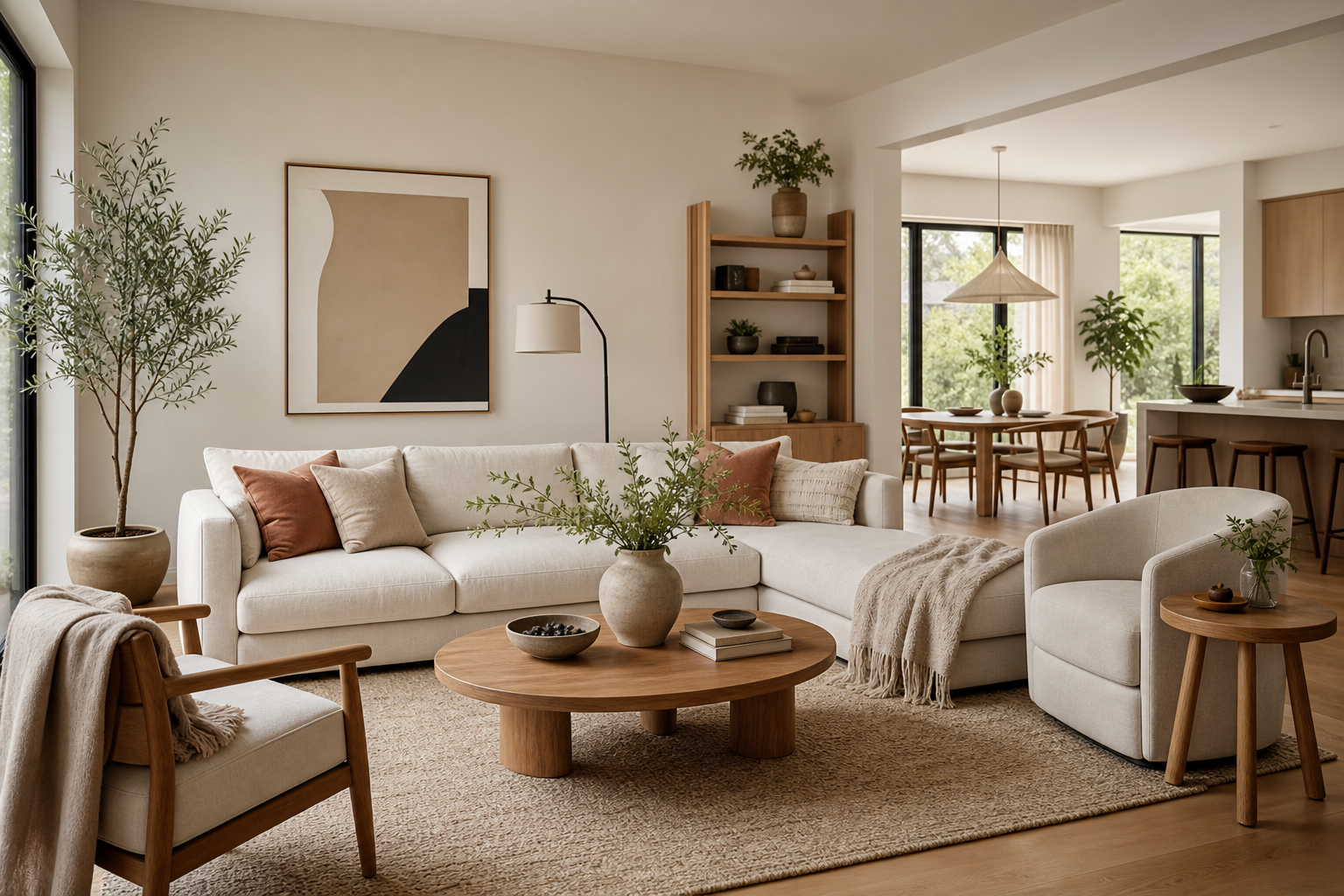
Room Decor Ideas
Modern Living Room Ideas Practical Guide for a Stylish Home
A practical guide to modern living room ideas, covering layout, furniture, color, lighting, texture, storage, and everyday comfort.
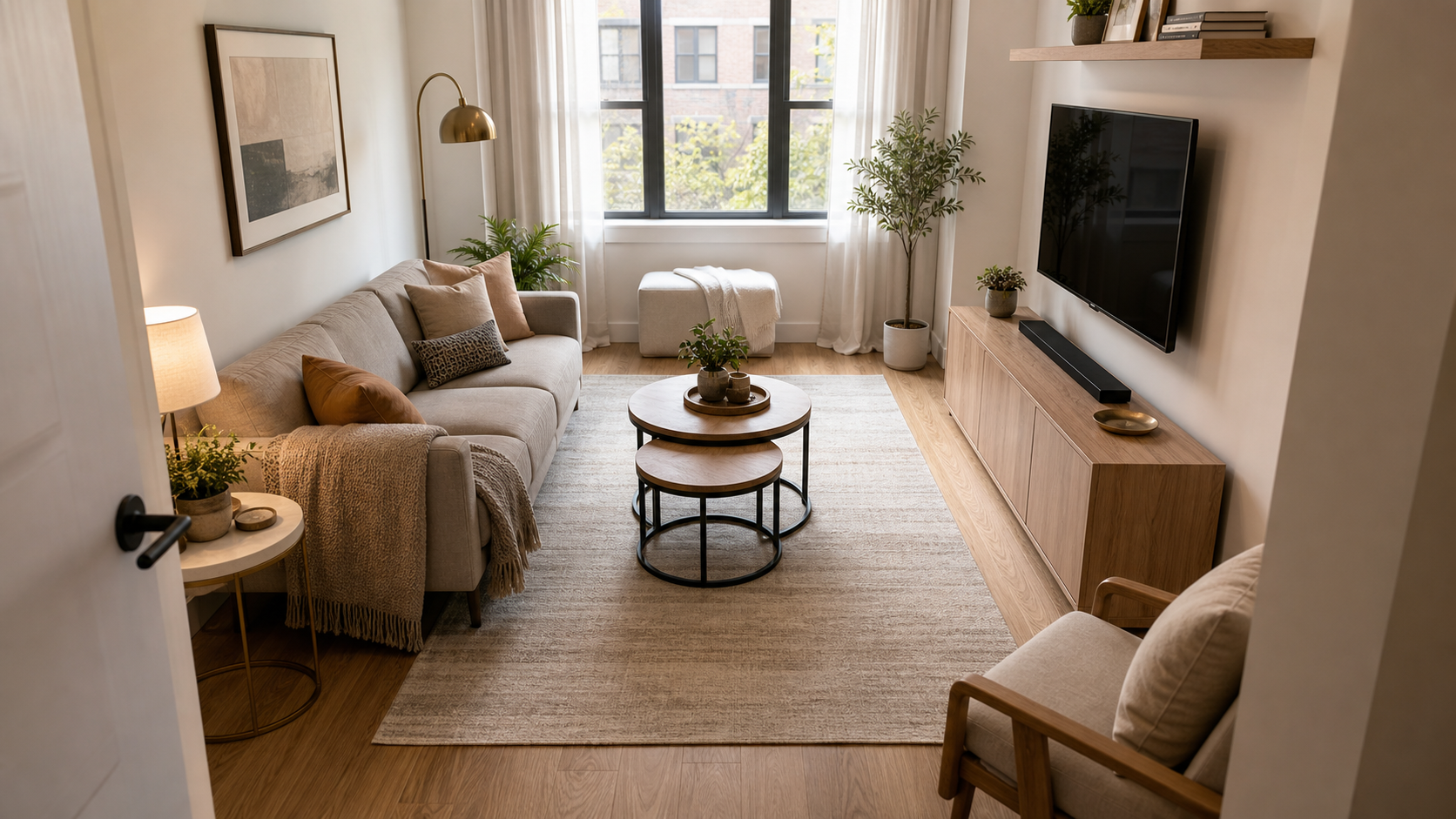
Small Spaces
Multifunctional furniture ideas for small homes
Choose multifunctional furniture for small homes from storage ottomans and sleeper sofas to nesting tables and foldable desks