
Room Decor Ideas
Modern Living Room Ideas Practical Guide for a Stylish Home
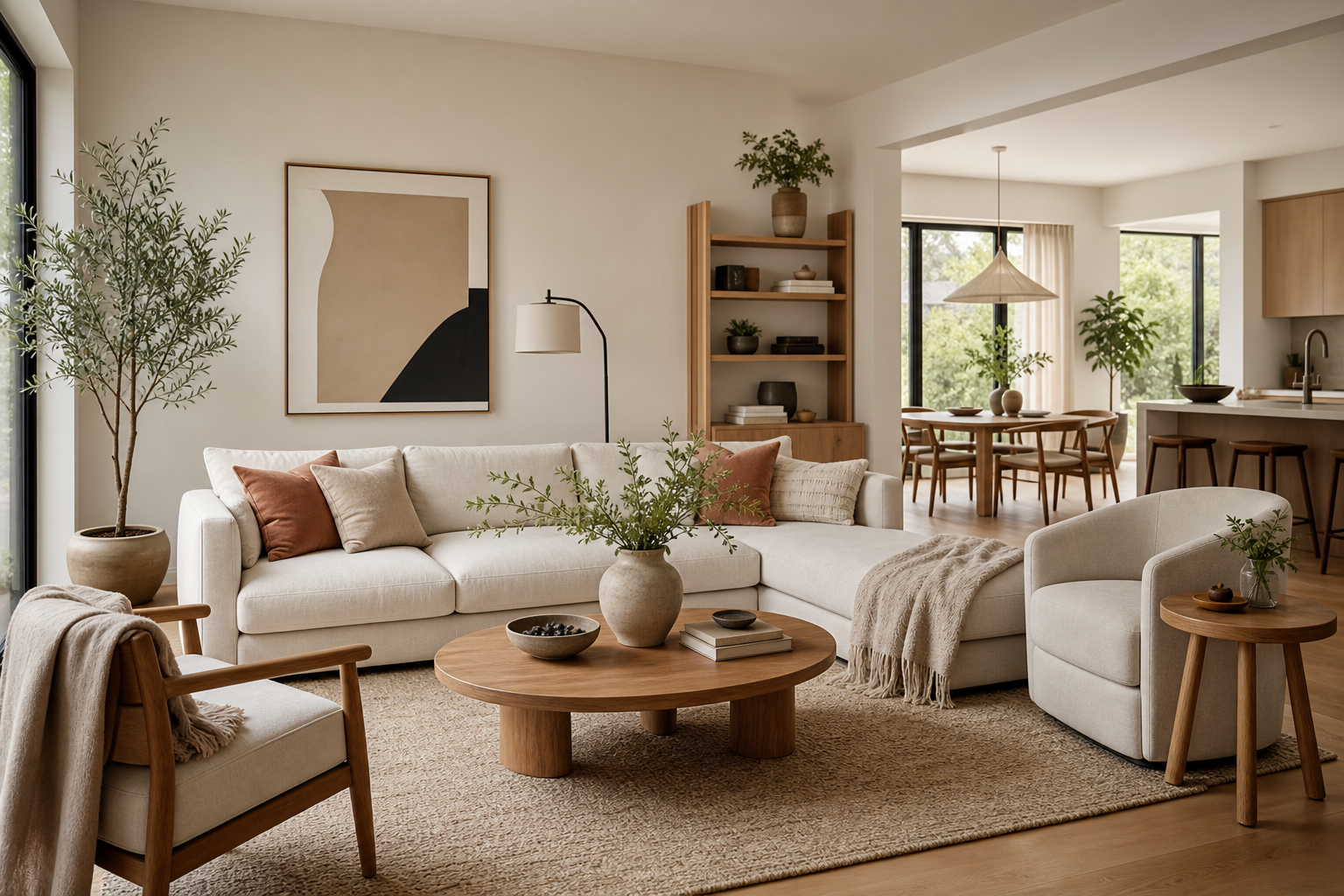
What makes a modern living room feel good to live in
The best modern living room ideas are not built around a single color or a showroom-perfect sofa. They begin with the way the room needs to work. A comfortable living room should make it easy to sit and talk. It should also support reading. It should support watching a film. It should support putting down a cup and moving through the home.
Modern style helps when it brings clarity to those everyday decisions. Clean lines can make a room feel less crowded. Natural wood can soften a pale palette. A few large useful pieces often look calmer than a collection of small ones. Texture, warm lighting, and personal objects keep the room from feeling sterile.
This guide is for a real room rather than a staged image. The aim is to help you choose a layout first. Then build a practical palette and add enough detail to make the space feel like yours.
Start with the room’s main job
Before choosing a sofa or saving another inspiration image, describe what happens in the room on an ordinary weeknight. If the space is mainly for conversation, the seating should face one another rather than every chair pointing at a screen. If it is a family room, leave a clear route through the seating and give everyday items a place to land. If the living room also works as a home office or dining area, define those uses without making the room feel divided into little boxes.
Make a short activity list
Write down the three activities that matter most. They might be relaxing or watching television. They might be reading. They might be hosting friends or keeping an eye on children. That list tells you more than a style label does.
Once the activities are clear, identify the fixed points. Note the doors. Note the windows. Note the outlets. Note the radiators. Note the built-ins and the best source of daylight. A room can look balanced in a photograph while being awkward to enter. These practical details make the final arrangement feel intentional.
Protect the walking paths
Aim for a comfortable route between the main entrance, the sofa, and any adjoining room. You do not need to measure every inch before moving a chair. You should be able to walk through the space without turning sideways or stepping around a coffee table.
In an open-plan home, keep the central walkway visually obvious. A rug, pendant, console, or change in furniture orientation can define the living area without closing it off. In a smaller room, the best modern living room ideas usually involve fewer pieces with more breathing room between them.
Choose a layout before choosing a look
Furniture arrangement is the foundation of the room. A beautiful sofa cannot fix a layout that blocks the door or leaves every seat facing away from the conversation. Begin with the largest seating piece. Then place the other elements around the room’s focal point.
The focal point might be a fireplace or a window. It could be a built-in bookcase, a television, or the center of the seating group. It does not have to be the most expensive feature. It only needs to give the room a clear visual destination.
Use the sofa to establish direction
Place the sofa where it supports the main activity and leaves a usable edge around it. In a larger room, floating the sofa away from the wall can make the arrangement feel more deliberate. Its back can help separate the living area from a dining zone.
Against a wall, a sofa can save space. Avoid pushing every piece to the perimeter by habit. A chair angled toward the sofa, a small side table, or a slim console can give the room a stronger center.
Keep the seating conversation-friendly
The seating does not need to form a perfect square. It does need to allow people to see one another without twisting around a coffee table. Two occasional chairs can make a living room more flexible than a second full sofa. This is especially useful when the room also needs open floor space.
Use a round or oval coffee table when the room has several circulation paths or many hard corners. Use a rectangular table when the seating is arranged in a clear linear group. The shape should support movement as well as style.

Select furniture for comfort and visual calm
Modern furniture does not have to mean rigid. It does not have to mean low or uncomfortable. The most useful pieces combine a simple silhouette with materials that invite use. Look for upholstery that feels good against the skin. Choose a seat depth that suits the people using it. Choose tables that are large enough for ordinary life.
Prioritize the pieces you touch
Spend the most thought on the sofa, the main chairs, and the lighting you use every evening. These pieces determine whether the room feels welcoming. A side table that holds a lamp and a drink is more valuable than a decorative table that cannot do either.
For a practical room, choose a finish that can handle small marks and regular cleaning. Performance fabric, washable covers, sealed wood, or textured patterns can all be useful. The right choice depends on your household. Practicality should be built into the design rather than added as an apology.
Mix shapes without making the room noisy
A modern room often feels more relaxed when straight architectural lines meet one or two softer shapes. Try a curved chair or a round coffee table. An arched lamp or a rug with a gentle pattern can have the same effect. You do not need every piece to have a different outline.
Repeat one or two materials to create connection. If the coffee table is warm wood, echo that tone in a console, frame, or small stool. If the seating is pale, a darker wood or olive accent can keep the room from becoming visually flat.
Leave room for change
Do not fill every corner on the first pass. A living room needs a little empty space for seasonal shifts. It needs space for a new plant or a stack of books. It also needs the feeling of being able to move something. An edited room is not unfinished. It is easier to live with and easier to refine.
Build a warm modern color palette
Warm modern interiors are usually less about matching colors and more about controlling temperature. A room can be mostly neutral and still feel rich when its whites, woods, textiles, and accents sit in the same family.
Begin with the largest surfaces such as the walls. Consider the floor. Consider the sofa and rug. Then add a smaller group of supporting tones. Warm white, oatmeal, sand, clay, muted olive, or medium wood can bring variation without forcing a strong theme.
Use contrast with intention
Contrast helps the room hold its shape. A black window frame, dark lamp, or deep brown table can draw attention to an architectural line. Too many dark accents can make a light room feel fragmented.
Use the strongest contrast near the focal point or at eye level. Keep smaller objects quieter so the eye has somewhere to rest. If the room already has strong views or artwork, a softer palette may be the better choice.
Let texture carry some of the color
A linen curtain, nubby rug, ribbed ceramic, or woven basket can make a neutral room feel layered without adding another hue. A boucle chair can do the same. Texture is especially useful when you want the space to feel calm but not plain.

Layer the lighting instead of relying on one ceiling fixture
Lighting changes how modern living room ideas feel after sunset. A single overhead fixture can illuminate the room while leaving it visually flat. Layered lighting gives you control over atmosphere, task light, and focus.
Create three useful layers
Start with ambient light that reaches the room broadly. Add task light beside a reading chair, sofa, or desk. Finish with accent light that brings attention to art, shelves, a plant, or a textured wall.
The sources do not need to be identical. A floor lamp, table lamp, or wall light can feel more collected than a matching set. A dimmable ceiling fixture can add useful control. Keep the color temperature comfortable and place switches where they are easy to use.
Light the corners people actually use
An empty dark corner can make a living room feel smaller than it is. A lamp beside a chair can turn that corner into a reading spot. A small lamp on a console can give the room a warm point of light when the main fixture is off.
Avoid placing a lamp where it creates glare on a television or shines directly into someone’s eyes. Good lighting is felt as much as it is seen.

Add texture and pattern without losing calm
The easiest way to make a modern living room feel personal is to layer materials rather than add more decoration. Combine smooth wood with woven fibers. Pair soft upholstery with a structured table. Use matte ceramics with a small reflective accent.
Start with the rug
A rug helps define the seating group and gives the room a softer visual base. It should be large enough to connect the main furniture rather than appearing like a small island underneath the coffee table. In a compact room, measure the available floor around doors and walking paths before choosing a size.
If the room already contains pattern in curtains or artwork, a tonal rug may be enough. If the furniture is mostly plain, a faded motif or restrained stripe can add movement without taking over.
Edit the pillows and throws
Three or four useful layers often look more polished than a sofa crowded with cushions. Mix scale and texture. Keep one color or material repeating across the room. A throw should be easy to reach and easy to put away. It is part of the room comfort and not just a styling prop.
Give objects some breathing room
Arrange books, bowls, candles, and small ceramics in groups with a little open surface around them. The goal is not to display everything you own. It is to create a few moments that reward a closer look.
Make storage part of the design
Clutter is often a storage problem rather than a decorating problem. A practical modern living room gives everyday objects a home close to where they are used. This makes the room easier to reset without requiring a large clean-up.
Hide what needs hiding
Use closed storage for chargers, games, paperwork, and pet supplies. It can also hold other items that do not need to be on view. A media console, storage ottoman, or cabinet can reduce visual noise while keeping those items accessible.
Display a smaller collection
Open shelves work best when they hold a considered mix of books, art, ceramics, and one or two living elements. Leave some shelf space empty. That pause helps the objects feel selected rather than stored.
Choose double-duty pieces
In a smaller home, favor furniture that earns its footprint. A nesting table can move when guests arrive. An ottoman can work as a footrest, seat, or surface with a tray. A console can divide a room while giving lamps and baskets a place to live.
Bring in nature and personal character
Modern rooms become more comfortable when they show signs of the people who use them. Plants, books, artwork, travel objects, and inherited pieces keep a neutral room from feeling generic.
Choose one or two personal elements with enough scale to be noticed. A large framed print often creates more calm than several small pieces scattered across a wall. A substantial plant can soften a corner and draw the eye upward.
Do not force the room into one period or one retailer’s look. Mixing a simple contemporary sofa with an older wood stool, a handmade bowl, or a vintage frame can make the result feel collected. Rooms with character and layered materials often feel more welcoming than perfectly matched sets. Practical comfort should lead the look.
Adapt the approach to a small or open-plan room
The principles stay the same when the room is smaller. The measurements simply become more important. Choose the focal point. Protect the walking path. Let the seating group do more than one job.
In an open-plan room, use furniture orientation and lighting to create a living zone. A rug can anchor the seating. A console or the back of a sofa can provide a gentle boundary. Keep the sightline between areas open so the home still feels connected.
In a narrow room, avoid placing a deep piece at the tightest point. Try a slimmer sofa, one substantial chair, or a small round table instead of several pieces competing for the same floor area. The room will usually feel larger when the route through it is obvious.
A practical order for decorating the room
If you are starting from an empty room, work in this order:
- Measure the room. Note the doors. Note the windows and fixed features.
- Decide the main activity and choose the focal point.
- Place the sofa and primary seating.
- Add a rug and coffee table that support the arrangement.
- Add the main light sources and check them after dark.
- Choose the larger storage pieces.
- Layer curtains, pillows, throws, art, plants, and smaller objects.
- Live with the arrangement before buying more.
Before ordering larger pieces, verify fit and safe placement.
This order keeps decoration from hiding a layout problem. It also helps you spend money on the pieces that have the greatest effect on comfort.
Common mistakes to avoid
Buying the rug too small
A small rug can make a seating area feel disconnected. Measure from the furniture arrangement outward and check the walking paths before ordering.
Using only one light source
An overhead fixture may be bright enough while still making the room feel cold at night. Add at least one lamp where people sit and one warm point of light elsewhere.
Choosing all hard surfaces
Wood, glass, stone, and metal can look beautiful together. Too many hard surfaces make a room echo visually and acoustically. Balance them with upholstery, curtains, rugs, and woven texture.
Copying a room instead of solving your own
Inspiration is useful for noticing proportions, colors, or materials. It cannot tell you where your doors open or how your household uses the room. Borrow the principle. Then adapt it.
Filling every empty corner
Empty space helps the useful pieces read clearly. Give the room time before deciding that another chair, basket, or accent table is needed.
Frequently asked questions
The best colors for a modern living room
There is no single correct palette. Warm whites, sand, or oatmeal can create a flexible base. Natural wood, muted olive, or clay can add depth. Soft gray can also work well. Add contrast with one dark accent or a deeper wood tone. Use texture to keep the room from feeling flat.
Ways to make a modern living room feel cozy
Begin with comfortable seating. Add a rug, curtains, layered lighting, and tactile textiles. Personal artwork and a few objects with history usually create more warmth than adding a large number of decorative pieces.
How to decide whether living room furniture should match
Matching is optional. A consistent scale, repeated material, and connected color palette matter more than buying a complete set. Mixing shapes and finishes carefully can make the room feel more personal.
Ways to make a small living room look bigger
Keep a clear route through the room. Choose furniture that fits the walls and door swings. Avoid breaking the floor into too many small zones. A correctly sized rug, a lighter palette, and furniture with visible leg space can help the room feel more open.
The first pieces to buy for a living room
Buy or place the pieces that determine the layout, such as the main seating. Add the rug and coffee table. Add lighting before smaller decor. Once the room works comfortably, you will have a clearer idea of what it actually needs.
Final takeaway
Modern living room ideas work best when style follows the way the room is lived in. Start with movement and comfort. Establish a clear seating group. Then build warmth through natural materials, layered light, useful storage, and a small number of personal details.
The finished room does not need to look expensive or perfectly styled. It needs to feel settled when you walk in. It needs to be easy to reset at the end of the day. It needs to stay open to the life happening inside it.
Related guides
Room Decor Ideas
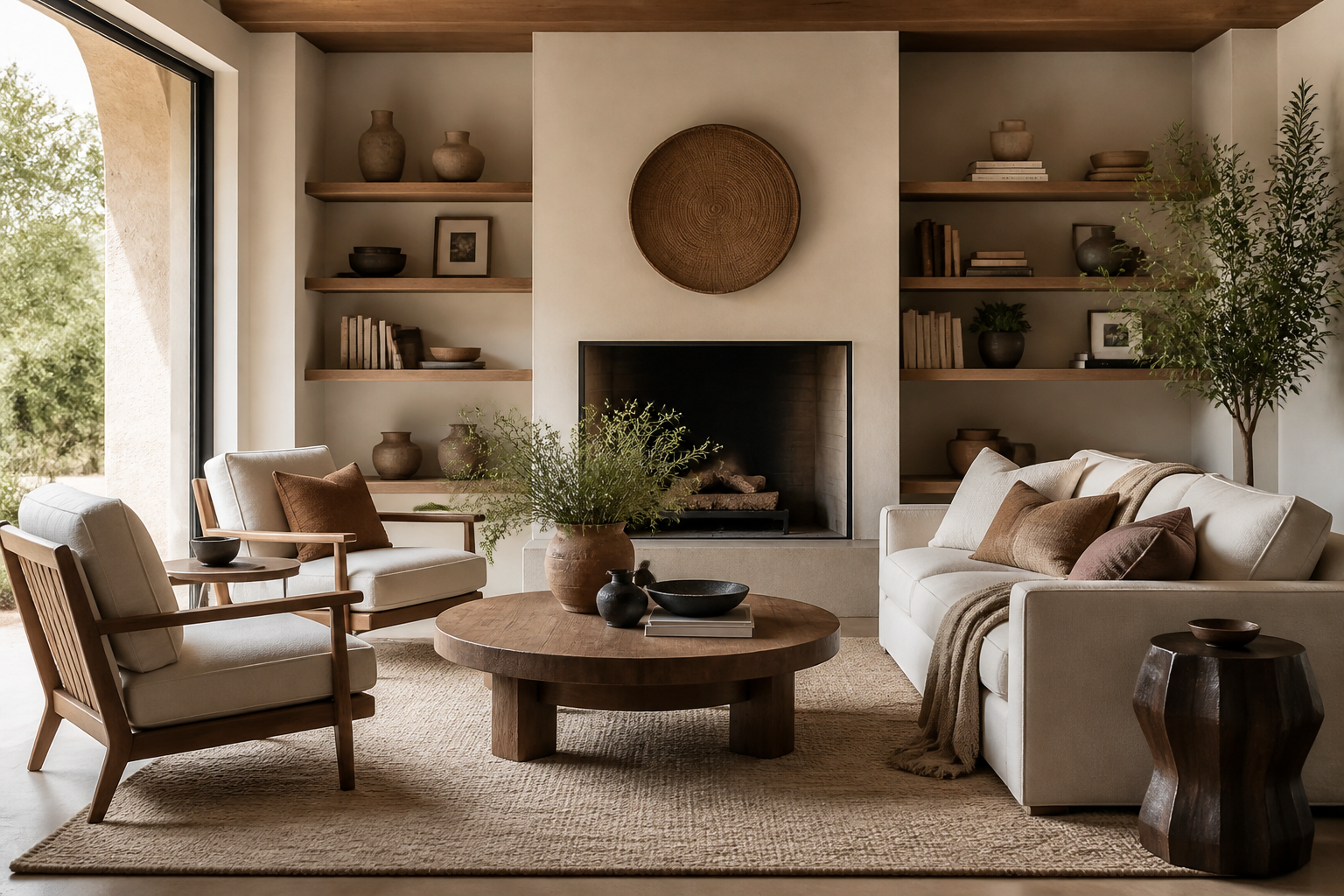
Living Room Furniture Arrangement Ideas That Make Any Space Work
Practical living room furniture arrangement ideas for sofa placement, chairs, coffee tables, rugs, traffic flow, and everyday comfort.
Room Decor Ideas
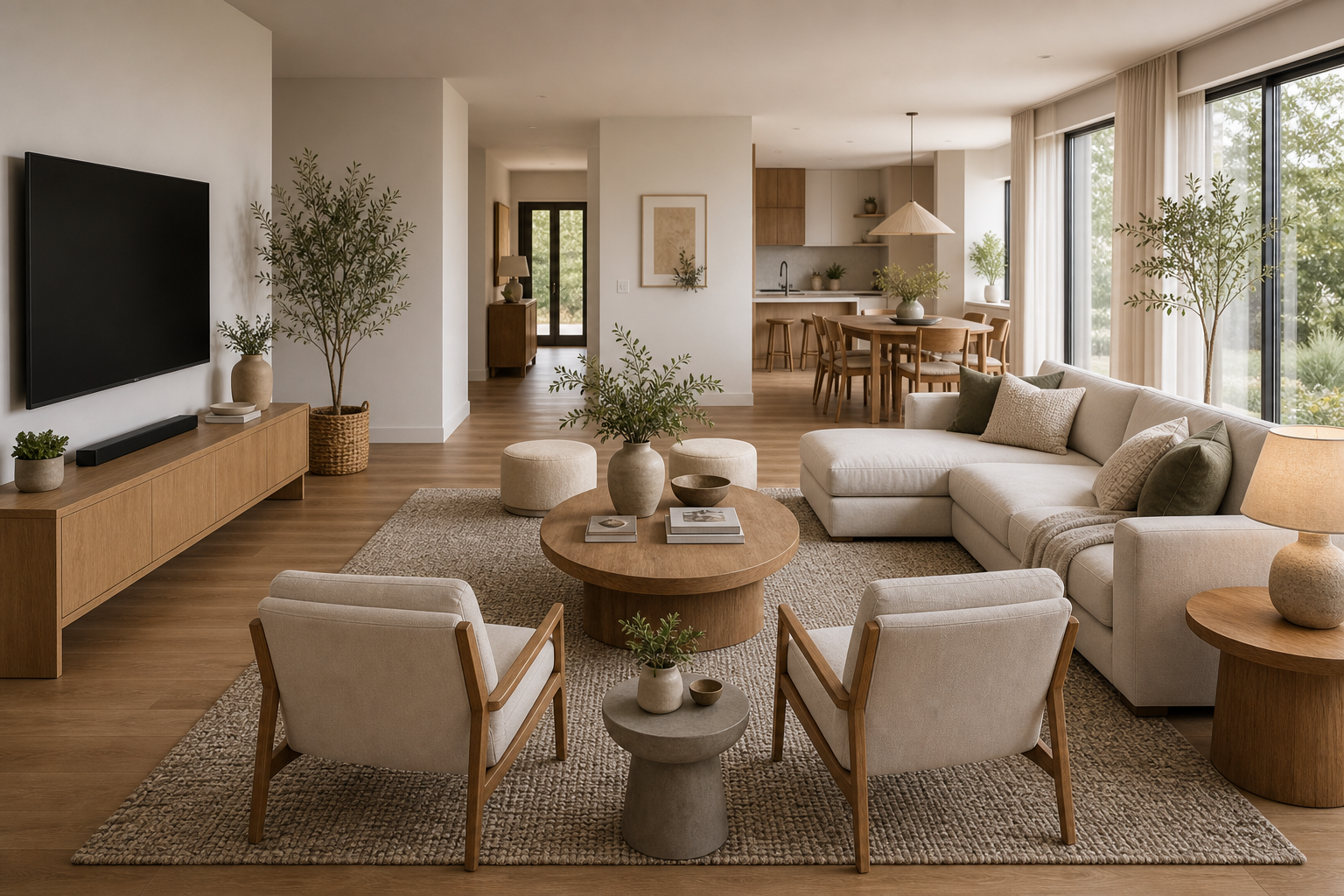
Living room layout ideas for modern homes
Practical living room layout ideas for modern homes with clear walking paths, comfortable seating, and flexible zones.
Room Decor Ideas
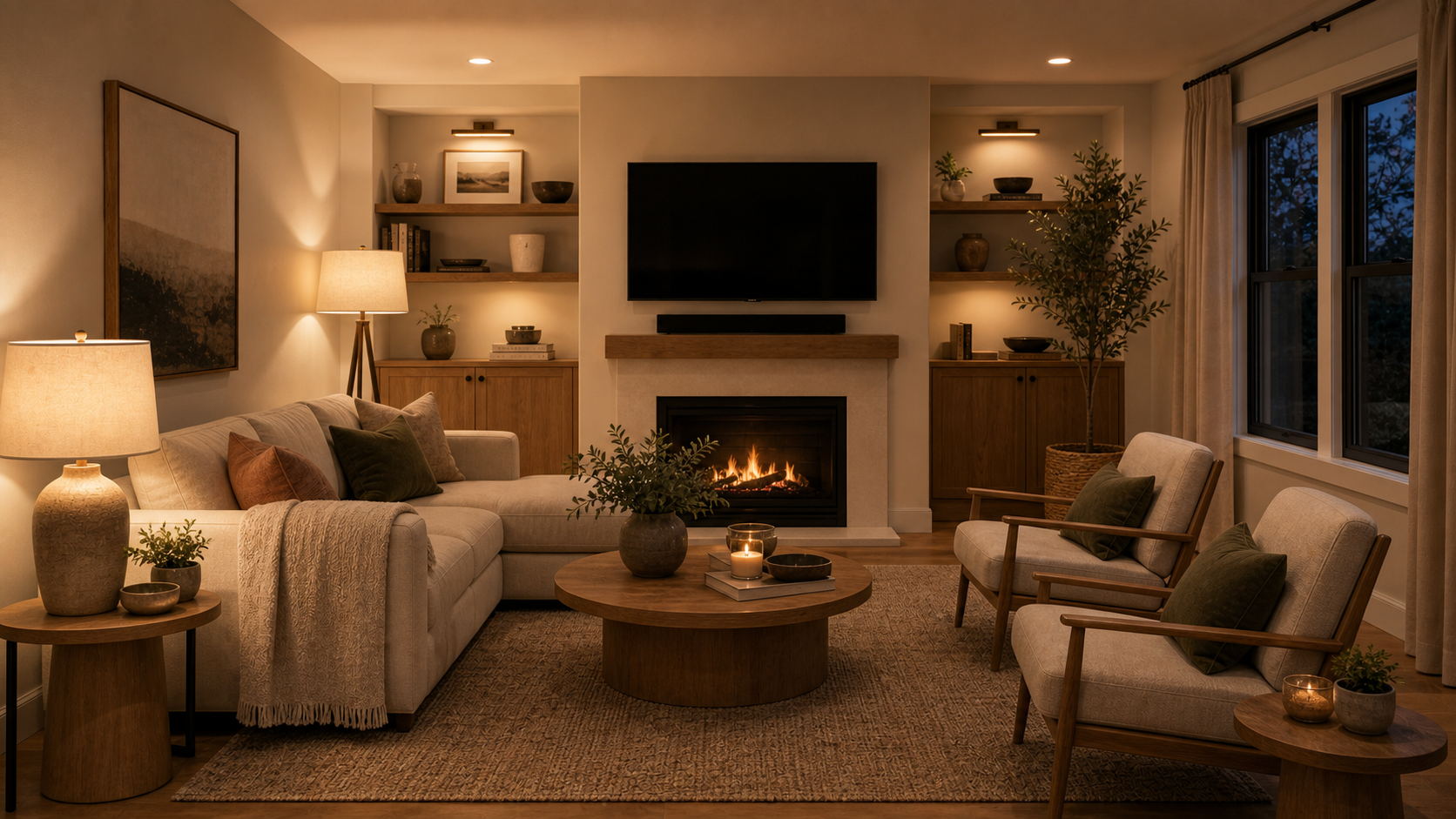
Living Room Lighting Layout Ideas for a Warm Functional Space
Practical living room lighting layout ideas for warm bulbs, useful lamps, reading corners, and comfortable evenings at home.