
Small Spaces
Small space home decor ideas for apartments and compact homes
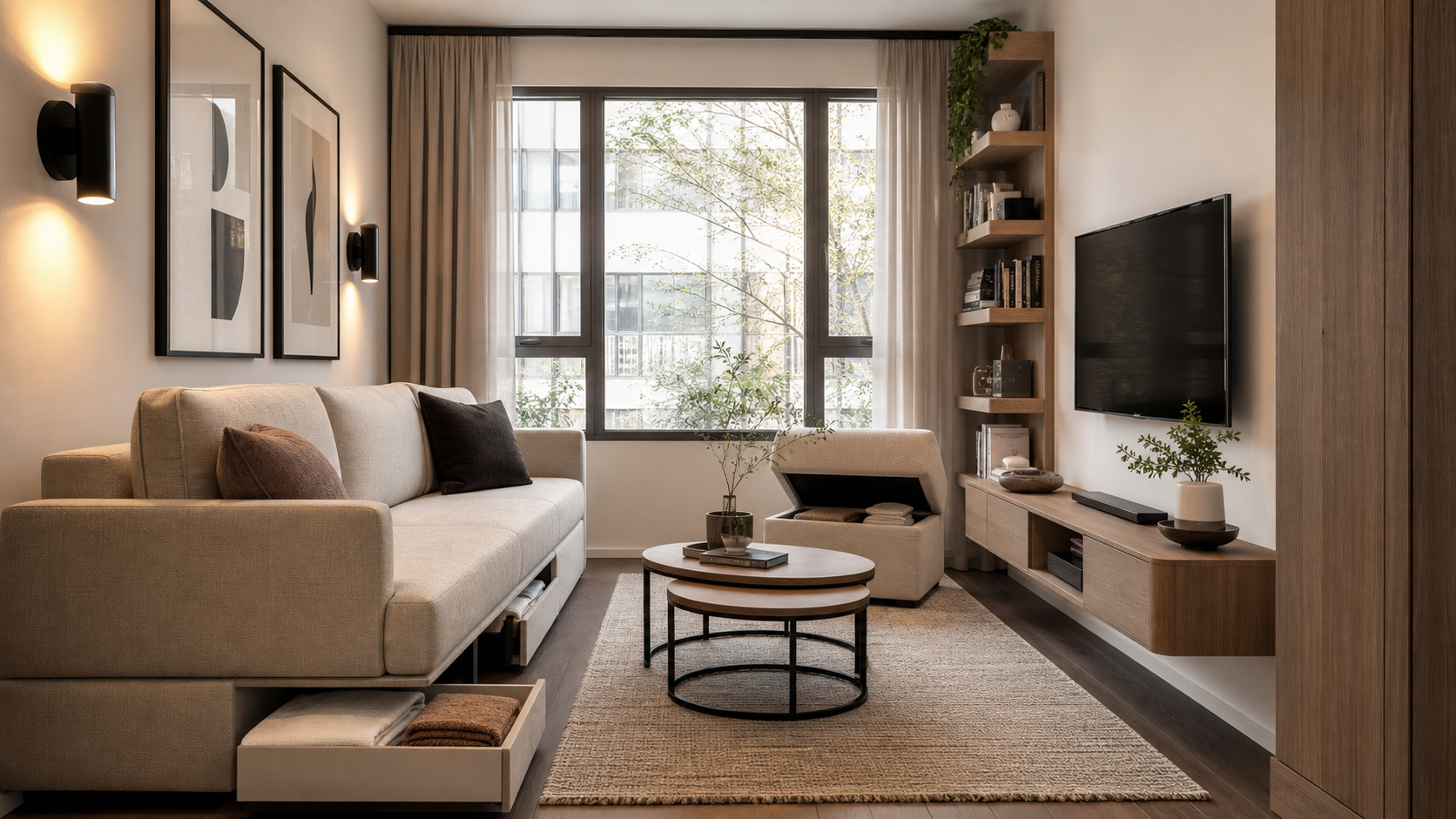
Start with how the home needs to work
A small home feels bigger when you can move through it easily, find things fast, and see at least one clear surface. That comes from layout, storage, and light, not from shrinking every piece of furniture. Measure first, then buy.
Start at the front door. Most compact homes share three friction points: a walkway that narrows below about 30 inches, clutter that lands where nothing is meant to hold it, and one oversized piece doing too much work. Fix those before you add decor.
This is the main guide for Decostead's Small Spaces category. It covers the whole home in order, and each section points to a deeper guide when you need room-by-room detail.
Small space home decor ideas that make rooms feel bigger
Three changes usually make a compact room feel larger than any new purchase.
- Clear the main walkway to about 36 inches, or at least 30 inches where furniture has to sit close.
- Leave 14 to 18 inches between the sofa and the coffee table. That is enough to reach a mug without blocking knees.
- Keep one surface clear, such as the dining table or the dresser top, so the eye has somewhere to rest.
If a piece blocks any of these, move it or remove it before you shop. Renters can test all three in an afternoon with painter's tape, and none of them costs anything.
Start with the floor before the decor
In a compact home, the floor is the first thing to protect. If the floor is crowded, the room feels crowded. This is true even when the furniture is beautiful. A sofa with too many side pieces, a table that blocks the path, or a chair that no one can move around will make the space feel smaller every day.
Walk through the room the way you normally use it. Go from the door to the sofa, from the bed to the closet, from the kitchen to the table, from the entry to the living area. Anywhere your body slows down, turns sideways, or steps around furniture is a place to fix before buying more decor.
Choose furniture that does not fight the room
Small rooms do not always need tiny furniture. They need furniture with the right visual weight.
A slim sofa can feel better than two small chairs. A round table can be easier than a square one. A bed with simple lines can make a bedroom feel calmer than a bulky frame with thick sides.
Look for raised legs, simple arms, lighter bases, rounded corners, and pieces that leave some air around them. These details matter because the eye reads them quickly. A heavy block of furniture can make the room feel full even when it technically fits.
The useful pieces are the ones that solve a real daily problem, not the ones that only look clever in a product photo.

Put storage where the mess actually starts
Storage only works when it meets the habit. If keys land by the door every day, storage belongs by the door. If blankets end up on the sofa every night, the solution has to live beside the sofa. If work papers take over the dining table, the work zone needs a place to close at the end of the day.
This is where many small homes go wrong. They add storage wherever there is an empty wall, but the clutter appears somewhere else. The better way is to watch the room for a day or two and notice where objects naturally land. Then create a real place there.
Keep the entry under control
The entry is small, but it affects the whole home. When shoes, bags, mail, and keys spread from the door into the living room, the apartment feels busy before anyone sits down.
Even a tiny entry wall can work if it has a hook, a landing surface, a mirror, and one place for daily shoes.
Keep entry furniture shallow. A narrow cabinet, small shelf, wall hook, or slim bench usually works better than a deep console. The path still has to stay open, because the entry is a movement zone first and a styling zone second.
It keeps the advice practical for renters and compact layouts.

Make the bedroom feel quiet
A small bedroom should feel easy at night and easy in the morning. That means fewer things on show, softer light, and furniture that leaves the bed feeling calm instead of squeezed.
The bed takes most of the visual space, so the bedding and wall around it need to be simple and intentional.
Closed storage helps more in a bedroom than open storage. A drawer in the nightstand, under-bed storage for seasonal items, and a closet with simple dividers can make the room feel less crowded without adding more decoration.
Use light to stretch the room
One ceiling fixture lights a small room evenly and flatly. Add light at two more heights so the corners do not disappear in the evening.
Put a table lamp beside the sofa or bed, and a floor lamp or wall light in the darkest corner. Warm bulbs around 2700K to 3000K feel calmer at night. Renters can use plug-in wall sconces, which hang on the wall and plug into an outlet, so no electrician is needed. Check your lease before drilling. Expect roughly $40 to $120 per sconce and $50 to $200 for a simple floor lamp.
Mirrors help only when they reflect something calm, such as a window, a lamp, or a clear wall. Place a mirror across from or beside the window, not facing a busy corner. A mirror that reflects clutter doubles it.
Let one room do more than one job without looking confused
Many compact homes need one room to handle several activities. A living room may also be a work zone. A studio may need sleeping, relaxing, eating, and storage in one open space.
The answer is not to fill the room with dividers. The answer is to give each activity a soft signal.
A rug can signal the living area. A lamp can signal the reading corner. A console can signal the entry. A low shelf can separate the bed without blocking light. These small signals help the home feel organized while still breathing.

Choose decor that earns its place
Small homes can still have personality. The trick is to use fewer objects with more purpose.
A lamp can add warmth and height. A mirror can add depth. A tray can organize daily objects. A plant can soften a corner. A textile can make a sofa or bed feel finished.
When an object only fills space, be careful. Small rooms do not have much room for decoration that does not help the mood, the function, or the story of the home. Use one strong piece rather than five small pieces that create visual noise.
A five-minute doorway check
Stand in the doorway with a tape measure and run this check once a season.
- Can you reach the window, closet, and seating without turning sideways? Measure any gap under 30 inches.
- Does the door open fully, with nothing in its swing?
- Do keys, mail, bags, and chargers each have a set place within a step of where they land?
- Is there light at three heights: ceiling, table, and floor or wall?
- Is the largest piece in scale with its wall? A sofa that runs almost wall to wall leaves no breathing room at the ends.
Write down the first "no." That is your next project, not a new shopping list.
What I would fix first in a compact home
If the whole home feels tight, do not try to solve every room at once. Start with the place that creates daily friction. For many apartments, that is the entry or living room. For a studio, it is usually the bed placement. For a small bedroom, it is often the nightstand, closet, or the space around the bed.
Fixing one daily friction point changes the way the home feels immediately. A clear entry makes the morning easier. A better sofa path makes the evening calmer. A bedroom with fewer visible objects makes sleep feel better. Small homes improve fastest when the work starts with the habit, not the decoration.
How to keep the style personal
A compact home should not become plain just because it is small. Keep the pieces that say something about the person living there, but give them room. One framed print, one handmade bowl, one plant, one favorite book stack, or one textile with texture can make the home feel personal without crowding it.
The difference is editing. A small room can carry personality, but it cannot carry too many unrelated messages at the same time. Choose a few objects that matter, repeat the colors around them, and let the rest of the room stay quieter.
Where to go next in small spaces
Start with the room that bothers you most.
Frequently asked questions
How much walking space do I need in a small living room?
Aim for about 36 inches on the main path from the door to the seating. Where space is tight, 30 inches still works for one person at a time. Leave 14 to 18 inches between the sofa and the coffee table.
What should I fix first in a small apartment?
Start with the spot that causes daily friction, usually the entry or the path to the sofa. Clear it, give daily items a set place, and live with the change for a week before buying anything.
Can renters make these changes without losing a deposit?
Yes. Rearranging, painter's tape tests, freestanding shelves, plug-in lights, and over-the-door hooks leave no marks. Ask your landlord before drilling, and keep any hardware you remove.
Related guides
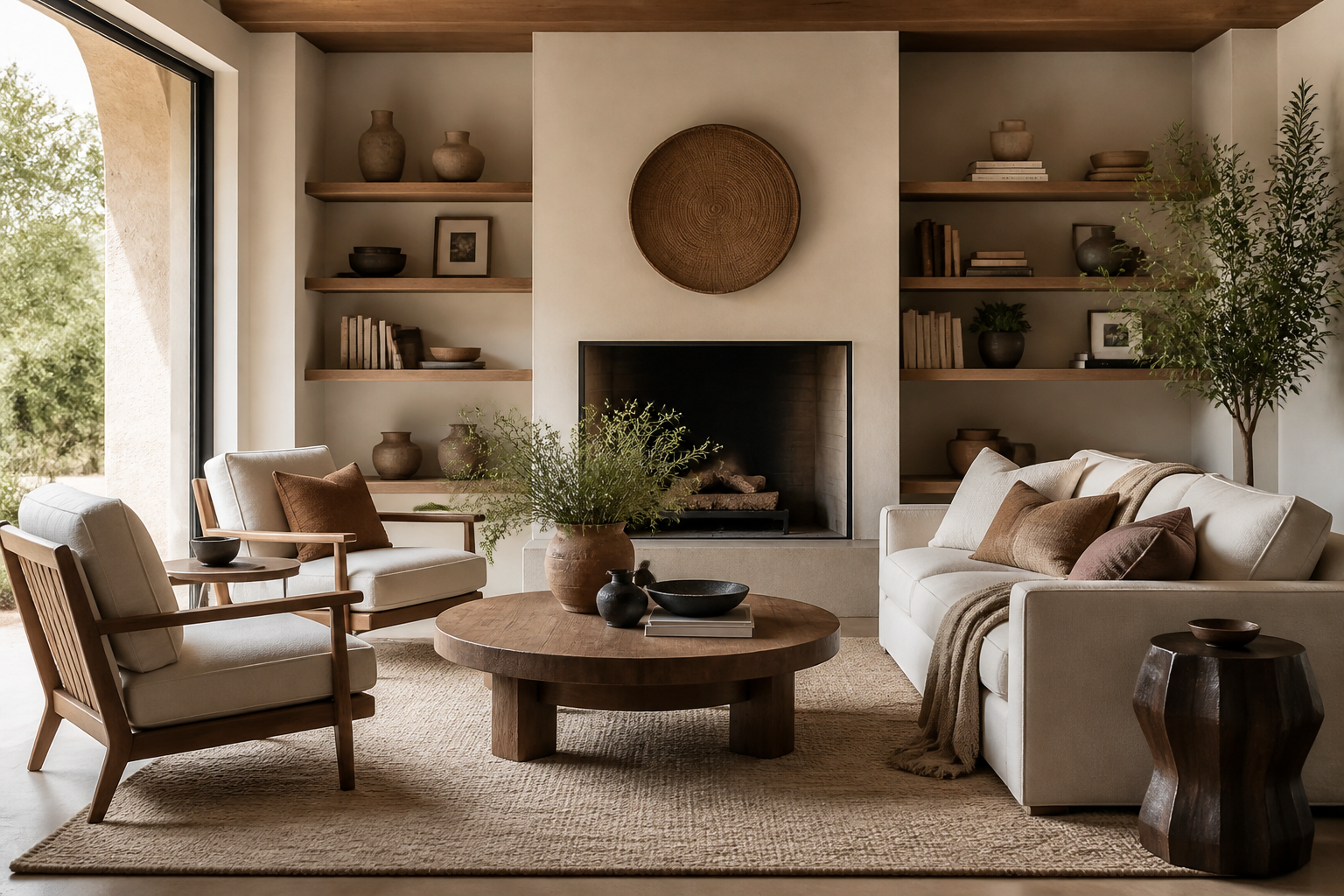
Room Decor Ideas
Living Room Furniture Arrangement Ideas That Make Any Space Work
Practical living room furniture arrangement ideas for sofa placement, chairs, coffee tables, rugs, traffic flow, and everyday comfort.
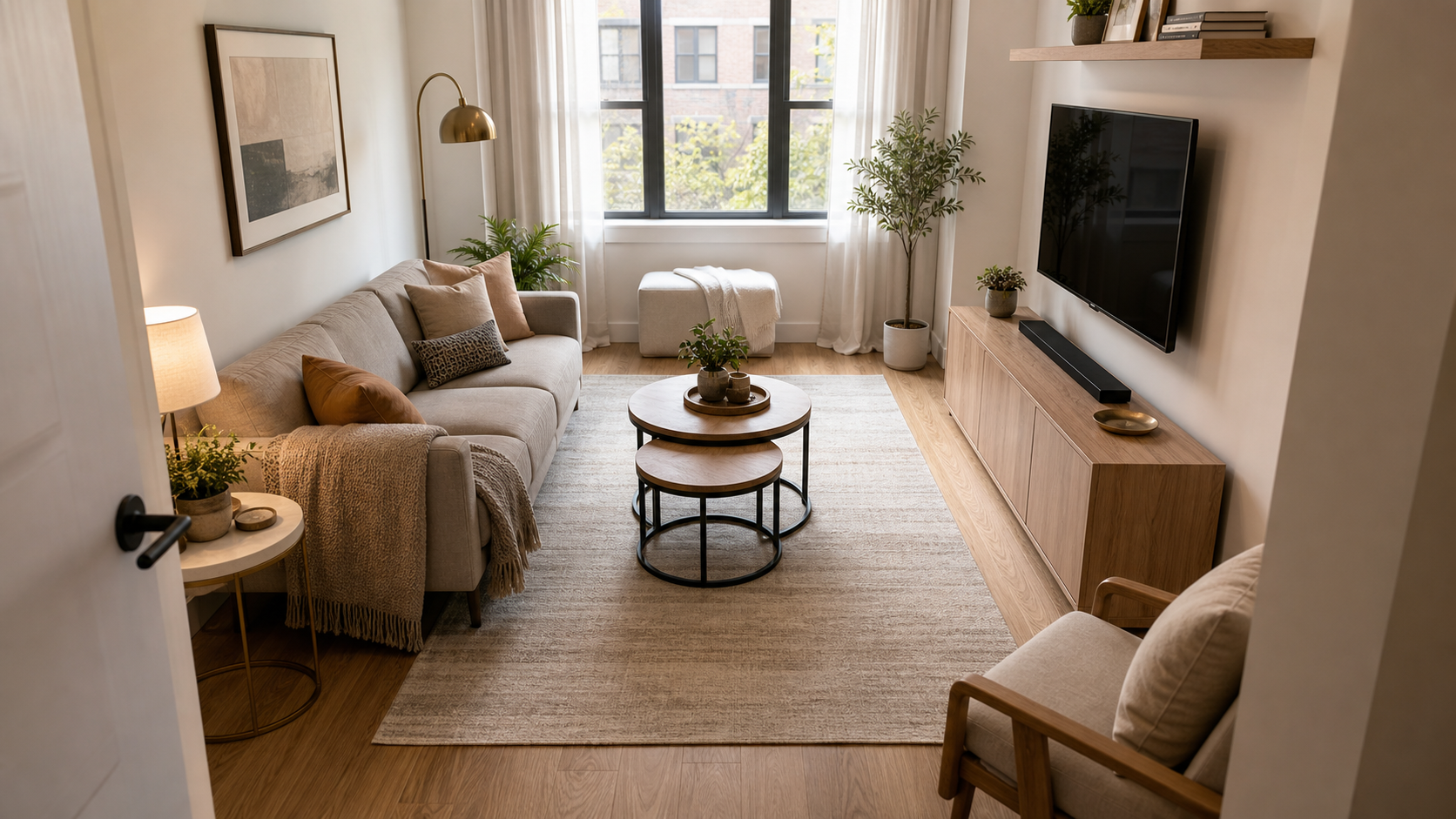
Small Spaces
Multifunctional furniture ideas for small homes
Choose multifunctional furniture for small homes from storage ottomans and sleeper sofas to nesting tables and foldable desks
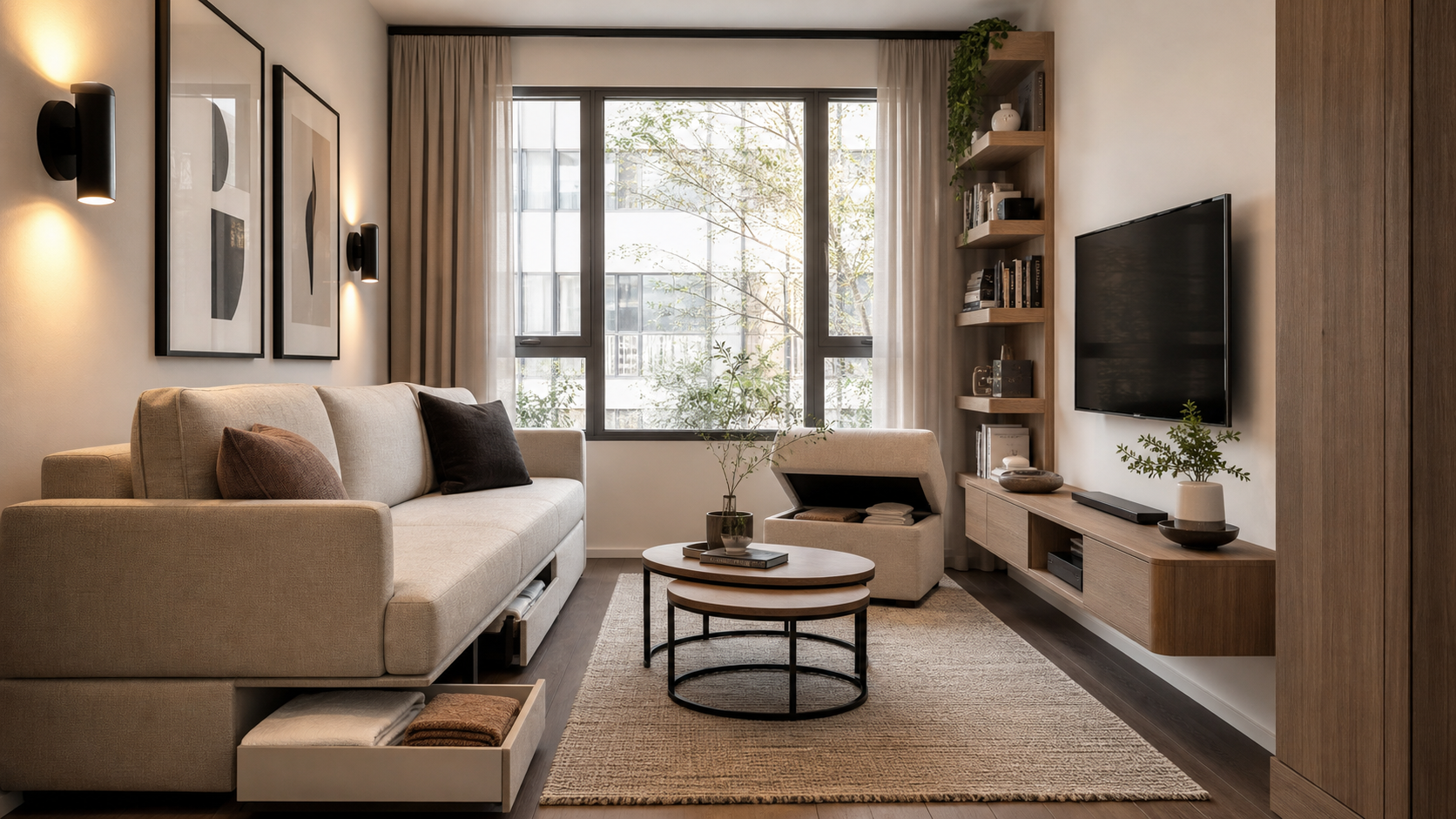
Small Spaces
Small apartment storage ideas for every room
Use small apartment storage ideas for living rooms bedrooms entries kitchens and bathrooms without making the home feel crowded