
Room Decor Ideas
Small bedroom layout ideas that make the room feel bigger
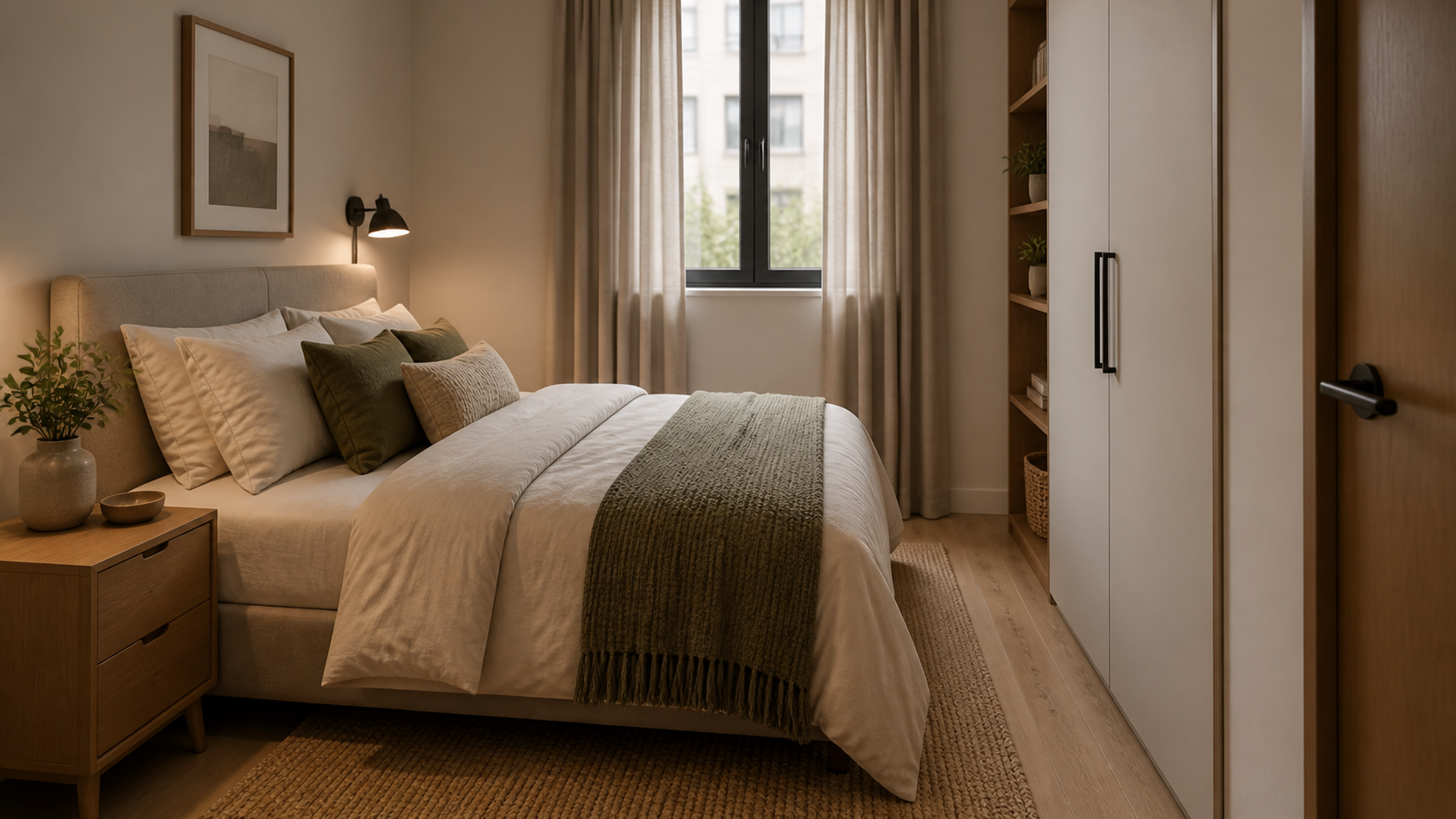
Small bedroom layout ideas should make the room feel bigger without pretending the room is something it is not. A small bedroom can still feel calm, useful, and stylish when the bed, storage, walkway, and light all have a clear place.
The best small bedroom layout starts with movement. The room should be easy to enter, easy to cross, and easy to reset at the end of the day. When the path is clear, the room feels larger before any decor is added. The same rule of clear paths first runs through all of our small space home decor ideas.
Start with the bed position
The bed is the largest piece in most bedrooms, so its position decides how the whole room feels. In a small bedroom, the bed should create the easiest walking path and the calmest first view from the doorway.
Placing the bed on the longest solid wall often works well because it gives the room a clear anchor. It can also leave one side of the room open for movement, storage, or a small desk. When the longest wall is not possible, choose the wall that gives the bed enough breathing room and does not block closet doors, windows, or drawers.
A centered bed can look balanced, but it is not always the best choice in a small room. Sometimes pushing the bed closer to one wall creates more usable floor space. This can work especially well in a guest room, a single bedroom, or a room where one side of the bed is used less often.
Do not judge the layout only from the bed. Stand at the doorway and look in. The room should feel open enough to enter without meeting furniture immediately. The first view should make the room feel calm rather than tight.
Protect the main walkway
A small bedroom feels bigger when the main walkway stays clear. The path from the doorway to the bed, from the bed to the closet, and from the bed to the window should be simple. If people need to turn sideways or step around furniture every day, the room will always feel smaller.
The walkway does not need to be dramatic. It only needs to feel natural. Keep the floor open near the door and avoid placing a chair, hamper, bench, or extra table where movement already feels tight.
Look at the places where drawers open. A dresser may fit on paper, but still fail if the drawers cannot open fully. A wardrobe may look good, but feel difficult if the door swing blocks the bed. A nightstand may be useful, but too wide if it steals the only clear path.
Use slimmer pieces where the room needs movement. A narrow nightstand can still hold a lamp and a book. A wall shelf can replace a bulky table. A small dresser can work better than a wide one if it protects the path.
Use vertical space for storage
Small bedroom storage should use height before it uses floor space. Tall wardrobes, wall shelves, hooks, and slim vertical dressers can hold more without making the room feel crowded. The floor is precious in a compact room, so every storage piece should earn its place.
Closed storage usually makes a small bedroom feel calmer than open storage because it hides the visual noise of daily life. Clothes, chargers, skin care, books, extra bedding, and small objects can make the room feel busy when they are always visible.
Under bed storage can help when it is easy to reach and not overfilled. Use it for bedding, seasonal clothing, or items that do not need daily access. Baskets and drawers work better when they slide smoothly and do not make the bed area feel messy.
The best storage is close to the habit it supports. Keep night items beside the bed. Keep clothing storage near the dressing area. Keep laundry in a place that does not block the path. Keep extra blankets where they can be reached without pulling the room apart.
Choose furniture with lighter profiles
Furniture shape matters in a small bedroom. A heavy bed frame, deep dresser, or oversized chair can make the room feel smaller even when the piece technically fits. Lighter profiles help more floor and wall space remain visible.
Choose a bed frame with a simple shape if the room is tight. A low frame can make the wall feel taller. A frame with legs can make the floor feel more open. A headboard with slim depth can give the bed presence without pushing too far into the room.
Nightstands should match the available space. A floating nightstand can keep the floor clear. A small table can work when storage is not needed. A narrow drawer nightstand can hold essentials without crowding the bed.
If you need a desk, choose one with a slim depth and place it where it does not interrupt the walking path. A wall mounted desk can work in a very small room. A stool can tuck under the desk and save space better than a full chair.
Make the window work harder
Natural light can make a small bedroom feel larger, so the window area should stay as open as possible. Avoid blocking the window with tall furniture when another wall can hold storage. Use curtains that hang high and wide so the window feels taller and more generous.
Light fabric can soften the room without making the wall feel heavy. If privacy is needed, use layers that still let daylight pass through during the day. A small room often feels better when the window is treated as part of the design rather than covered as an afterthought.
Mirrors can help when they reflect light or a calm part of the room. A mirror placed across from a messy corner will only double the clutter. A mirror near the window or beside a clean wall can make the space feel brighter.
Keep the floor near the window simple. A plant, small chair, or slim table can work if there is room, but the window path should not feel crowded.
Keep the bed wall calm
The bed wall can anchor the room without becoming crowded. Use one headboard or one simple focal point. Keep nightstands balanced when the room allows two.
Avoid adding shelves that make the bed feel boxed in. A calm wall helps a small bedroom feel more restful.
The bed wall is the main visual moment in a small bedroom. It should feel finished but not busy. A simple headboard, soft art, warm lamps, and calm bedding can be enough. Strong wallpaper, heavy shelving, and too many small frames can make the wall feel crowded if the room is already tight.
Use symmetry when it helps the room feel steady. Two matching lamps or two similar nightstands can make the bed area feel balanced. When there is not enough room for symmetry, use visual balance instead. A wall light on one side can be balanced by art or a small shelf on the other.
Keep the bedding simple because the bed takes up a large part of the room. A layered bed can feel cozy, but too many pillows and strong patterns can make the room feel full before anything else is added.
One quiet color story across the bed wall can make the room feel wider. Warm white, oatmeal, muted olive, soft grey, pale wood, and gentle clay tones can work well when they repeat naturally across bedding, curtains, and small accents.
Leave one area visually open
Every small room benefits from one open area. This may be the floor near the window or the wall opposite the bed. Do not fill the room simply because there is a gap.
Open space supports movement and makes the furniture that remains feel intentional.
A small bedroom needs at least one place where the eye can rest. This might be a clear floor path, a simple wall, a clean nightstand, or an open corner. If every area has furniture, decor, baskets, shelves, and objects, the room will feel smaller.
Do not rush to fill empty space. Empty space can be useful in a small bedroom because it gives the room breathing room. It can also make the pieces you choose look more intentional.
If a corner feels unfinished, add one useful element rather than many small ones. A tall lamp, a plant, a narrow hamper, or a wall hook can solve the corner without making it heavy.
When the room feels tight, remove one piece before adding another. The best small bedroom layout often comes from editing down until the path and the bed feel right.
Reset the room every day
A small bedroom becomes difficult to use when clothes and bags collect on the floor. Give laundry a clear place. Keep daily items close to the door or inside the storage they support.
The best layout is one that stays clear after an ordinary morning. Test the room for a week and move only the pieces that repeatedly cause a problem.
A small bedroom can become messy quickly because there is less space to absorb daily life. The layout should make resetting easy. Put storage close to where items land. Keep the nightstand simple. Keep laundry contained. Keep extra blankets in one clear place.
Use trays, baskets, drawers, and hooks so the room has a simple rhythm. The goal is not to hide life. The goal is to stop small items from spreading across every surface.
At the end of the layout, check the room from the doorway, from the bed, and from the closet. Each view should feel calm and usable. If one view feels crowded, adjust the furniture before buying more decor.
A good small bedroom layout makes the room feel bigger because it removes friction. It gives the bed a clear place, the walkway a clear path, and storage a clear job. Once those pieces work, the whole bedroom becomes easier to live in.
Related guides
Room Decor Ideas
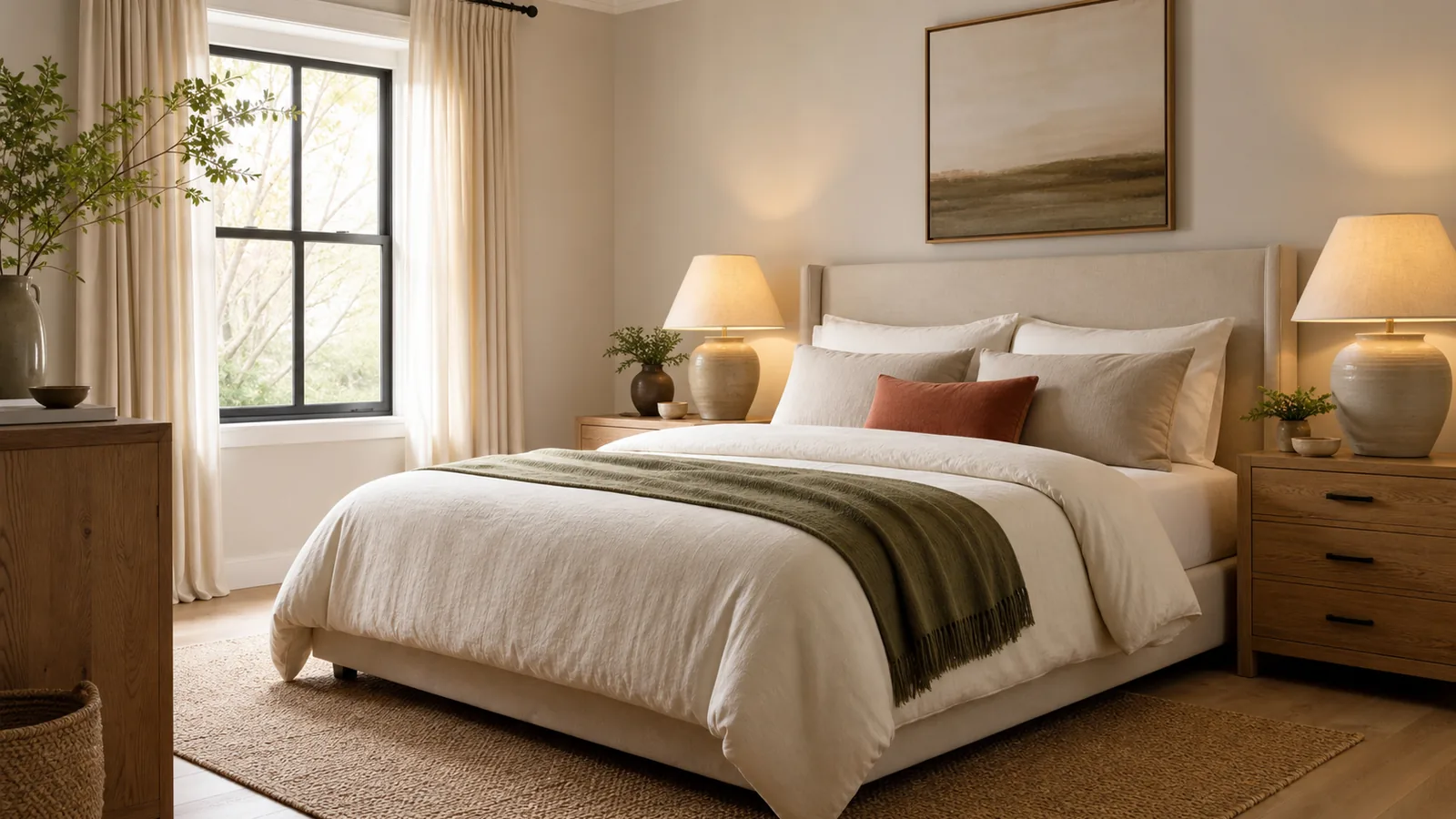
Bedroom color ideas: calm palettes and how to test them
Bedroom color ideas for a calm room: one main color, warm neutrals and soft greens or blues, real paint examples and a simple way to test samples.
Room Decor Ideas
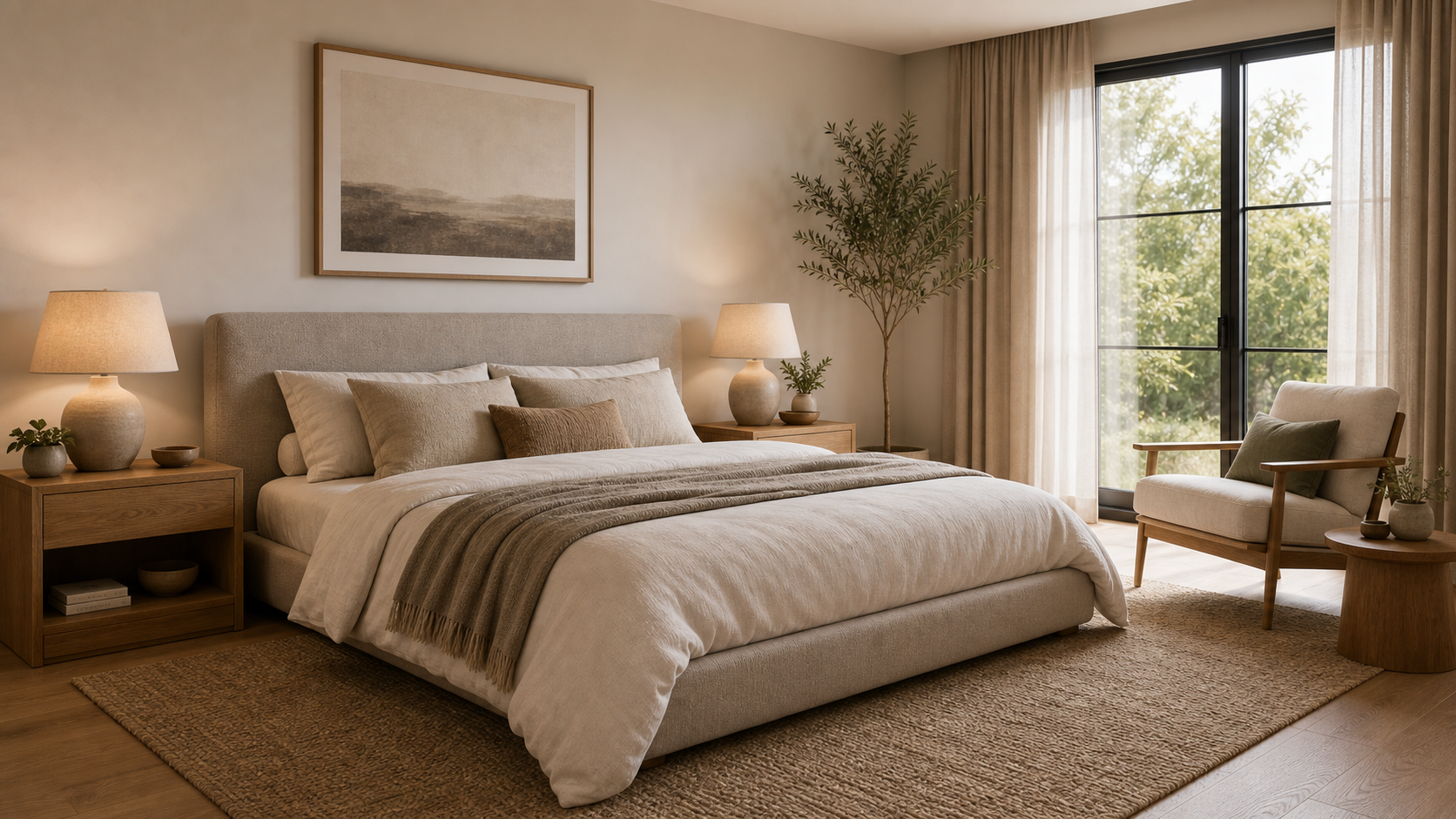
Bedroom ideas: a step-by-step plan for a calm, working bedroom
Bedroom ideas planned in order: where the bed goes, clearances by bed size, lighting, color, storage, rug size and a room set up for better sleep.
Room Decor Ideas
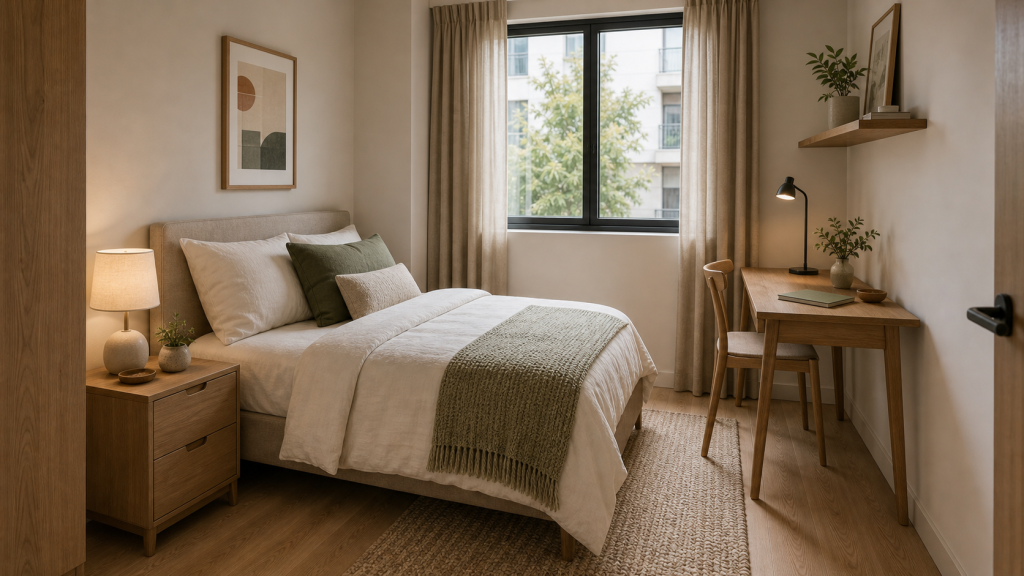
Bedroom furniture arrangement ideas: bed placement and clearances
Bedroom furniture arrangement ideas: where to put the bed, clearances by bed size, nightstand spacing, closet and dresser space, and door swing.