
Room Decor Ideas
Living Room Lighting Layout Ideas for a Warm Functional Space
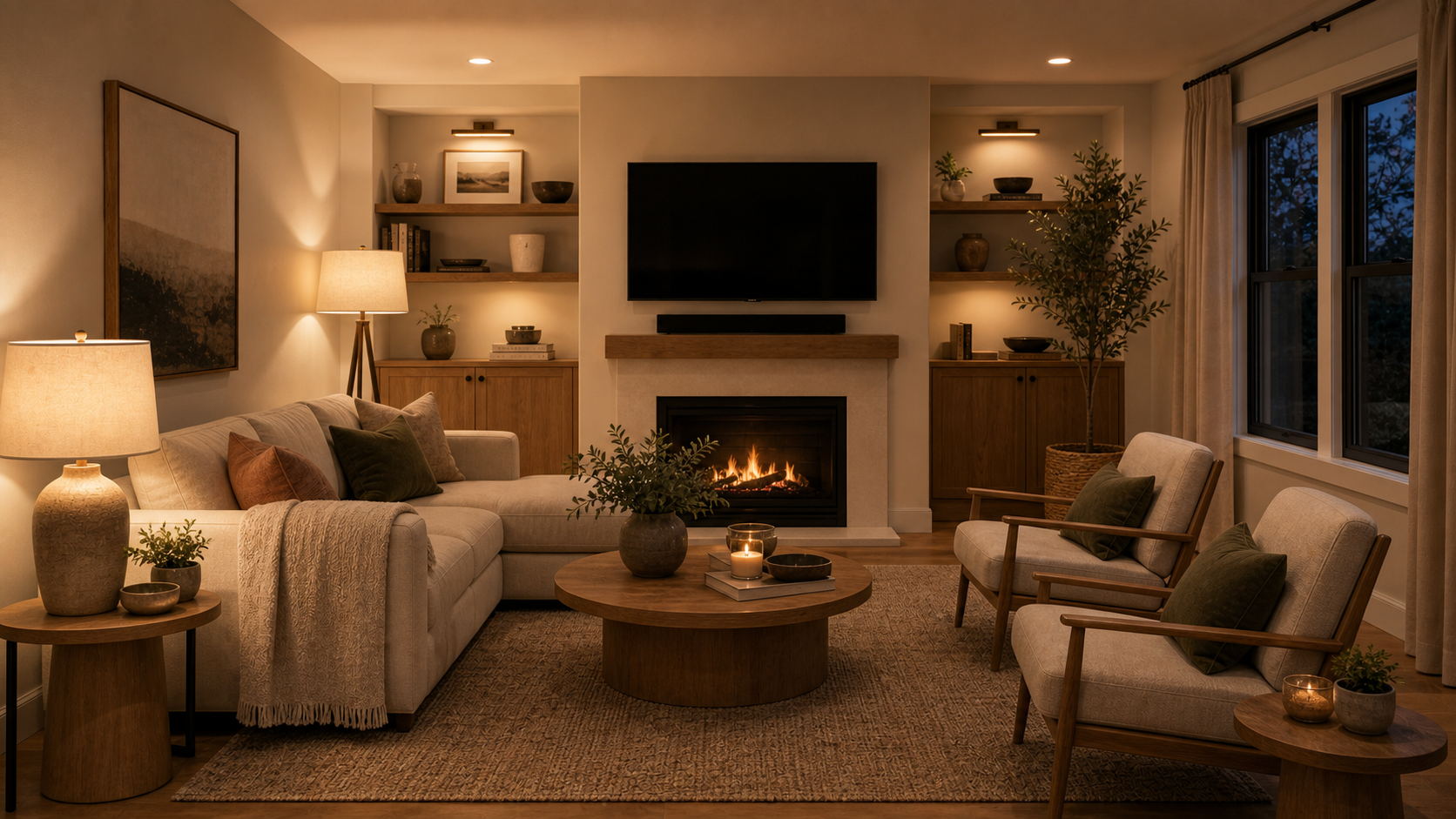
Let lighting follow the way you live
The best living room lighting layout ideas begin with use rather than with the fixture. A room needs enough light for movement and conversation. It also needs softer light for reading, relaxing, and settling down at the end of the day.
Start by noticing what happens in each part of the room after sunset. The sofa may need a gentle lamp. A chair near the window may become a reading corner. Shelves or artwork may need a small wash of light so they still have presence when daylight fades.
Good lighting does not make every corner equally bright. It gives the room a comfortable rhythm. Some areas support an activity while other areas remain quiet.
Use the ceiling light as a starting layer
Ceiling lights provide general brightness, but they should not have to create the entire atmosphere. A central fixture can help people move through the room and can provide useful light when cleaning. It may feel harsh when used alone in the evening.
If the room has recessed lights, place them with the furniture in mind. A row of lights that sits directly over the sofa can create glare or strong shadows. A dimmer gives more control and makes the same fixture useful at different times of day.
A pendant can add a stronger sense of place in a room with a high ceiling. Keep its scale suited to the seating area and check that it does not interrupt the view across the room. In a small apartment, a flush mount fixture may leave more visual space while lamps provide the warmth.

Build a soft layer around the seating
The seating area is where most evening life happens. It needs light that is close enough to use but gentle enough for conversation. A floor lamp beside the sofa can fill a dim corner without taking up the surface of a table.
A table lamp works well on a side table or console. Choose a shade that keeps the bulb out of your direct view when you are sitting down. The height matters too. Light should reach the book or drink beside you without shining across the room.
Use more than one small source when the room is wide. A lamp near the sofa and another on a console can create balance. They do not need to match. Repeat a material or a warm tone so they feel connected without looking like a set.
Keep the bulb warm and comfortable
Warm bulbs suit living rooms because they soften wood, upholstery, and neutral walls after dark. The exact color depends on the room and the fixture, but a warm white usually feels more relaxed than a cool daylight bulb.
The shade and surface around the bulb change the result. Linen and fabric shades soften the glow. Opal glass spreads light gently. Dark metal can create a more directed pool of light. Think about where the light lands rather than choosing a bulb by color alone.
Give reading corners their own useful light
A reading corner needs light at the page and enough surrounding light to keep the contrast comfortable. A floor lamp with an adjustable head can sit beside the chair. A table lamp can work when there is a small table close to the arm.
Place the source slightly behind or beside the reading shoulder. This reduces shadows across the page. Check the position from the actual chair because a lamp that looks well placed from the doorway may feel awkward when you sit down.
Keep a small surface nearby for a book or a cup. Lighting and furniture work together here. A beautiful lamp is less useful when it has nowhere practical to stand.

Lighting works best when it follows the layout instead of trying to correct a seating arrangement that does not feel natural.
Add accent light where the eye rests
Accent lighting gives depth to the room. It can draw attention to artwork, shelves, a plant, or a textured wall. The light should support the feature rather than make it look like a display case.
A small picture light can give art a soft center. A concealed strip beneath a shelf can separate objects from a dark wall. A directional lamp can highlight a plant or a corner without filling the whole room.
Use fewer accent points than you think you need. One or two calm pools of light often feel more composed than every shelf glowing at once. Let some surfaces remain in shadow so the brighter areas have meaning.

Keep light away from the television screen
Television glare can make a comfortable room frustrating at night. Place lamps to the side or behind the seating when possible. Avoid a bright bulb directly opposite the screen.
Window treatments help too. Sheer curtains can soften reflections while still letting the room feel open. At night, a dimmable lamp behind the sofa may give the wall enough light without creating a bright patch in the screen.
Check the room from the main viewing seat. Turn each light on one at a time and notice what is reflected. This small test is more useful than judging the arrangement from the entryway.
Use light to make the corners useful
Dark corners can make a living room feel smaller. A lamp can give one of those corners a reason to exist. Place it near a chair, a plant, a console, or a small table so the light supports something rather than floating without purpose.
In a narrow room, keep the lamp close to the wall or behind the seating. Choose a base that does not narrow the walking route. A portable lamp can be useful in a rental because it can move as the room changes.
The goal is not to erase every shadow. It is to avoid a room where the only bright place is the center. A little light at the edge helps the room feel deeper.
Layer lighting in an open-plan room
Open rooms need separate light zones. The dining table can have its own pendant. The kitchen needs practical task light. The living room can use lamps that create a lower and softer layer.
Keep the controls independent when possible. You may want the kitchen bright while the living room is quiet. You may want a small lamp on when the rest of the home is dark. This flexibility makes an open plan feel more like several useful rooms without closing the sightlines.
Repeat a warm material across the zones to connect them. A wood tone, a fabric shade, or a muted metal finish can link the fixtures without making them identical.
Plan lighting for a small living room
Small rooms need light that earns its space. A wall light can free a side table. A slim floor lamp can brighten a corner without making the seating feel crowded. A ceiling fixture with a dimmer can handle general light while one portable lamp carries the evening mood.
Keep cords along the edge of the room and away from the main route. Check that a lamp base does not compete with the coffee table or chair legs. The best small room lighting is easy to reach and easy to move when the layout changes.
Use reflective surfaces with care. A pale wall can spread soft light, but a glossy table or framed glass can create glare. Texture often gives a more comfortable result than shine.
Common lighting mistakes to avoid
Relying on one central fixture
One ceiling light may be practical for cleaning, but it rarely gives a living room a comfortable evening feeling. Add a lower source near the seats and use the central light only when you need broad brightness.
Putting every lamp at the same height
Different heights create a more natural rhythm. Combine a floor lamp with a low table lamp or a shelf light so the room does not have one bright line across it.
Choosing brightness without considering glare
A bright bulb can still be uncomfortable when it sits in your eye line. Use a shade or move the source to the side. Test it while seated rather than standing.
Lighting objects instead of activities
Accent light is useful, but it should not replace light for reading, conversation, or movement. Make the practical layers work before adding decorative highlights.
Let the room change after dark
Before ordering lighting, verify fit and safe placement.
A good living room lighting layout has more than one setting. The ceiling light can help with cleaning. The lamps can support conversation. A reading light can stay on while the rest of the room becomes quieter.
Try the room at the time you usually use it. Move a lamp when the light feels too strong or too far away. Notice which corners disappear and which surfaces reflect more than you expected.
Warm useful lighting should feel almost effortless. When the sources sit near the activities they support, the room becomes easier to use and more comfortable to return to each evening.
Related guides
Room Decor Ideas
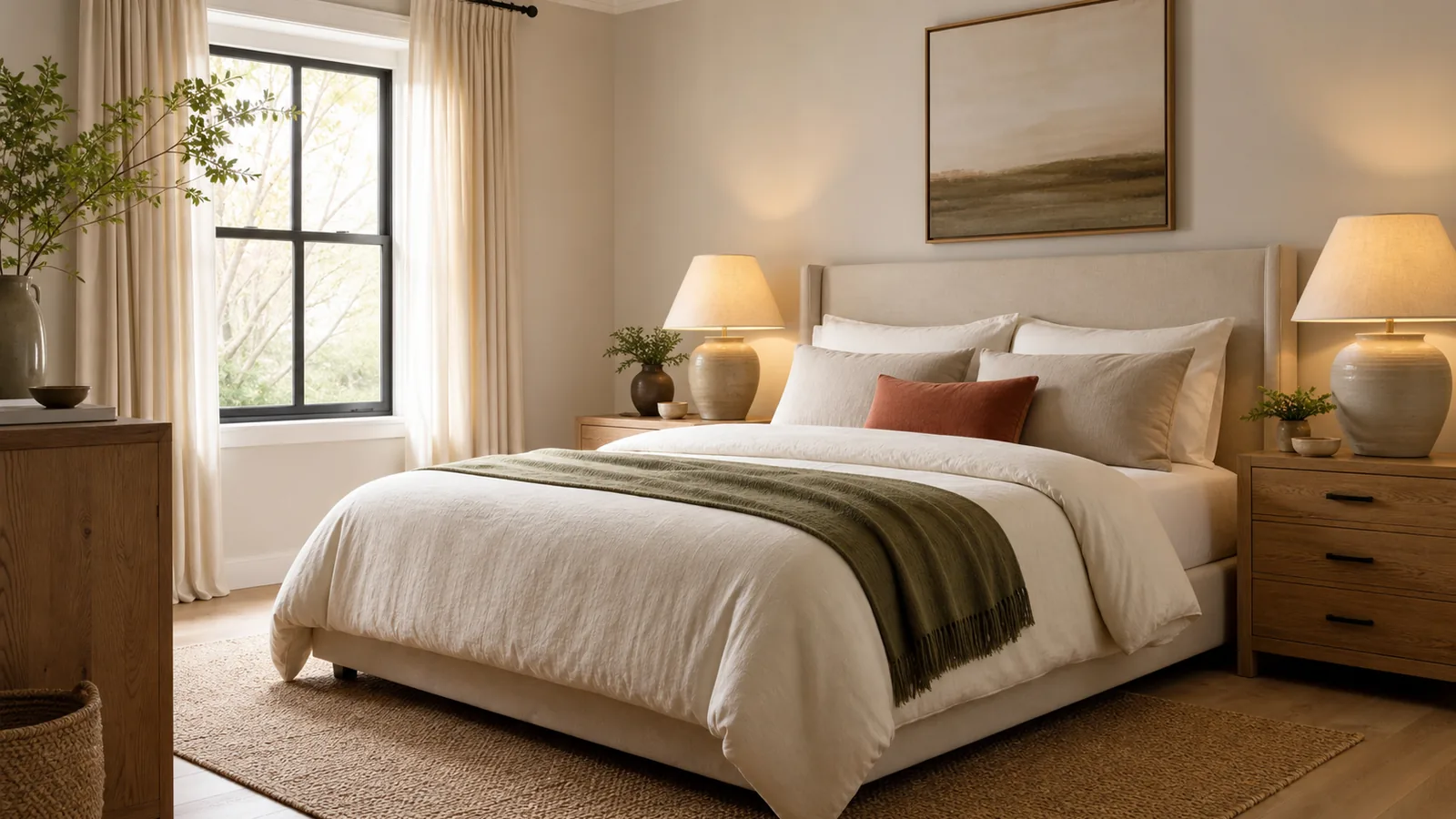
Bedroom color ideas: calm palettes and how to test them
Bedroom color ideas for a calm room: one main color, warm neutrals and soft greens or blues, real paint examples and a simple way to test samples.
Room Decor Ideas
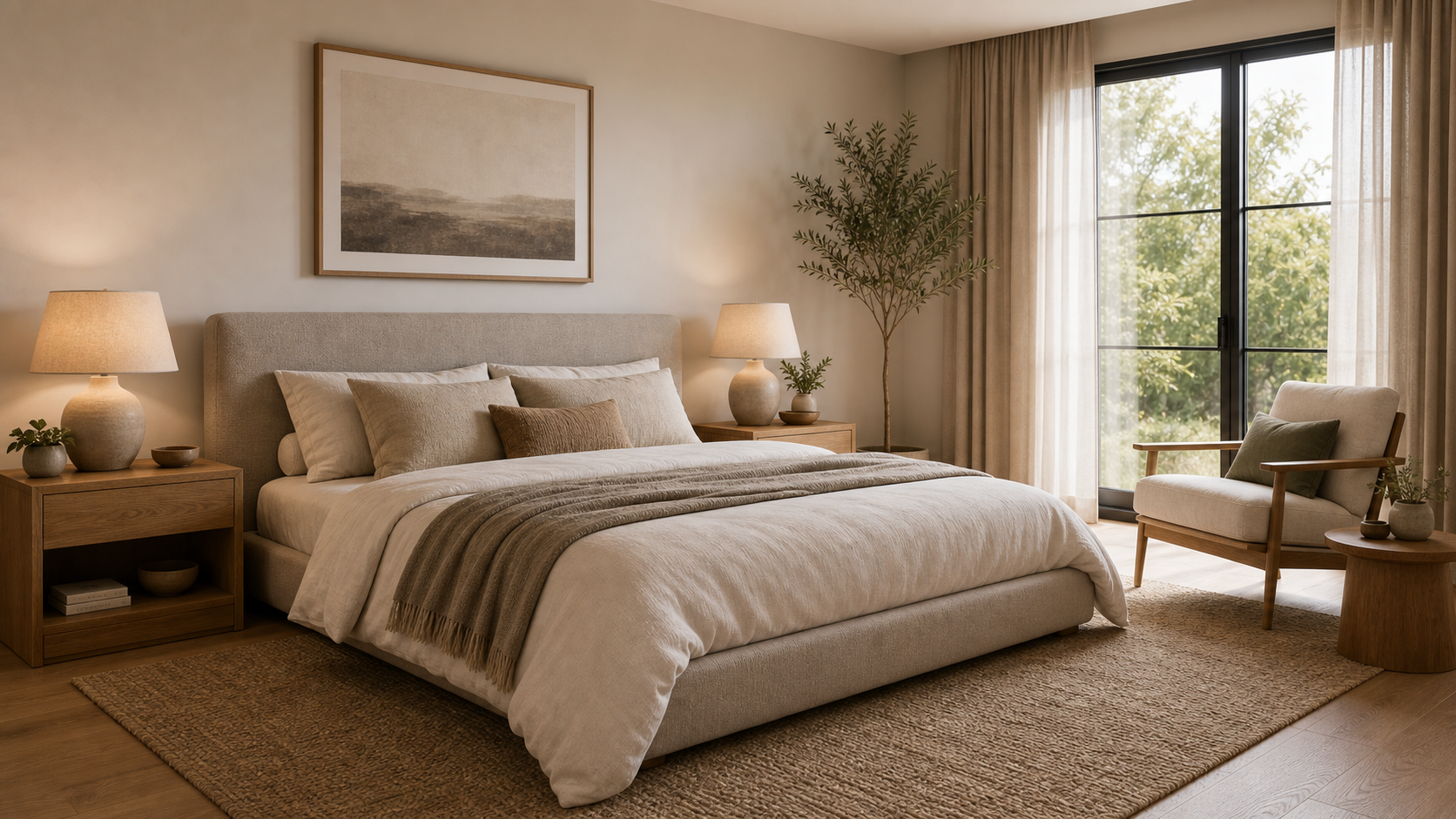
Bedroom ideas: a step-by-step plan for a calm, working bedroom
Bedroom ideas planned in order: where the bed goes, clearances by bed size, lighting, color, storage, rug size and a room set up for better sleep.
Room Decor Ideas
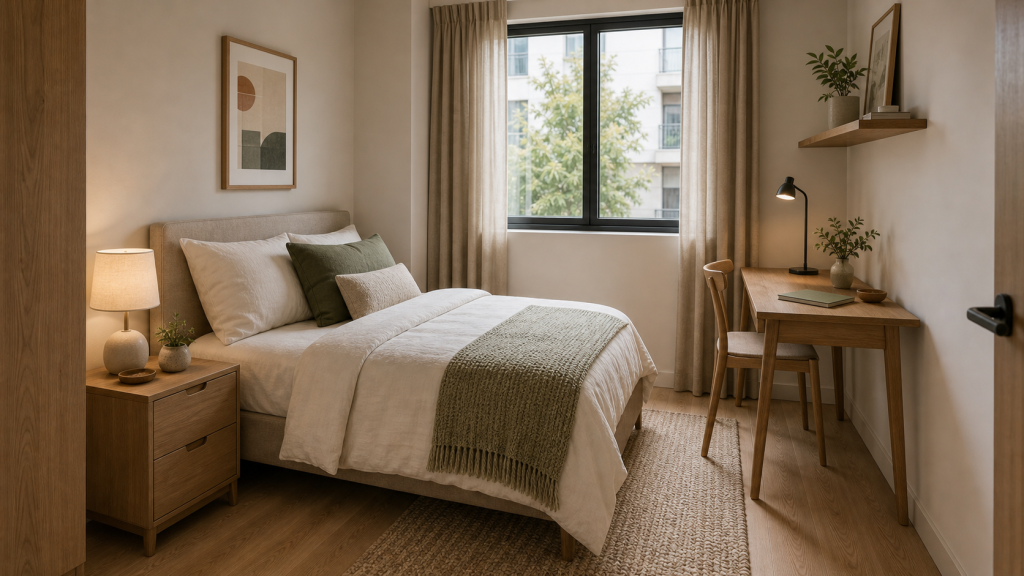
Bedroom furniture arrangement ideas: bed placement and clearances
Bedroom furniture arrangement ideas: where to put the bed, clearances by bed size, nightstand spacing, closet and dresser space, and door swing.