
Room Decor Ideas
Living Room Furniture Arrangement Ideas That Make Any Space Work
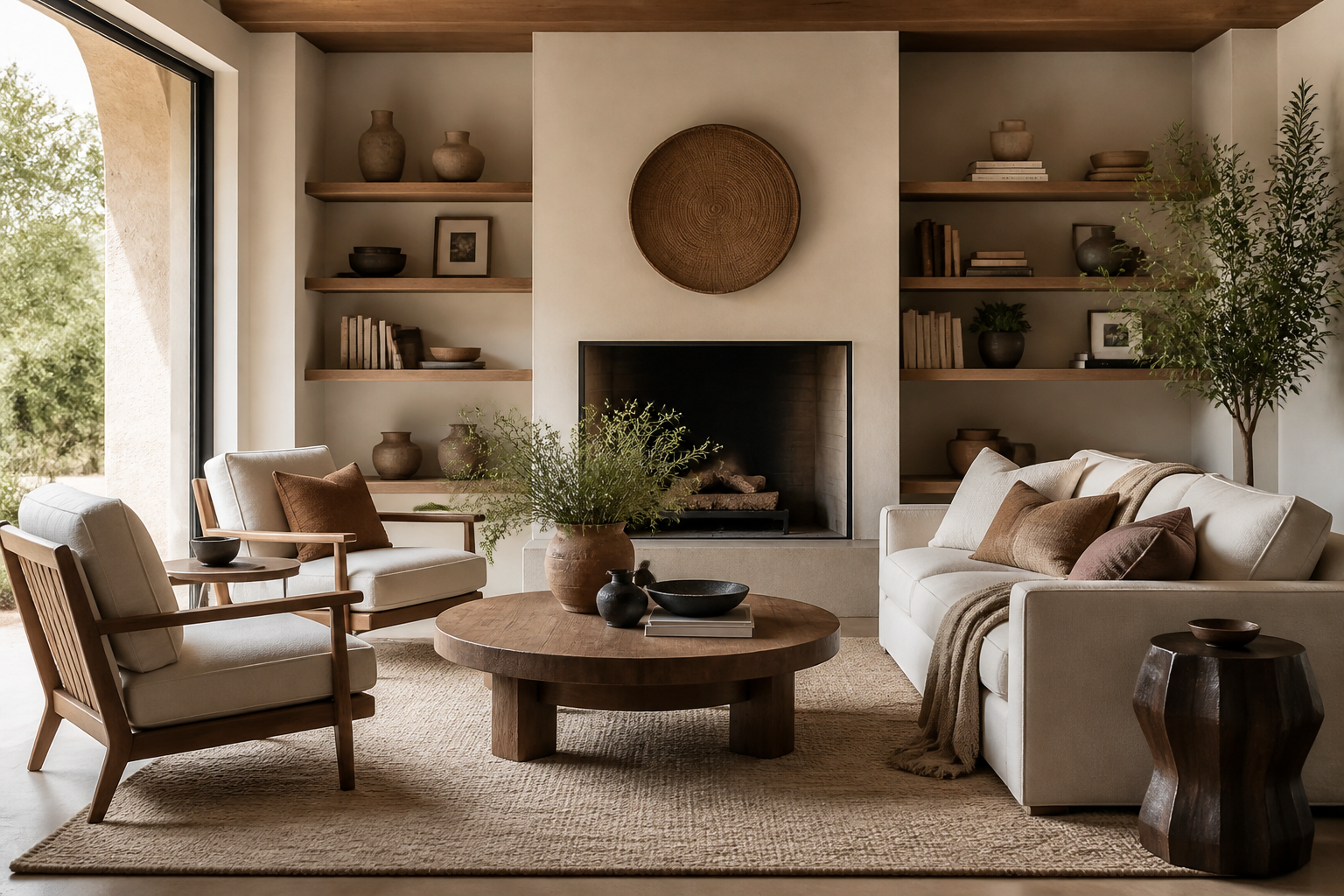
Start with the way the room is used
The best living room furniture arrangement ideas make everyday life feel easier. They leave a clear route through the room. They give people a comfortable place to sit. They also let the furniture support conversation instead of pointing every seat toward the television.
Before moving anything, notice how the room is used during a normal week. Maybe the sofa holds quiet reading and evening television. Maybe children move through the room on the way to the kitchen. Maybe the space needs to welcome guests while keeping an open route to the door.
The arrangement should answer those needs first. Style becomes much easier when the main pieces already sit in the right relationship to one another.
Find the natural focal point
Look across the room from the main entrance and from the place where people usually sit. Notice what draws your eye. It might be a fireplace, a window, a built-in shelf, or a television wall. A view outside can also provide a strong focal point.
Place the sofa so it supports that feature without making it the only thing the room can do. A sofa can face a fireplace while a chair turns slightly toward the rest of the room. This small shift helps the space feel social instead of arranged only for viewing.
If the architecture has no obvious focal point, create a calm one. A large piece of art, a simple console, or the seating group itself can give the eye somewhere to rest. Avoid giving every wall the same visual weight.

Place the sofa before the smaller pieces
The sofa sets the direction because it is usually the largest piece. Start by placing it where it supports the main activity and leaves enough room for people to enter and leave.
Pushing the sofa against a wall can save space in a narrow room. It is not always the best choice in a larger room. Floating it can give the seating group a stronger center and create a natural boundary between the living area and the dining or kitchen zone.
Check the space behind the sofa before adding a console. The route should remain wide enough for normal movement. A narrow table is useful only when it does not turn the back of the sofa into a bottleneck.
Angle chairs toward the conversation
Chairs work best when they turn toward the sofa or toward the center of the room. They do not need to sit in a perfect square. A slight angle can make the arrangement feel more relaxed and can leave a better route around the coffee table.
Choose the number of chairs based on the room rather than on a matching set. One comfortable chair may be better than two that make the space hard to cross. In a larger room, two chairs can balance a sofa while keeping the conversation area open.

Keep enough space for movement
A good arrangement feels clear before it looks finished. Walk from the entry to the next room. Walk to the window and to the storage. Sit down, then stand up. If you have to twist around a table or pull a chair out of the route, the furniture needs more space.
The exact distance depends on the room and the people using it. The useful test is whether the path feels natural. Furniture should not create a narrow channel between the sofa and the coffee table or force people behind a chair every time they enter.
Use the shortest practical route through the room. A clear path along the edge can work well. A path behind a floating sofa can work too when it leads somewhere useful. Do not preserve an empty center if that makes the main seating feel scattered.

Choose a coffee table that fits the group
The coffee table should bring the seating together without closing the path. A round table can soften a room with many corners and make it easier to move around the group. A rectangular table can suit a longer sofa and a more linear arrangement.
Keep the table close enough to use from the main seats. Leave enough space for knees and for a person to pass around it. If the room is tight, a small table that moves can be more useful than a large table that fills the whole center.
Nesting tables can provide more surface when guests arrive. An ottoman with a tray can work as a table and a footrest. The right choice is the one that supports the way the room is used without making every movement feel planned.
Furniture arrangement is one part of a larger foundation, but it is often the decision that determines whether the room feels easy to live in.
Use the rug to anchor the furniture
A rug can show where the living area begins and ends. The front legs of the sofa and chairs should sit on it when the room allows. If the rug is too small, the seating can look separated even when the pieces are close together.
In a narrow room, choose a rug shape that supports the direction of the furniture. Keep the edge away from door swings and the busiest walkway. A rug should soften the room without becoming another obstacle.
Look at the rug from the main entrance. It should make the seating feel connected. It does not need to cover every inch of floor to do that.
Work with windows and natural light
Windows bring light and depth to a room, so avoid blocking them with tall furniture when possible. A sofa can sit in front of a window when the back is low and the view still feels open. A chair beside the window can create a useful reading place.
Leave enough room for curtains to move and for the window to open. A side table or plant can soften the edge without covering the glass. Natural light should remain part of the arrangement rather than becoming an afterthought.
When the best view is to one side, angle the seating toward it. You do not need every chair to face the window. One clear sightline can be enough to make the room feel connected to the outdoors.
Arrange a room around a television wall
Television walls often become the default center of a living room. They can still support a warmer arrangement when the seating does not all point directly at the screen.
Place the sofa where viewing is comfortable, then angle one chair toward the room. Keep the screen at a height that does not make people look up for long periods. A low media console can add storage without creating a heavy wall.
Use a lamp to one side rather than directly opposite the screen. Keep decorative objects simple around the television so the wall does not compete with the conversation area.
Make small rooms work harder
Small rooms need a clear priority. Choose the piece that supports the main activity and let everything else follow it. A sofa with a simple profile can leave more room for movement. One chair may be enough for reading or a guest.
Use furniture with visible legs when it suits the room. The extra view of the floor can make the arrangement feel lighter. Storage ottomans and nesting tables can support more than one use without adding another large footprint.
Keep the center as open as the room allows. Moveable pieces are valuable when the room needs to change for cleaning, guests, or a different activity.
Make larger rooms feel settled
Large rooms can feel unfinished when the furniture is pushed too far apart. Bring the main seating together so people can talk without raising their voices. A rug can give the group a shared base, and a console can define the back of a floating sofa.
If the room has more than one purpose, create a second zone with a clear reason. A pair of chairs can form a reading or conversation corner. A slim desk can sit near a window when it does not interrupt the main route.
Do not fill every wall. A little open space lets the furniture read as a group and gives the room a calm edge.
Common furniture arrangement mistakes
Pushing every piece to the perimeter
This can leave the room without a center. Pull the sofa and chairs together when the walkway allows it. The room will often feel more welcoming even if some floor remains unused.
Choosing a rug that is too small
A small rug can make every seat look like a separate island. Choose a size that connects the main pieces and keeps the path clear.
Ignoring the chair path
A chair needs space to pull out and space to walk around. Check the route behind it before deciding that it fits.
Letting the television control everything
Comfortable viewing matters, but a living room can also support conversation. Angle one seat toward the room so the layout has more than one direction.
Buying before measuring
Measure the full footprint of each piece, including arms and doors. Mark the shape on the floor with tape when you are unsure. This simple test is especially useful in apartments and narrow rooms.
Let the arrangement settle
Before ordering large pieces, verify fit and safe placement.
Live with the main furniture before styling every surface. Notice which seat people choose and which route they use. Pay attention to the room after dark and when several people are moving through it.
If a table is always moved or a chair is always in the way, the layout is giving you useful information. Make the small adjustment. The right arrangement is rarely the one that looks most exact from the doorway. It is the one that supports the life of the room without asking people to work around it.
Related guides
Room Decor Ideas
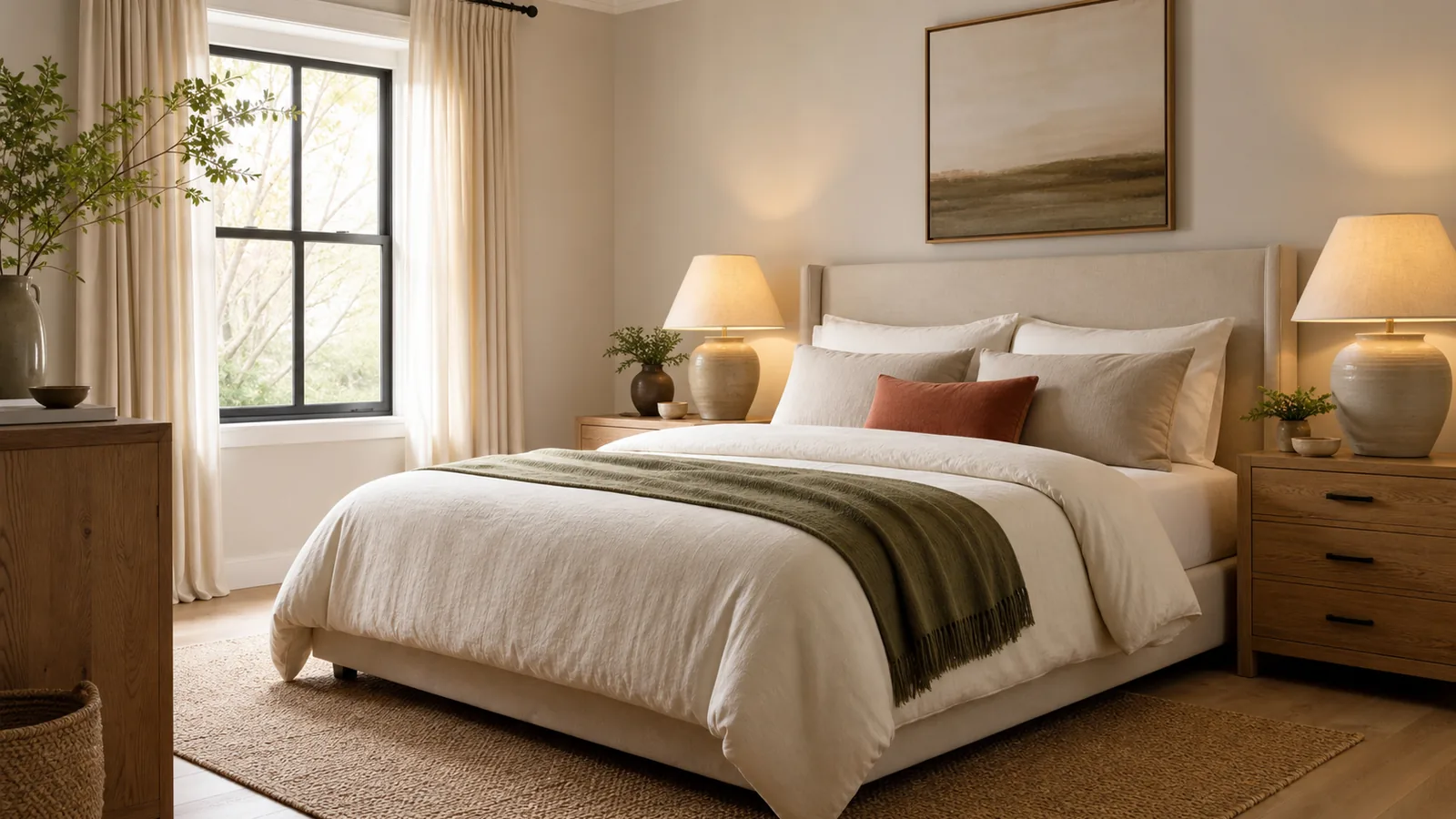
Bedroom color ideas: calm palettes and how to test them
Bedroom color ideas for a calm room: one main color, warm neutrals and soft greens or blues, real paint examples and a simple way to test samples.
Room Decor Ideas
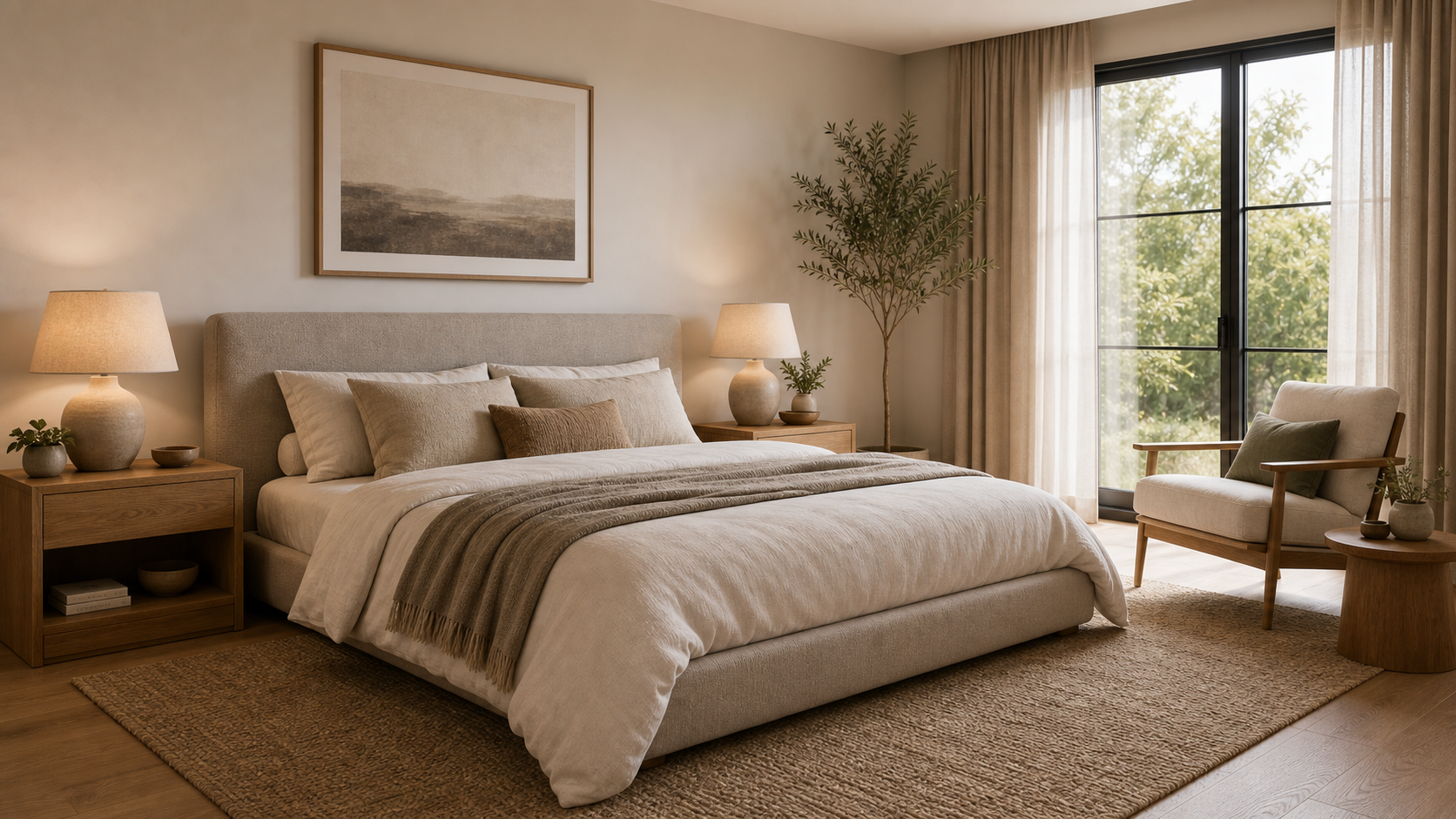
Bedroom ideas: a step-by-step plan for a calm, working bedroom
Bedroom ideas planned in order: where the bed goes, clearances by bed size, lighting, color, storage, rug size and a room set up for better sleep.
Room Decor Ideas
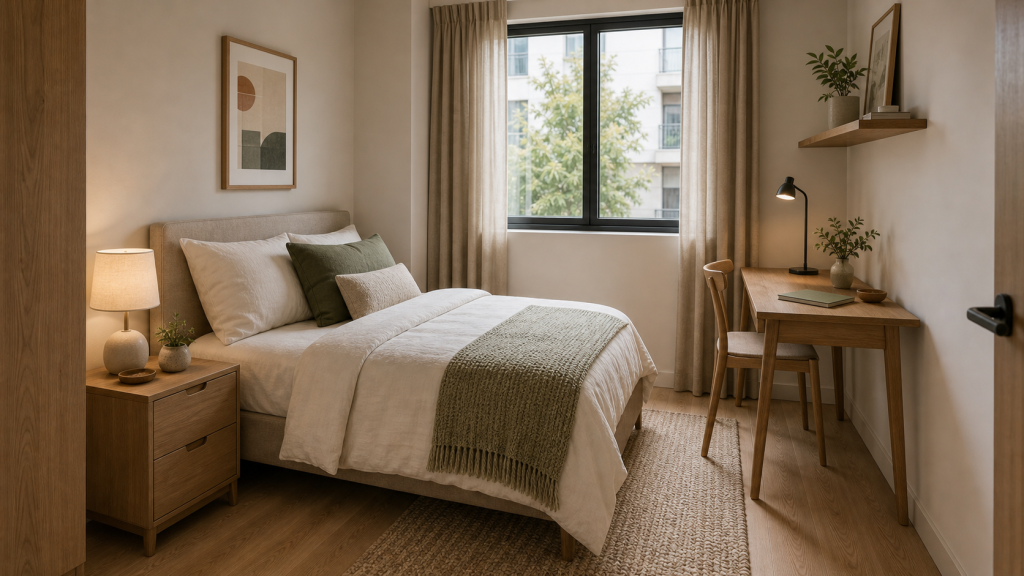
Bedroom furniture arrangement ideas: bed placement and clearances
Bedroom furniture arrangement ideas: where to put the bed, clearances by bed size, nightstand spacing, closet and dresser space, and door swing.