
Styles
The ultimate home decor guide styles colors furniture and design ideas

This home decor guide brings style, color, furniture, lighting, texture, storage, and daily comfort into one practical planning process. Use it when you need to decide what a room needs first, how the major choices should relate, and which details can make the space feel personal without becoming crowded.
If you want to compare style directions before planning the room, begin with home decor styles for modern homes.
What home decor really means
Home decor is the process of shaping the look, feeling, and function of a room through choices like furniture, color, lighting, textiles, art, rugs, storage, plants, and decorative accents. Interior design can include architecture and technical planning, while home decor focuses more on how the finished space feels and works in everyday life.
Home decor works best when style, color, furniture, lighting, and daily comfort all support the same idea. A beautiful room is not only a room that photographs well. It is a room that helps you relax, move easily, host people, store what you need, and feel at home every time you walk in.
This home decor guide is the main starting point for the Styles category. It gives you a complete framework for choosing a decor direction, building a color palette, selecting furniture, layering texture, adding lighting, and avoiding the mistakes that make a room feel unfinished.
Use it as a practical roadmap. You do not need to copy one style perfectly. The goal is to understand the pieces of a good room so you can create a home that feels personal, calm, and easy to live with.
Good decor is not about filling every corner. It is about making intentional choices. A sofa should fit the way people sit. A rug should connect furniture instead of floating alone. A color palette should make the room feel coherent. Lighting should help the room change from morning brightness to evening comfort.
-
Beauty: the room has visual harmony and a clear mood.
-
Function: the layout supports real daily movement.
-
Comfort: materials, seating, and light make the room pleasant to use.
-
Personality: the home still feels like the people who live there.
Start with the feeling not the furniture
One of the biggest decorating mistakes is starting with random products. A chair looks nice, a lamp is on sale, a rug feels trendy, and suddenly the room has many good items that do not speak the same language. Before shopping, decide the feeling you want the space to create.
A calm home may need soft contrast, fewer patterns, warm lighting, and closed storage. A creative home may need stronger color, expressive art, open shelving, and vintage pieces. A refined home may need better materials, cleaner lines, and fewer visible items. The feeling becomes the filter for every choice.
Choose a home decor style as your foundation
A decor style gives the room a foundation. It does not need to become a strict rulebook, but it helps you decide what belongs and what does not. Most beautiful homes mix more than one style, but they still have a main direction.
Modern style
Modern decor uses clean lines, open space, simple furniture profiles, and a controlled palette. It works well for people who like rooms that feel fresh, organized, and easy to maintain. The risk is that it can become cold, so add texture through rugs, curtains, wood, ceramics, and soft upholstery.
Scandinavian style
Scandinavian interiors are bright, practical, and calm. They often use pale woods, soft whites, muted color, simple furniture, and natural light.
Rustic farmhouse style
Rustic farmhouse decor brings warmth through wood, woven materials, vintage shapes, and relaxed textiles. It works especially well when the goal is comfort and timeless character.
Natural boho style
Natural boho decor is relaxed, textured, and personal. It uses layered textiles, rattan, plants, soft earth tones, and handmade details.
Warm color led interiors
Some rooms are built around one strong color direction. Terracotta, clay, olive, ochre, and warm beige can make a room feel grounded and expressive.
If you want a wider comparison before choosing a direction, open the full guide to home decor styles for modern homes.
Build a color palette that can age well
Color is one of the fastest ways to change the emotional temperature of a room. A white room can feel bright or empty depending on texture. A dark room can feel elegant or heavy depending on lighting. A colorful room can feel joyful or chaotic depending on balance.
For most homes, the easiest formula is to choose one base color, one supporting color, one accent color, and one natural material tone. This gives enough structure without making the room feel flat.
-
Base color: the wall, large rug, or main upholstery color.
-
Supporting color: a second tone used in curtains, chairs, or large textiles.
-
Accent color: a smaller tone used in pillows, art, vases, or decor objects.
-
Material tone: wood, stone, metal, rattan, leather, or ceramic that repeats around the room.
Pick furniture for scale not just style
Furniture can be beautiful and still be wrong for the room. Scale is the part most people underestimate. A sofa that is too large blocks movement. A coffee table that is too small makes the seating area feel disconnected. A rug that is too short makes the whole layout look unfinished.
Before buying furniture, measure the room and mark the main walkway. Keep enough space for people to move naturally between doors, seating, windows, and storage. In a living room, the largest furniture piece usually defines the rest of the layout. In a bedroom, the bed does. In a dining area, the table and chair clearance matter most.
-
Choose fewer large pieces instead of many small pieces when you want a calmer room.
-
Repeat one material or finish at least three times so the room feels connected.
-
Leave breathing room around statement furniture so it looks intentional.
-
Prioritize storage when visual clutter is the main problem.
Layer texture so the room does not feel flat
Texture is what makes a neutral room feel rich instead of plain. A beige sofa, beige wall, and beige rug can look unfinished if every surface is smooth. Add linen, boucle, wool, jute, wood, ceramic, stone, leather, glass, or metal to create depth.
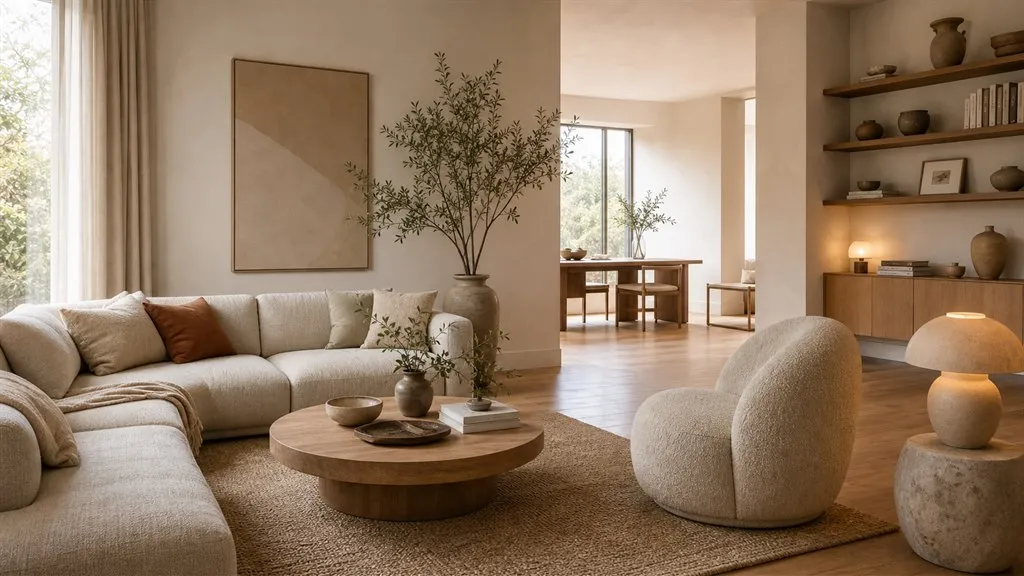
The easiest way to layer texture is to start soft, then add natural, then add structured. For example, combine a soft sofa, linen curtains, a wool rug, a wooden coffee table, ceramic vases, and one metal lamp. The room stays calm, but it has enough variation to feel designed.
Use lighting as a decorating tool
Lighting is not only practical. It changes the entire mood of a room. A single ceiling light often makes a space feel flat, especially at night. A better approach is to layer ambient, task, and accent lighting.
-
Ambient lighting: the general light that helps you see the room.
-
Task lighting: lamps for reading, cooking, working, or getting ready.
-
Accent lighting: softer light for shelves, art, corners, plants, or architectural details.
Warm bulbs, shaded lamps, dimmers, and indirect lighting can make even simple furniture feel more expensive. If the room already has good furniture but still feels unfinished, lighting is usually one of the first things to fix.
Decor accessories should support the room not crowd it
Accessories are the final layer, but they should not be treated as random decoration. Pillows, blankets, vases, bowls, trays, books, candles, mirrors, frames, and plants should repeat the room palette and help the eye move around the space.
A strong styling trick is to group accessories in different heights. For example, on a coffee table you can combine a low tray, a medium bowl, and a taller vase. On a shelf, mix vertical books, a round object, framed art, and one plant. The room feels styled without looking overfilled.
Room by room home decor priorities
Living room
The living room needs the clearest layout because it usually has the most functions: relaxing, hosting, watching TV, reading, and family time. Start with the main seating position, then build the rug, coffee table, lighting, and accent chairs around it.
Bedroom
A bedroom should feel restful before it feels impressive. Prioritize a calm palette, soft bedding, warm lamps, closed storage, and fewer visible objects. Texture matters more than strong decoration here.
Kitchen and dining area
Kitchen decor should support cleanliness and rhythm. Keep counters mostly open, repeat material tones, and use lighting or stools to bring style without blocking function. In dining spaces, scale and chair comfort matter more than decorative objects.
Entryway
The entryway sets the tone for the home. A mirror, a small console, a bowl for keys, a lamp, and one strong artwork can make even a small entrance feel intentional.
A practical decorating order that works
If you are starting from zero, do not decorate everything at once. Work in layers so the room becomes better with each decision.
-
Choose the mood and main style direction.
-
Measure the room and decide the layout.
-
Pick the base color palette.
-
Choose the largest furniture pieces.
-
Add the rug, curtains, and main lighting.
-
Layer pillows, art, plants, and smaller accessories.
-
Edit the room after living with it for a few days.
This order also helps you avoid wasting money. Small decor is easier to change later, but large furniture, rugs, and lighting should be chosen with more patience.
Common home decor mistakes to avoid
-
Buying too many small items: this creates clutter instead of style.
-
Ignoring scale: furniture that is too big or too small changes the whole room.
-
Using only overhead lighting: the room feels harsh and unfinished.
-
Choosing a rug that is too small: the furniture looks disconnected.
-
Copying trends without a base: trendy items work better when the room already has timeless foundations.
-
Forgetting storage: even beautiful rooms need a place for everyday items.
Smart shopping path for future upgrades
When you are ready to buy, start with pieces that improve both function and style. A better sofa, a good rug, quality lighting, or a flexible storage piece usually changes the room more than many small accessories.
Final thoughts
Home decor becomes easier when you stop thinking about isolated objects and start thinking about the whole room. Style gives the direction, color gives the mood, furniture gives the structure, lighting gives atmosphere, and accessories gives personality.
Start with one room, one clear feeling, and one practical improvement. Then build slowly. The best homes are not decorated in one day. They become better through thoughtful choices, better proportions, and details that support real life.
Related guides

Decor Accents
Calm room decor ideas: how to quiet a busy room with accents
Calm room decor ideas that quiet a busy room: fewer, heavier accents, matte texture, soft light, softer sound, and a clear edit list for every surface.
Styles
Home decor styles for modern homes
Compare the best home decor styles for modern homes and learn how to choose a style direction that feels practical timeless and personal

Room Decor Ideas
How to choose paint colors for your home: a whole-house plan
How to choose paint colors for your home in order: light, fixed finishes, one whole-house palette, 60-30-10, connecting rooms, sheen, and testing.