
Room Decor Ideas
How to choose paint colors for your home: a whole-house plan

Knowing how to choose paint colors for your home is less about taste than about order. Most color regrets come from deciding room by room, from a small chip, under store lighting. The living room ends up warm, the hall ends up cool, the kitchen ends up a third white, and the house never quite feels like one place.
This guide works the other way. It starts with the light and the finishes you will not change, builds one palette for the whole house, and only then picks colors room by room. It is written for ordinary houses, like the ranch homes, split-levels, and brick bungalows common across the Midwest, where the living room, kitchen, and hall can all be seen from one spot.
Plan the house first. Then paint the rooms.
How to choose paint colors for your home: start with the light
The same paint looks different in every room because the light is different. Before choosing any color, walk the house at three times of day and note what you see.
- North-facing rooms: steady, cooler light. Grays can look cold and whites can look flat; warmer colors balance them.
- South-facing rooms: strong, warm light for much of the day. Most colors look brighter; cool colors stay calm.
- East-facing rooms: warm in the morning, cooler and dimmer in the afternoon.
- West-facing rooms: dim in the morning, warm and strong in late afternoon.
- Rooms with little daylight: halls, basements, and interior rooms rely on lamps, so test colors under warm bulbs.
Write the direction and the brightest time of day on your floor plan. It will decide whether each room gets the warm or the cool version of your palette.
Use the fixed finishes as your starting point
Paint is the easiest surface to change, so it should work around the surfaces that are hard to change.
- Floors: oak, maple, tile, or carpet all carry an undertone, usually yellow, orange, pink, or gray.
- Cabinets and countertops: these often set the kitchen palette for years.
- Brick, stone, and fireplaces: strong colors that the walls must sit beside.
- The sofa and large furniture you are keeping.
Hold paint samples against each of these in their actual rooms. A white that looks clean on a white card can look dirty next to an orange-toned oak floor. Choose colors whose undertone agrees with the fixed finishes rather than fighting them.
Build one whole-house paint color palette
A whole-house paint color palette is a short list of colors that every room draws from. It makes the house feel connected, especially in open or visually linked spaces.
Build it in three parts:
- One main neutral for halls, connected living areas, and most walls. Warm whites, soft greiges, and pale beiges are the most flexible.
- One or two secondary colors for rooms that are closed off or need more character, such as a bedroom, a dining room, or an office.
- One accent color for small doses: a front door, a powder room, an interior door, or built-in shelves.
Add one trim color, usually a white that agrees with the main neutral, and use it throughout. One trim white repeated in every room is the simplest way to make a house feel planned.
The 60-30-10 idea, applied to a room
Within each room, balance the palette with the 60-30-10 idea: about 60 percent main color, 30 percent secondary, and 10 percent accent.
- 60 percent: usually the walls.
- 30 percent: large furniture, the floor, or a rug.
- 10 percent: cushions, art, a painted door, or a single accent wall.
The numbers are a guide, not a law. Their purpose is to make sure one color leads and the others support it. A room where three colors compete at equal strength rarely feels settled.
Connect colors from room to room
Stand where you can see into more than one room at once, such as the front door, the kitchen, or the top of the stairs. Every room visible from that spot should look like it belongs to the same house.
- Open or connected spaces: use the main neutral on all of them, and change color only where a wall clearly ends.
- Closed rooms: bedrooms, offices, and bathrooms can take a secondary color, since you see them one at a time.
- Halls and stairs: keep them in the main neutral; they tie the house together.
- Doorways: when two colors meet, change color at the inside corner or the door frame, never in the middle of a wall.
If you want a stronger color in a connected space, use it on one wall that ends at a corner, or on built-ins, rather than across the whole area.
Paint colors for a whole house, room by room
With the palette set, each room takes its color from the list according to its light and its job.
- Living room and connected spaces: the main neutral, warmer if the room faces north, a touch cooler if it gets strong afternoon sun.
- Kitchen: often the main neutral or a slightly lighter version, so cabinets and counters stay the focus.
- Bedrooms: a secondary color works well here, since the room is closed and used mostly at night. Test it under lamps.
- Bathrooms: a lighter secondary color or the main neutral; small rooms show undertones strongly, so test at the mirror.
- Home office: a calm secondary color behind the desk can help a room used for long hours.
- Ceilings: usually a flat white that matches the trim white, or the main neutral lightened.
- Halls and stairs: the main neutral, always.
Keep a list of the final colors, sheens, and rooms in one place. Touch-ups and future rooms will be much easier.
Choose the right sheen for each room
The finish affects how a color looks and how well it holds up. Sheens vary by maker, so check the product details, but the general pattern is:
- Flat or matte: ceilings and low-traffic rooms. It hides wall flaws but marks more easily.
- Eggshell: living rooms, bedrooms, and halls. A slight sheen that wipes clean.
- Satin: kitchens, bathrooms, kids' rooms, and doors. More washable and more reflective.
- Semi-gloss: trim, cabinets, and doors that get handled.
Higher sheens make colors look slightly darker and show every bump in the wall, so use them where durability matters more than a soft look.
Test before you commit
Small chips under store lighting are the main source of paint regret. Test every color in the house before buying gallons.
- Use large samples, painted sheets or sample boards, at least two feet square.
- Place them on at least two walls in the room, one in the brightest spot and one in the darkest.
- Check them in the morning, the afternoon, and the evening, with lamps on.
- Look at them next to the floor, the trim, and the main fabrics.
- Live with the samples for a few days before deciding.
Most homeowners narrow a choice to two close shades and pick the one that still looks right at night, since that is when most rooms are used.
A simple order for painting the house
Once the palette is set, paint in an order that keeps decisions consistent.
- Ceilings first, usually a flat white or a lighter version of the main neutral.
- Halls and connected living areas in the main neutral.
- Closed rooms in their secondary colors.
- Trim and doors last, in the one trim color.
- Accent areas, such as a front door or a powder room, at the end.
Renters should check the lease before painting and keep a record of the original colors. For more on how wall color fits with seating, lighting, and storage in a full room plan, the guide to modern living room ideas shows how color supports the rest of the room.
Common color mistakes to avoid
- Choosing from a small chip under store lighting.
- Picking a different white for every room.
- Ignoring the undertone of the floor or cabinets.
- Painting a dark room a dark color to make it cozy without adding lamps.
- Changing color in the middle of an open space.
Frequently asked questions
How do you choose paint colors for your home interior?
Start with the light in each room and the fixed finishes, build one whole-house palette with a main neutral, one or two secondary colors, and one accent, then test large samples on two walls at three times of day.
Should the whole house be painted the same color?
Not necessarily, but connected spaces and halls usually look best in one main neutral. Closed rooms such as bedrooms and offices can take secondary colors from the same palette.
How many paint colors should a house have?
Most houses look calm with one main neutral, one or two secondary colors, one accent, and one trim white used throughout.
What paint sheen should you use in a living room?
Eggshell is a common choice for living room walls because it has a soft look and wipes clean. Use satin or semi-gloss on trim and doors, and check the maker's guidance.
Related guides
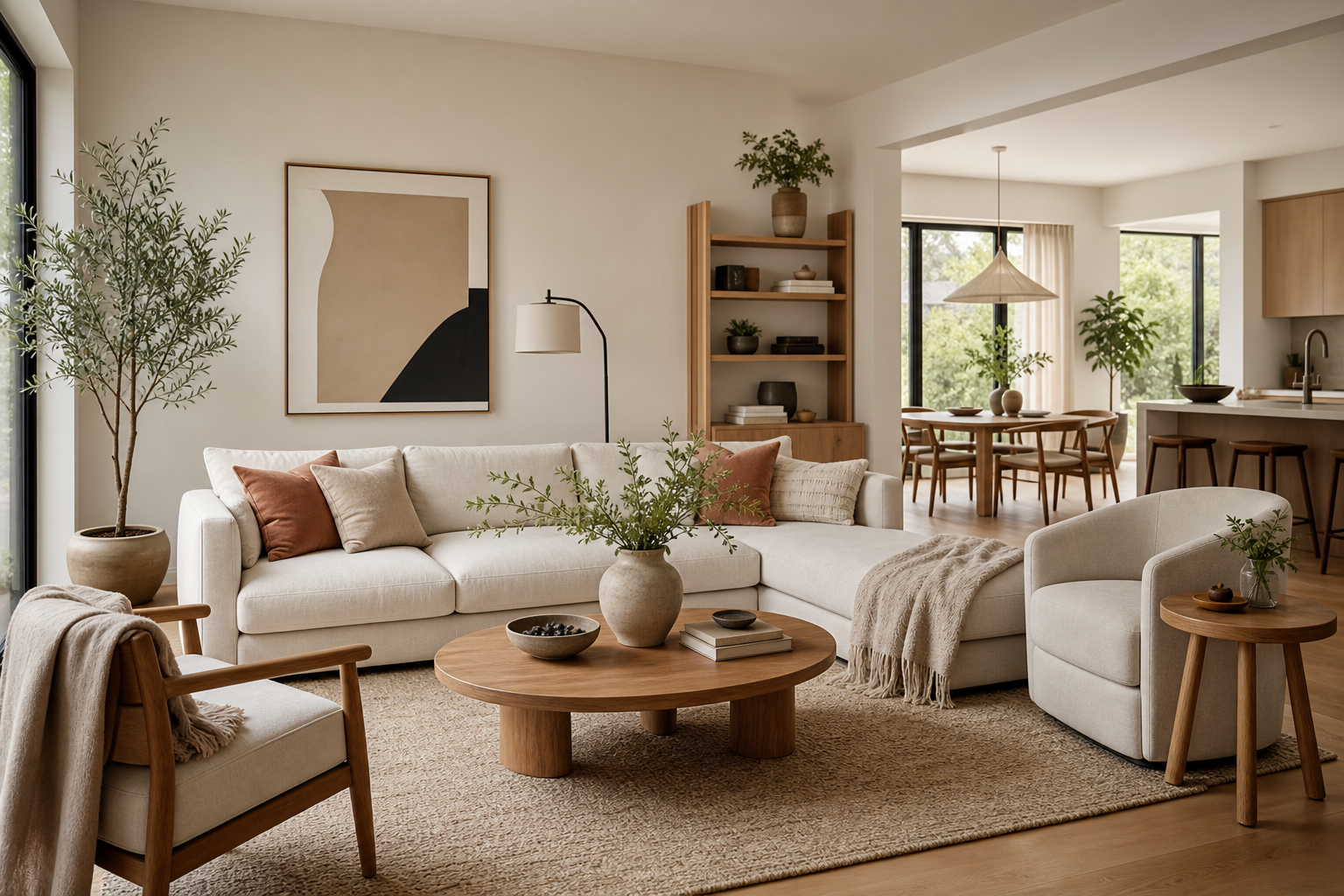
Room Decor Ideas
Modern Living Room Ideas Practical Guide for a Stylish Home
A practical guide to modern living room ideas with layout furniture lighting colors and decor choices for a stylish home
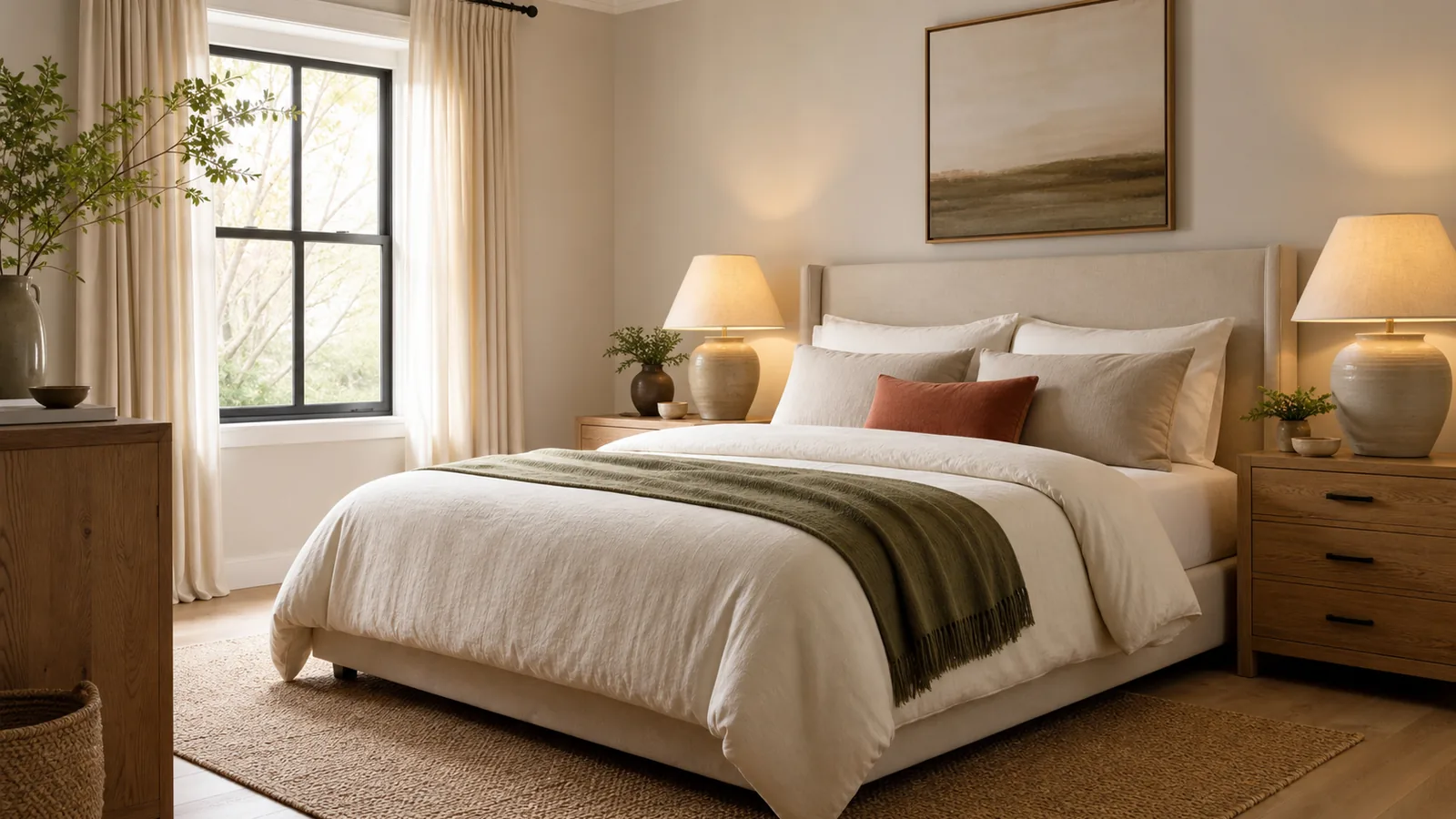
Room Decor Ideas
Bedroom color ideas: calm palettes and how to test them
Bedroom color ideas for a calm room: one main color, warm neutrals and soft greens or blues, real paint examples and a simple way to test samples.
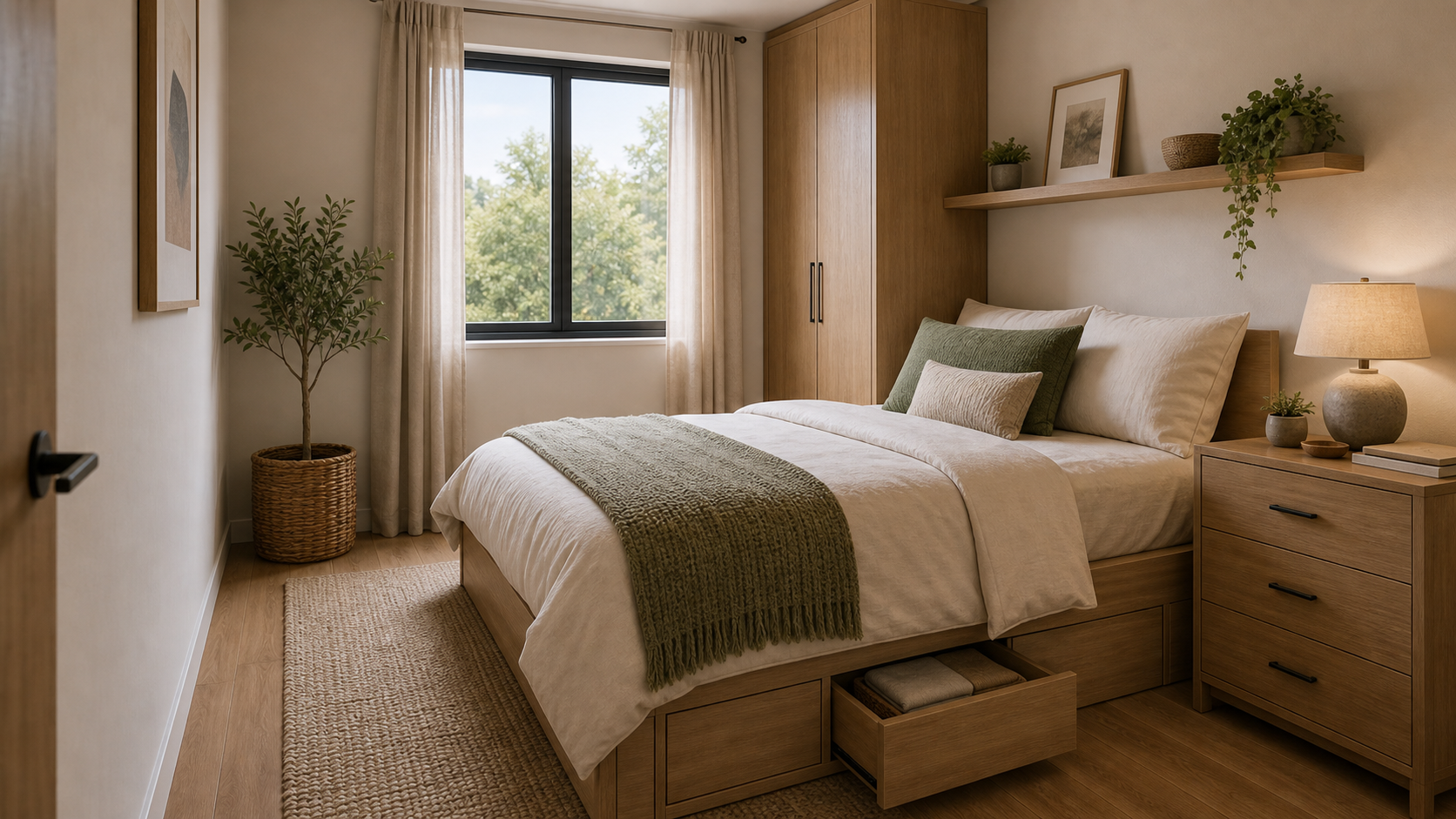
Room Decor Ideas
Bedroom storage ideas: closet, dresser and under-bed storage that stay tidy
Bedroom storage ideas in order: closet first, then the dresser and under-bed storage, with closet clearances, lidded boxes and safe dresser anchoring.