
Small Spaces
Small apartment storage ideas for every room
Start with apartment storage ideas
Storage only works when it meets the habit. If keys land by the door every day, storage belongs by the door. If blankets end up on the sofa every night, the solution has to live beside the sofa.
A compact home can feel calm when storage is planned by zone. Each room needs a different solution, but the same principle applies: store things where you actually use them, hide visual clutter, and keep frequently used items easy to reach.
Start with clutter patterns
Before adding storage, notice where clutter naturally lands. If shoes collect by the door, the entry needs a shoe solution. If blankets pile on the sofa, the living room needs a basket or storage ottoman. If papers cover the table, the work zone needs a small filing system.
Small apartment storage works best when it supports real routines. The point is not to buy more boxes. The point is to create simple places for the objects that appear every day: shoes, coats, bags, chargers, blankets, mail, cleaning supplies, toiletries, pantry items, and work tools. Among all small space home decor ideas, storage comes right after the walkway and before any decor.
Storage fails when it is too far from the behavior it is supposed to support. The best storage feels almost automatic.
Use vertical space without crowding the walls
Vertical storage is powerful in small apartments, but it should still look balanced. Floating shelves, wall hooks, tall cabinets, and over-door organizers can free up floor space. The mistake is covering every wall until the room feels busy.
Use vertical storage in the zones that need it most: entryways, kitchens, bathrooms, and work corners. Keep at least one or two walls visually quiet so the apartment can breathe.

Choose double duty storage pieces
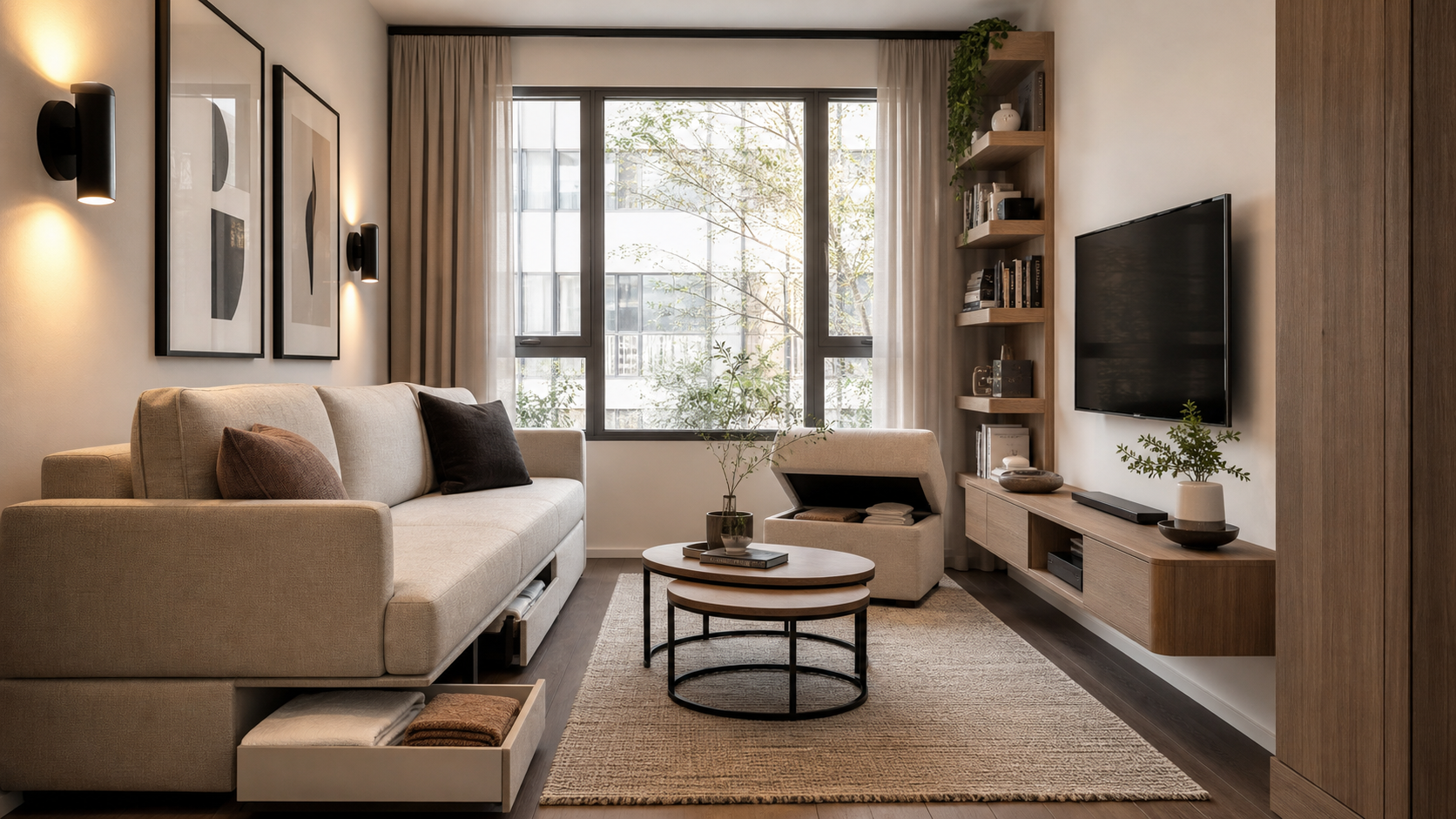
In a small apartment, storage furniture should often do more than one job. A bench can hold shoes. An ottoman can store blankets. A coffee table can hide remotes. A bed can include drawers. A console can serve as both entry storage and display surface.
Best double duty pieces
Start with the basics: storage ottoman, lift-top coffee table. Then look at the details that usually create pressure in a small room: bed with drawers, entry bench with shoe storage, nesting tables, wall desk with shelves.
Create a drop zone near the door
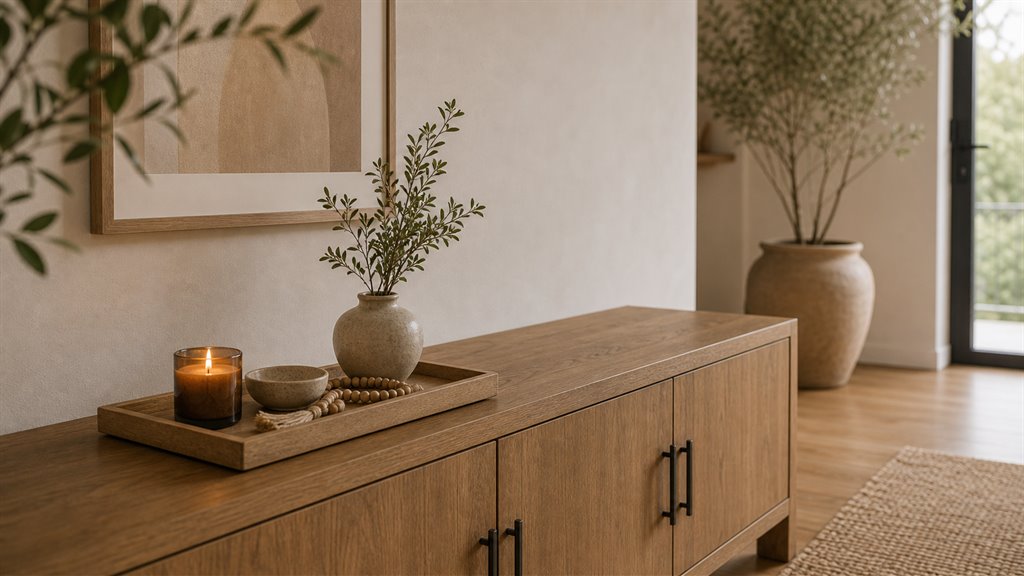
The entry is the control point of a small apartment. Even a tiny wall can hold hooks, a mirror, a tray, and a narrow shoe cabinet. A drop zone prevents keys, bags, and mail from spreading into the living room.
Make open storage look intentional
Open storage needs editing. Use matching baskets, repeat materials, and leave some empty space. If every shelf is packed, the apartment will feel smaller even if the storage technically works.
Closed storage is better for objects that are visually noisy. Open storage is better for objects that are attractive, frequently used, or easy to group neatly.
Use hidden storage for seasonal items
Seasonal decor, extra bedding, bulky coats, and rarely used items should not occupy prime daily storage. Use under-bed bins, high shelves, or closet organizers for these categories. Keep the easiest storage for the objects you touch every day.

What to check before calling it finished
Start with the basics: store items where they are used; create an entry drop zone. Then look at the details that usually create pressure in a small room: use vertical space selectively, choose double-duty furniture, use closed storage for visual clutter, keep open shelves edited, move seasonal items out of daily zones.
Questions people usually ask in small rooms
How do I add storage without making a small apartment feel crowded
Choose storage that is slim, closed, wall-mounted, or multifunctional. Match materials and colors to the room so storage blends with the decor.
What is the best first storage upgrade
Start with the entry. A small drop zone near the door prevents clutter from spreading into the rest of the apartment.
Storage ideas by room
Living room storage
Use a storage ottoman, closed media cabinet, baskets, and a tray for remotes. Keep open shelves edited so they look like decor instead of overflow storage.
Bedroom storage
Use under-bed bins, nightstands with drawers, hooks behind the door, and closet dividers. Store seasonal bedding away from daily clothing so the room stays easier to manage.
Kitchen and dining storage
Use vertical shelf risers, drawer dividers, wall rails, and closed containers. In small kitchens, the counter should stay as clear as possible because visual clutter makes the whole apartment feel smaller.
Bathroom storage
Use narrow cabinets, over-toilet shelves, drawer organizers, and matching containers. Keep only daily products visible, and store backup items elsewhere.
How to make storage look like decor
Storage looks better when materials repeat. If your room uses warm wood, choose wood trays or woven baskets. If your room has black accents, repeat black hooks or slim metal shelves. Matching storage to the room palette makes practical pieces feel intentional.
Closed storage should blend in. Open storage should be curated. This simple distinction keeps the apartment useful without making it visually heavy.
The 80 percent storage rule
Do not fill storage to one hundred percent. Leave breathing room in drawers, shelves, baskets, and closets. When storage is packed completely, it becomes hard to maintain, and clutter returns quickly.
Aim for about eighty percent full. That small amount of empty space makes the system easier to use every day.
Renter friendly storage ideas
Start with the basics: over-door hooks for coats or towels, freestanding shelves that do not need drilling. Then look at the details that usually create pressure in a small room: Command hooks for keys and lightweight items, under-bed bins for seasonal storage, rolling carts for kitchens, bathrooms, or work supplies, slim shoe cabinets near the entry.
Questions people usually ask in small rooms
Should small apartments use open shelves
Yes, but selectively. Open shelves work best for attractive, organized items. Use closed storage for mixed clutter, backup products, and anything visually busy.
How do I stop storage from looking cheap
Use fewer container styles, repeat colors, and avoid too much plastic in visible areas. Woven, wood, fabric, or simple matte finishes usually look calmer.
A weekly storage maintenance routine
Small apartment storage works only if it is easy to maintain. Once a week, reset the entry tray, return loose items to baskets, remove objects from the coffee table, and check whether any open shelf is becoming crowded. This takes less than fifteen minutes when the system is simple.
A monthly reset can handle deeper categories: seasonal clothes, pantry overflow, bathroom products, paper, and cables. The point is not perfection. The point is to stop small storage problems from becoming apartment-wide clutter.
Storage decisions that save money
Before buying a new cabinet, try to improve the system inside the furniture you already own. Drawer dividers, shelf risers, under-bed boxes, and matching baskets often solve the problem for less money and less floor space.
Buy furniture only when the object needs a permanent home and the current room has no logical place for it.
How to label without making it look busy
Labels can help in closets, pantries, and storage bins, but visible labels in living areas can look too practical. Use labels inside cabinets or on hidden bins, and keep visible baskets simple. A clean visual surface matters in a compact apartment.
Related guides

Decor Accents
Decorative vases bowls and tray styling ideas
Learn how to style decorative vases bowls and trays with height texture color and balance for a curated modern home.
Small Spaces
Multifunctional furniture ideas for small homes
Choose multifunctional furniture for small homes from storage ottomans and sleeper sofas to nesting tables and foldable desks

Small Spaces
Small bedroom ideas that make a room look bigger
Create a bigger feeling small bedroom with smart layout storage color lighting bedding mirrors and edited decor