
Room Decor Ideas
Modern living room decorating ideas: a step-by-step decorating order
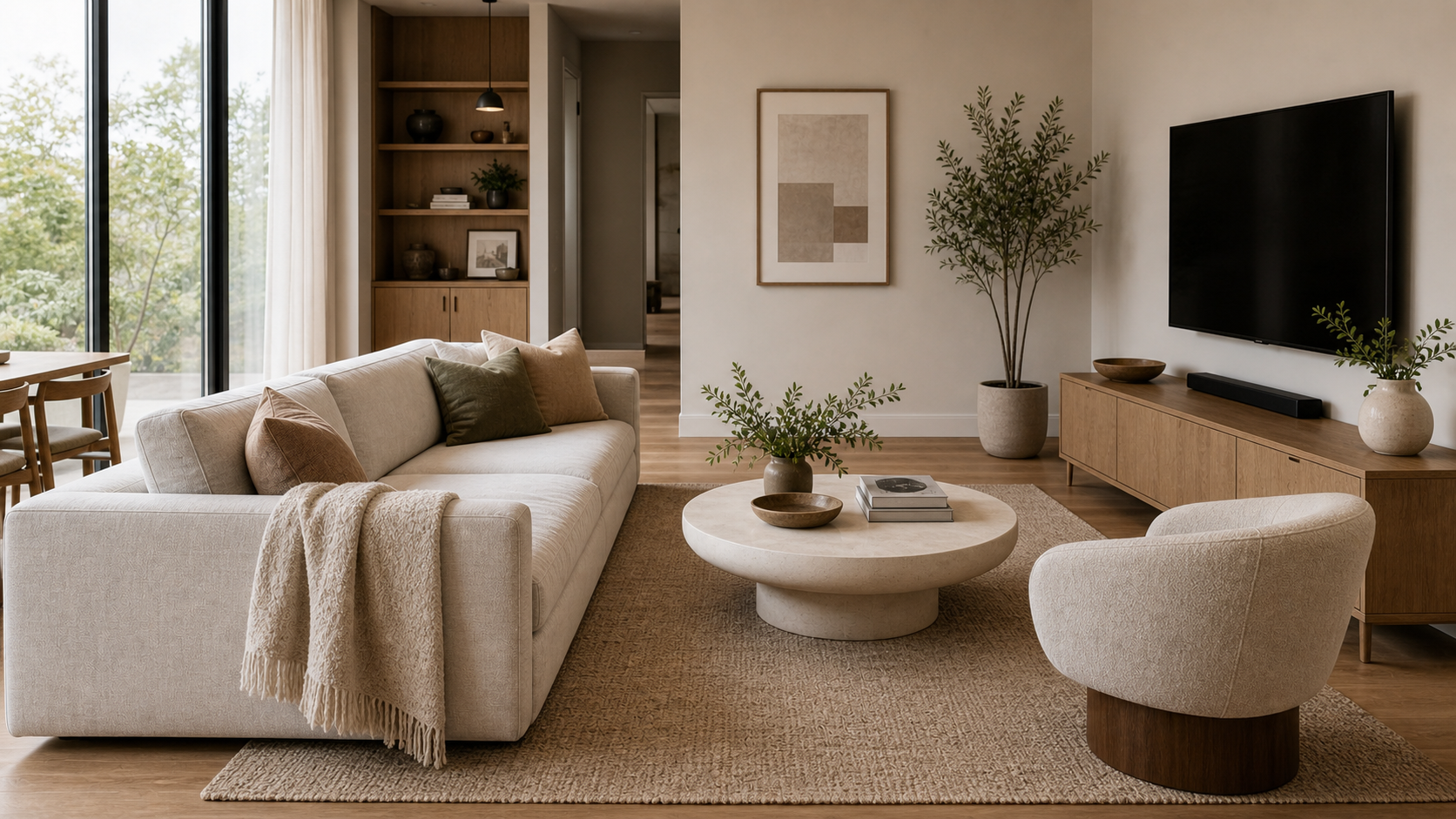
Most modern living room decorating ideas fail for the same reason: they are done in the wrong order. A new rug is bought before the sofa is placed, a paint color is chosen before the lamps are in, and accessories arrive before anyone knows where the walking path goes. Each step undoes part of the last one.
This guide puts the decisions in order. It is written for ordinary living rooms in ordinary houses, like the ranch houses and split-levels common across the Midwest, where one room handles movie nights, homework, and guests. Follow the steps in sequence and each decision makes the next one easier.
Start with how the room needs to work.
Step 1: Modern living room decorating ideas start with the room's jobs
Before choosing anything, write down the jobs the living room does every week. Be specific.
- Watching TV or movies, and how many people at once.
- Conversation with guests.
- Reading, homework, or working on a laptop.
- Kids playing on the floor, or pets sleeping on the sofa.
Rank the jobs. The top one decides where the main seating faces. The second one decides what goes in the leftover corners. A room that tries to give every job equal weight usually does none of them well.
Step 2: Find the focal point and the main path
Every living room has one place the eye goes first. It may be a fireplace, a large window, or the TV wall. Choose one focal point and plan the seating around it.
Then trace the main walking path: from the entry door to the seating, and through to the next room. Keep about 36 inches clear along that path, or 30 inches as a minimum where furniture has to sit close. Mark it on the floor with painter's tape if it helps. Everything you add later has to stay out of that line.
Step 3: Choose the wall color with the room in mind
With the focal point and path set, choose the wall color. Paint is the largest surface in the room, so it should support the furniture and floors you will keep, not the accessories you might buy later.
- Start from what will not change: the floor, the fireplace surround, the sofa you are keeping.
- Balance the palette: about 60 percent main color, 30 percent secondary, and 10 percent accent across walls, large furniture, and smaller pieces.
- Test before you commit: put large samples on at least two walls and check them in the morning, afternoon, and evening, next to the floor and the main fabrics.
For modern living rooms, warm whites, soft greiges, and muted greens or blues tend to work with wood floors and a range of furniture. North-facing rooms often need a warmer white than the paint chip suggests.
Step 4: Place the big pieces first
Place the big pieces first: the sofa, the main chairs, and any large storage. Their positions decide whether the room works.
- Face the sofa toward the focal point, or set it at a right angle to it.
- Add chairs so the main seats sit within about 8 feet of each other, close enough to talk without raising your voice.
- Leave 14 to 18 inches between the sofa and the coffee table.
- Keep the walking path clear on at least one side of the seating group.
Use the room for a week before buying anything else. A layout that looked right on paper often needs one chair moved or turned once the household starts using it.
Step 5: Anchor the seating with the rug
The rug ties the seating group together. Choose it after the furniture is placed, not before.
- Size: large enough that the front legs of the sofa and chairs sit on it, and at least as wide as the sofa. In most living rooms that means 8 x 10 feet; 5 x 8 feet is the minimum in a small room.
- Edges: leave about 8 to 18 inches of bare floor between the rug and the walls.
- Material: low-pile wool or a flat-weave holds up in a busy family room.
A rug that is too small is the most common decorating mistake in a modern living room. It makes the furniture look like it is drifting apart.
Step 6: Plan the lighting in layers
Lighting comes next, because it affects how the paint, rug, and furniture look in the evening.
- At least three sources besides the ceiling light, at three heights: a table lamp, a floor lamp, and a wall light.
- Warm bulbs: 2700K for lamps in a living room, and up to 3000K for general light.
- Reading light: a lamp beside every chair where someone reads.
Renters can use plug-in wall lights and lamps instead of new wiring, and should check the lease before drilling. Any hardwired work belongs to a licensed electrician.
Step 7: Add storage before accessories
Storage comes before decor, because the things a living room collects every day will cover any surface you style.
- Closed storage near the TV for cords, remotes, game controllers, and chargers.
- A basket or chest near the sofa for throws and kids' toys.
- Shelves or a cabinet for books and the few objects you want to show.
- A landing spot near the entry if the front door opens into the living room.
Fill drawers and bins to about 80 percent so they close easily and stay in use. Anchor tall bookcases and cabinets to studs or rated anchors, especially in homes with children. Once everything has a home, the open surfaces can stay mostly clear.
Decorating a modern living room on a budget, in phases
Few households decorate a living room all at once. Spreading the work over a few months is fine, as long as the phases follow the same order.
- Phase one, free: rank the room's jobs, move the furniture into a working layout, clear the walking path, and edit what you own.
- Phase two, low cost: paint, warm bulbs, and one or two plug-in lamps. A simple floor lamp is roughly $50 to $200, and a plug-in wall light roughly $40 to $120.
- Phase three, the anchor: the right-size rug, since it ties the seating group together.
- Phase four, the big pieces: replace the sofa or chairs only if they do not fit the plan.
- Phase five, the finish: curtains, art, and accessories.
Price ranges here are rough; they vary by region and store. The point of the order is that money spent early is never wasted by a later step.
Living room decorating ideas with a brown sofa
A brown sofa, in leather or fabric, is one of the most common starting points in a family living room. Plan around it rather than against it.
- Walls: warm whites, soft greige, or muted green suit brown leather.
- Rug: a lighter rug keeps the sofa from looking heavy.
- Other seating: a lighter fabric chair balances the room.
- Lighting: brown absorbs light, so add one more lamp than you would with a pale sofa.
The smaller accents, such as pillows, throws, and table styling, come last, once the seating, rug, and lighting are settled.
Common mistakes and a final check
Most modern living room decorating problems trace back to the order of decisions.
- Buying the rug before placing the furniture.
- Choosing paint from a small chip under store lighting.
- Pushing every piece against the walls.
- Relying on a single ceiling light.
- Adding accessories before the room works.
Final check: walk the main path, sit in every seat, turn on the evening lights, and confirm each job from Step 1 has a place. For more on planning the whole room, from seating and color to lighting and storage, the guide to modern living room ideas shows how these steps fit together.
Frequently asked questions
How do you decorate a modern living room step by step?
Decide what the room has to do, choose a focal point and the main path, pick the wall color, place the big pieces, anchor them with a rug, plan the lighting, and add smaller accents last.
What are modern colors for a living room?
Warm whites, soft greige, and muted greens or blues work in most modern living rooms. Test large samples on two walls in the morning, afternoon, and evening before you choose.
How do you decorate a living room on a budget?
Work in phases: rearrange and edit for free, then paint and add warm lamps, then buy the right-size rug, and replace big furniture only if it does not fit the plan.
What should you buy first when decorating a living room?
The sofa and the main seating, because their placement decides the rug size, the lighting, and the walking path. Buy accessories last.
Related guides
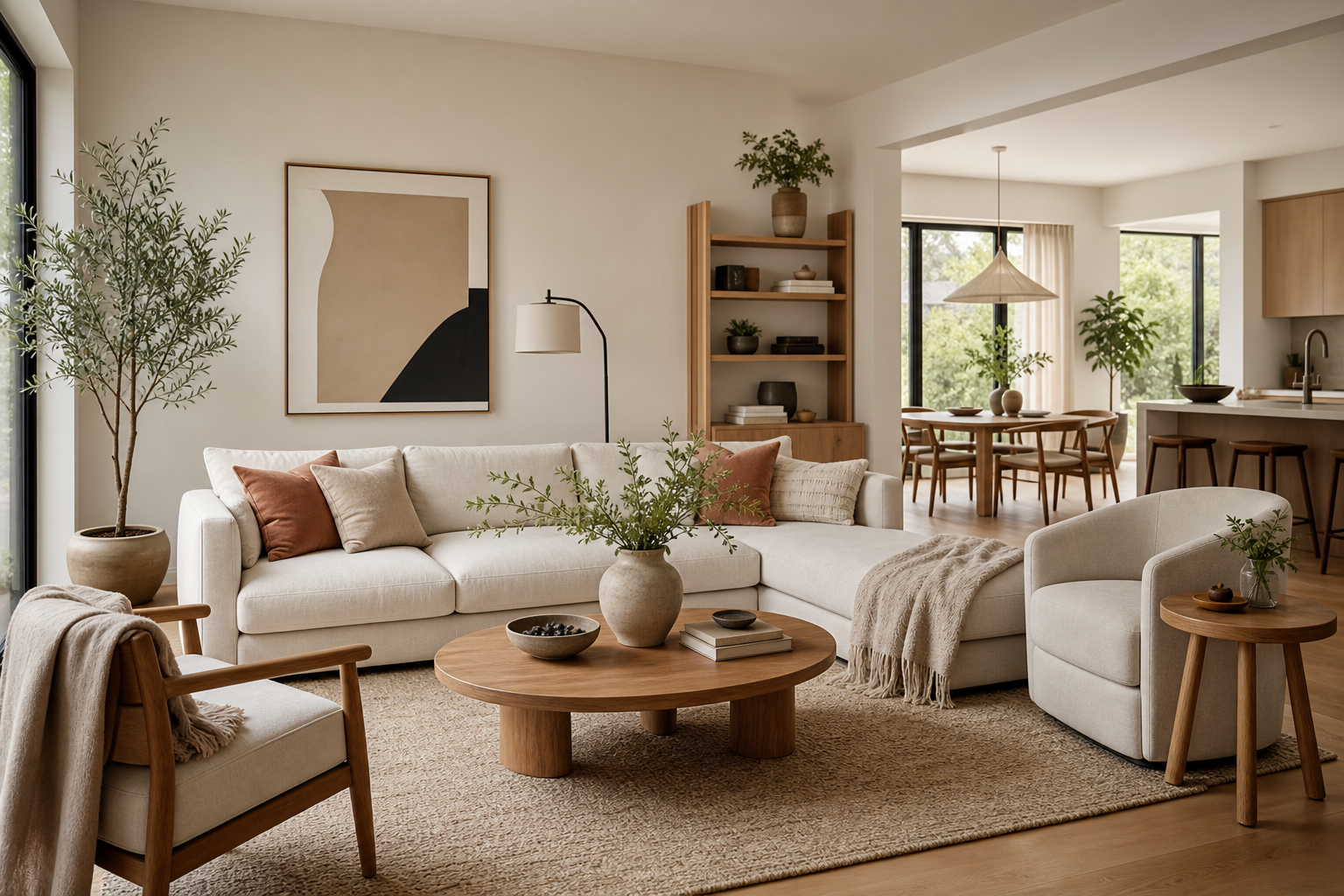
Room Decor Ideas
Modern Living Room Ideas Practical Guide for a Stylish Home
A practical guide to modern living room ideas with layout furniture lighting colors and decor choices for a stylish home
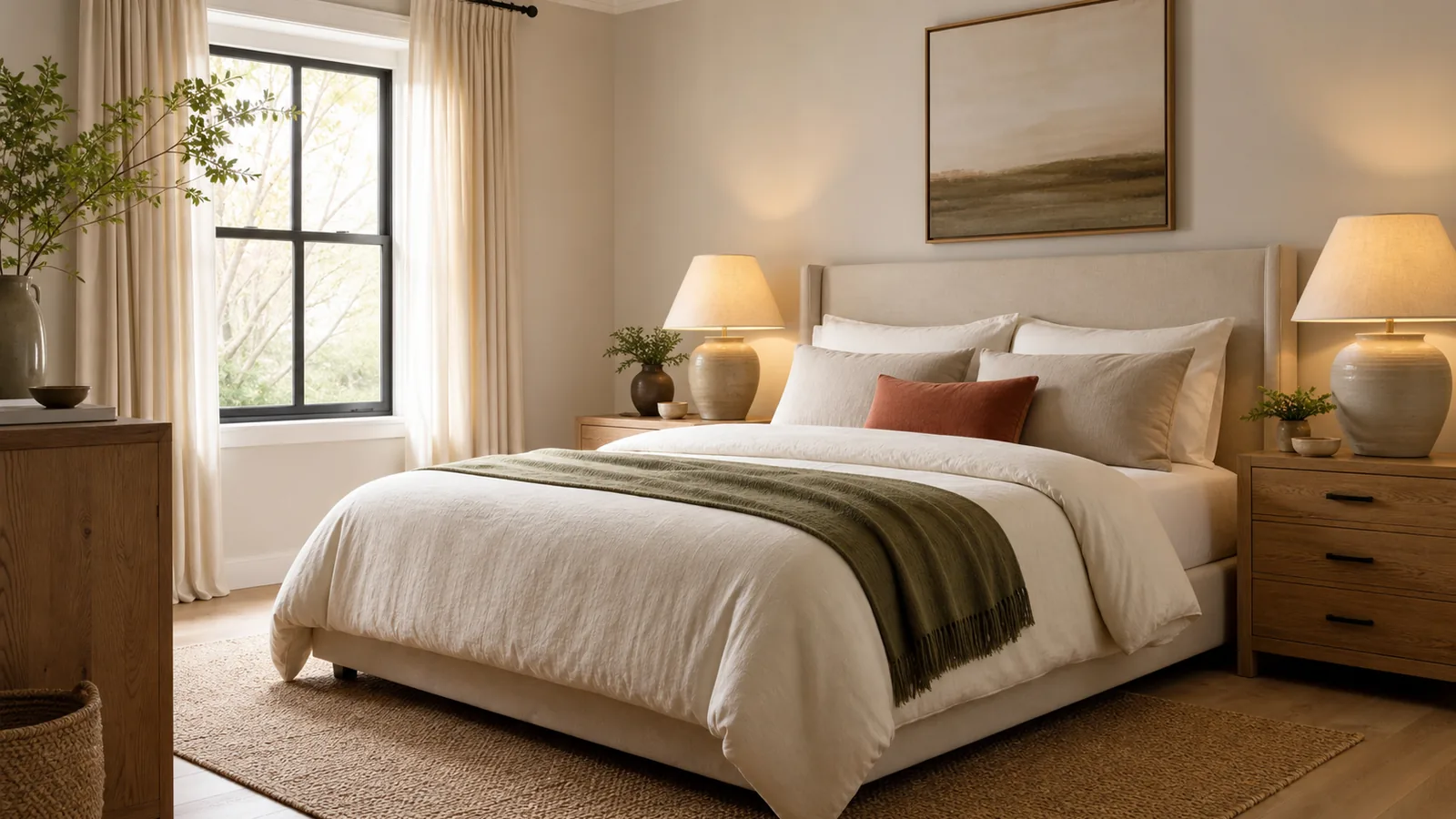
Room Decor Ideas
Bedroom color ideas: calm palettes and how to test them
Bedroom color ideas for a calm room: one main color, warm neutrals and soft greens or blues, real paint examples and a simple way to test samples.
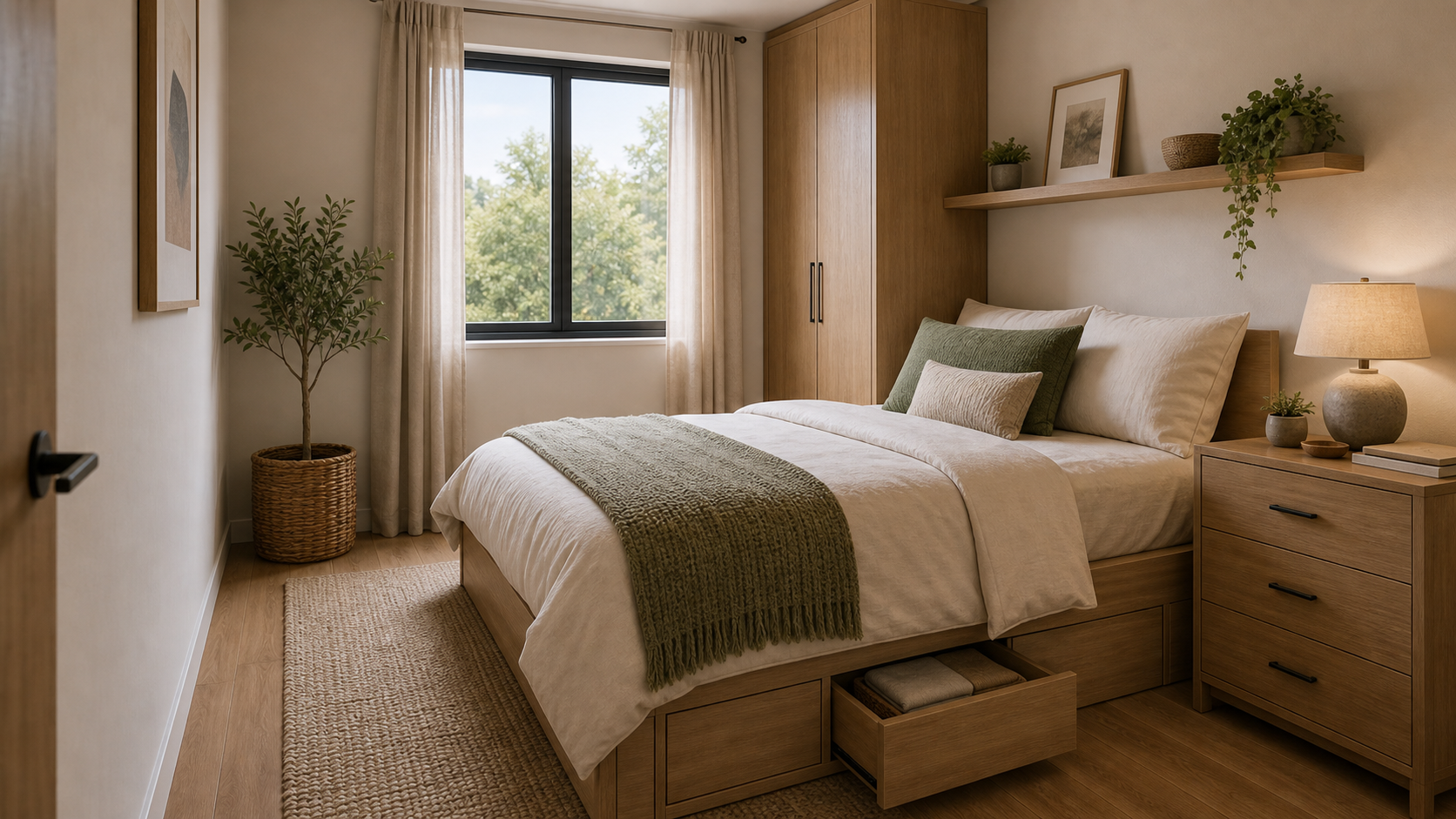
Room Decor Ideas
Bedroom storage ideas: closet, dresser and under-bed storage that stay tidy
Bedroom storage ideas in order: closet first, then the dresser and under-bed storage, with closet clearances, lidded boxes and safe dresser anchoring.