
Decor Accents
Sofa styling ideas: how to style a sofa and everything around it
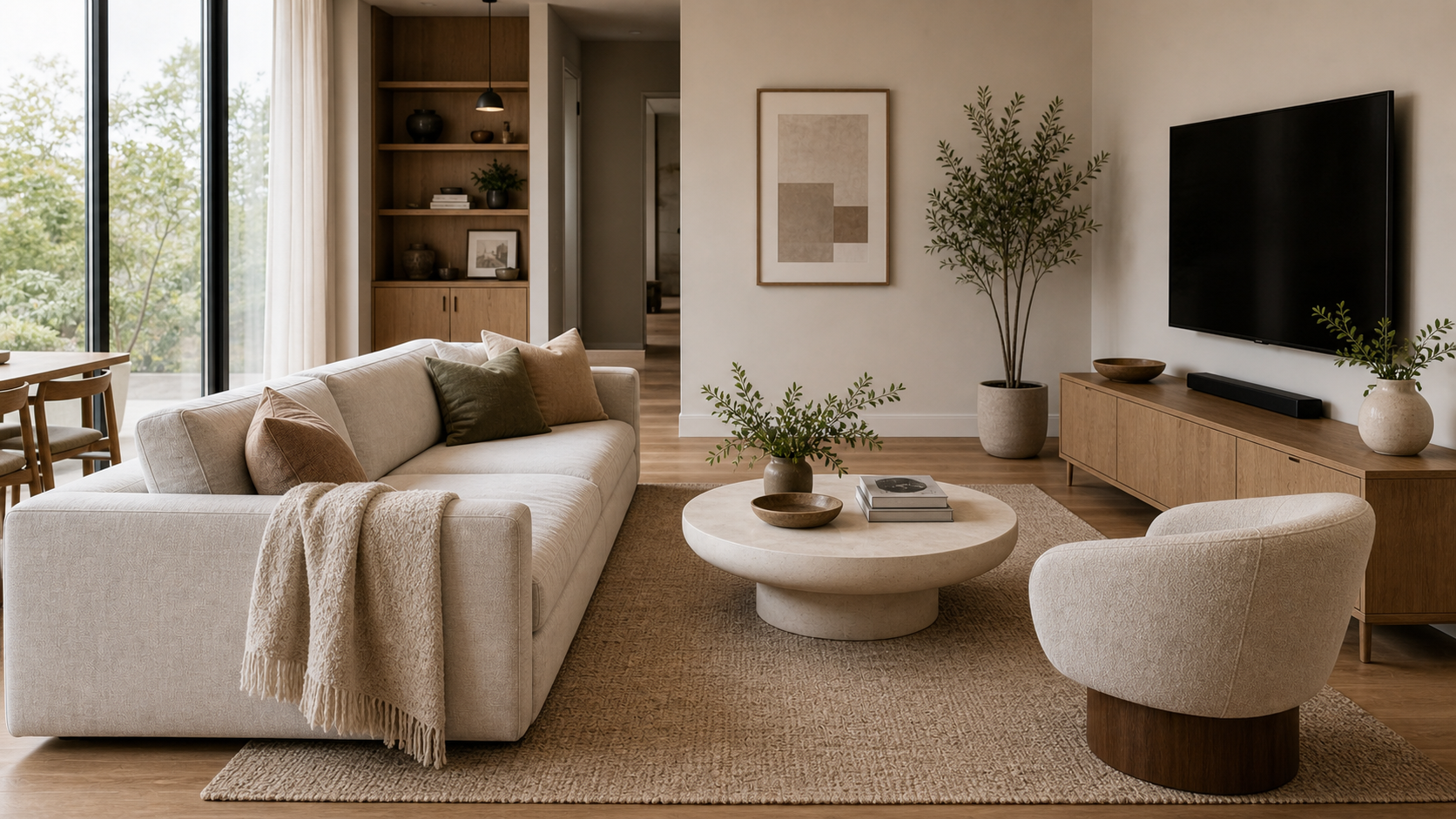
Most sofa styling ideas start and stop with cushions. But a sofa rarely looks finished on its own. What makes it look settled is everything around it: the tables at its sides, the lamp that lights it, the coffee table in front, the sofa table behind, and the wall above. Style those surfaces well and the sofa needs very little added to it.
This guide works around the sofa one surface at a time, in the order the eye reads it. It uses the same measurements as the rest of Decostead, so the pieces fit the sofa and each other. Pillows and throws get a short section near the end; they are the last layer, not the first.
Start with the sofa. Then work outward.
Start with the sofa you already have
Before adding anything, look at the sofa itself. Its shape, color, and fabric decide what will sit well beside it.
- Shape: a low, square-armed sofa suits slim, low tables and simple lamps. A rolled-arm or curved sofa suits rounder tables and softer shades.
- Color: a light sofa can take darker wood and deeper textiles around it. A dark sofa looks best with lighter tables and a pale rug to keep it from sinking.
- Fabric: linen and cotton pair naturally with wood, rattan, and stoneware. Leather and velvet suit wool, brass, and heavier ceramics.
Choose one or two materials from the sofa and repeat them nearby. Repeat materials, not matching sets. A walnut side table that echoes the sofa's legs and a wool throw that echoes its weave will feel more considered than a three-piece set bought together.
Sofa styling ideas for the sides: tables and lamps
The sides of the sofa are where people actually reach: for a cup, a phone, a book. A side table on at least one side, and ideally both, makes the sofa usable and frames it visually.
- Height: keep the top of the side table within about 2 inches of the sofa's arm height, so a cup is easy to set down.
- Size: a small sofa takes a slim table; a deep sofa can take a wider one. The table should not stick out past the front of the seat.
- What goes on it: a lamp, one small object, and room for a drink. That is enough.
A lamp next to the sofa does more for the room at night than any accessory. Choose one with a fabric or paper shade, and set it so the bottom of the shade sits at about eye level when you are seated, roughly 38 to 42 inches from the floor. Use a warm 2700K bulb. If the sofa is long, a lamp at each end balances it; if it sits against a wall, a plug-in wall light can replace one table lamp.
The coffee table in front
The coffee table is the most-used surface near the sofa and the easiest to overload. It should be close enough to reach and calm enough to rest your eyes on.
- Distance: leave about 14 to 18 inches between the sofa and the coffee table.
- Size: aim for a table about two-thirds the length of the sofa.
- Height: the top should sit at seat height or 1 to 2 inches lower.
- Styling: three to five objects, grouped, with room for a cup and a book.
A good three-part group is low, tall, and sculptural: a short stack of books, a vase with a single stem, and a stoneware bowl. A tray can hold the group together and makes the table easy to clear.
How to style a sofa table behind a sofa
When a sofa floats in the room rather than sitting against a wall, a narrow sofa table behind it finishes the back view. It is the side of the sofa that people see first when they walk in.
- Height: keep the table at or just below the height of the sofa back, so it reads as one piece with the sofa.
- Length: a table slightly shorter than the sofa looks intentional; one longer than the sofa looks like it is escaping.
- Lamps: a pair of lamps, one at each end, is classic and balanced. A single lamp at one end with a taller object at the other is more relaxed.
- Objects: between the lamps, one larger piece and one small group. Leave about a third of the top open.
- Below: two baskets or a bench can sit underneath to hold throws or shoes.
Keep the sofa table's finish related to the coffee table or the side tables. Too many different woods around one sofa can look accidental.
The wall above the sofa
When the sofa sits against a wall, the wall above it is the largest surface in the composition. Leave it bare and the sofa looks unfinished; overfill it and the room feels crowded.
- Size: art or a grouping about two-thirds the width of the sofa.
- Height: leave about 8 to 10 inches between the top of the sofa back and the bottom of the frame.
- Shape: one large horizontal piece, two vertical pieces side by side, or a tight grid of three or four frames with 2 to 3 inches between them.
A mirror works here too, especially opposite a window, but keep it sized to the sofa rather than the wall. A shelf above the sofa is best left with only a few light objects and secured well into studs or rated anchors.
Ground the sofa with the rug
The rug decides whether the sofa belongs to the room or floats in it. Place the rug so the front legs of the sofa and the nearby chairs sit on it, and choose a rug at least as wide as the sofa. In most living rooms that means 8 x 10 feet; a small room can use 5 x 8 feet as a minimum.
Texture matters as much as size. A flat-weave or low wool rug suits a tailored sofa. A softer, deeper rug suits a relaxed linen one. Keep the rug's tones close to the sofa and let the accents carry any stronger color.
Cushions and throws, briefly
Cushions and throws are the final layer. On a standard three-seat sofa, up to five pillows is plenty: two large, two medium, and one lumbar. On a loveseat, two or three. Choose fabrics that repeat the room's materials and keep at least one plain cover in each group.
A throw looks best folded loosely over one arm or across a corner of the seat, not spread out flat. Keep it within the color story of the room. That is all the sofa itself needs.
The final edit around the sofa
Step back to the doorway and look at the whole group: sofa, side tables, lamps, coffee table, sofa table, wall. Then check it in daylight and lamplight. A group that looks balanced at noon can look lopsided at night if only one lamp is on.
- Take one object away: most sofa zones have one too many, usually on the coffee table.
- Check the reach: can you set down a cup from every seat?
- Check the cords: route lamp cords behind the table legs or along the baseboard.
- Check the balance: if one side looks heavier, move a lamp or swap a tall object for a low one.
For more ideas on lighting, textiles, wall decor, and table styling across the whole room, the guide to modern home decor accent ideas shows how the sofa zone connects to the rest of the space.
Frequently asked questions
How do you dress a sofa?
Start around it, not on it: a side table and lamp at one or both ends, a coffee table about 14 to 18 inches in front, and art above if it sits against a wall. Then add up to five pillows and one throw.
What do you put on a sofa table behind a couch?
A pair of lamps, or one lamp and a taller object, with one larger piece and a small group between them. Keep about a third of the top open and use baskets underneath for throws.
How far should a coffee table be from a sofa?
About 14 to 18 inches, close enough to reach a cup and far enough to walk past your knees.
How high should a lamp be next to a sofa?
Set it so the bottom of the shade sits at about eye level when you are seated, roughly 38 to 42 inches from the floor.
Related guides
Decor Accents
Modern home decor accent ideas a complete guide to styling a warm polished home
Explore modern home decor accent ideas using color, texture, lighting, rugs, trays, and simple styling choices for a warm, polished home that feels practical.

Decor Accents
Neutral fall decor ideas for a living room that does not look themed
Neutral fall decor for the living room: camel, olive, wool, and lamplight instead of orange props. A calm, surface-by-surface guide.

Decor Accents
How to choose accent pieces for a neutral living room
A practical guide to choosing accent pieces for a neutral living room with calm color balanced texture useful scale and a clean modern look