
Decor Accents
Neutral fall decor ideas for a living room that does not look themed
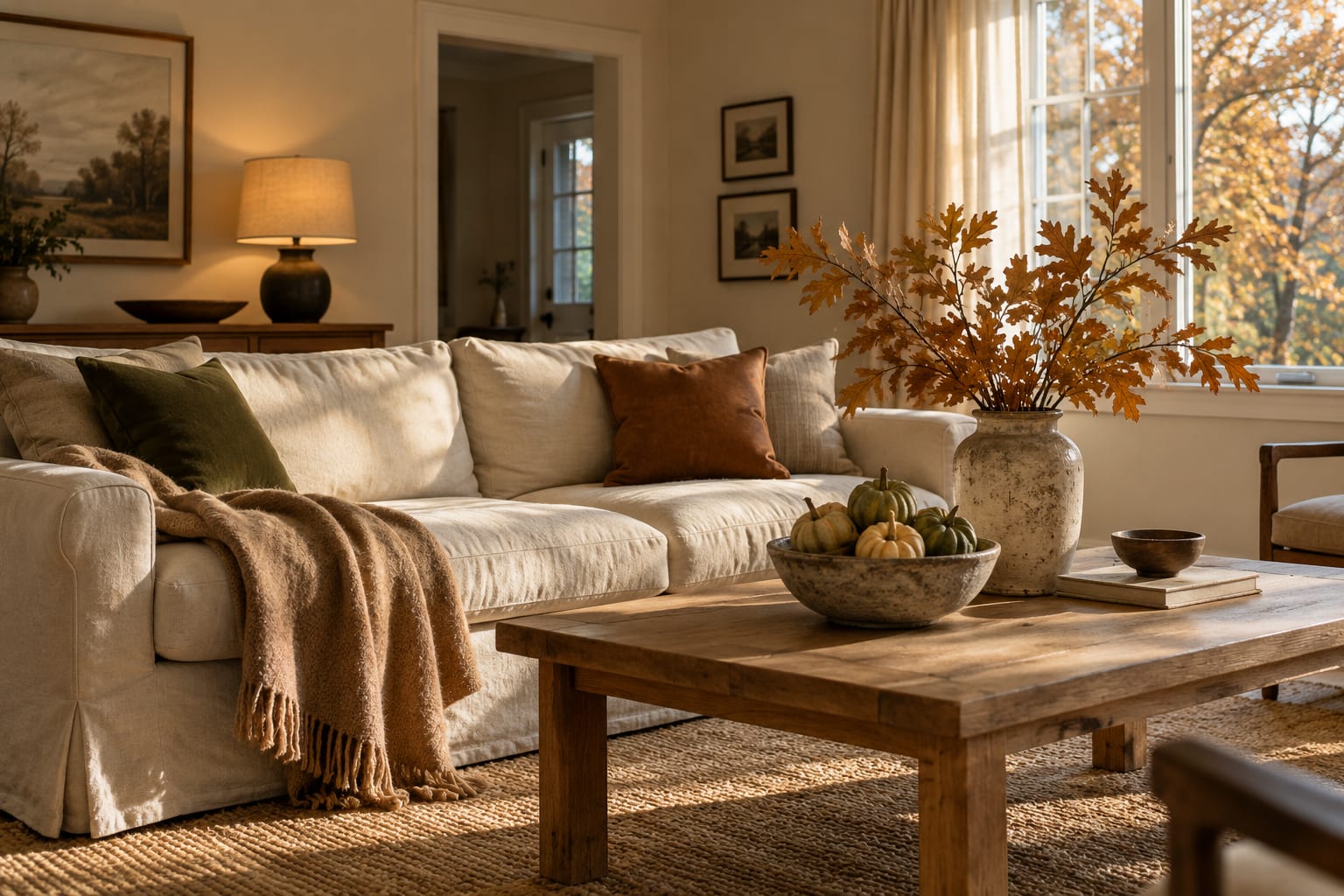
In a neutral living room, fall decor works best as a change in weight, not a change of theme. The room keeps its cream walls and pale oak, and gains wool, deeper wood, and a few warm tones that match the color outside the window. It needs no pumpkin parade and no word signs.
This guide is for rooms that are already mostly finished: a sofa you like, a rug that works, a palette of whites and beiges. It shows how to bring in autumn through color, texture, and light, one surface at a time. It also shows how to take most of it back out in November without the room feeling bare.
Start with what the room already has
Before buying anything, look for what is already warm. Most neutral living rooms hold more fall than they seem to: an oak floor, a walnut side table, a linen curtain that turns gold in late light, a basket by the sofa.
Make a short list of those materials, because they are the base the season will sit on. If the room leans cool, with gray upholstery and white oak, the fall layer should warm it gently. If it already leans warm, with beige and honey-toned wood, go deeper rather than brighter.
Older houses help here. Original trim, wide pine floors, and a brick fireplace already carry autumn color. Let them lead, and keep what you add quieter than the architecture.
Choose one fall color palette
Pick one color story and repeat it. Three work especially well with neutrals:
- Camel and cognac: tan wool, leather, and caramel-glazed stoneware. Warm and grown-up.
- Olive and moss: dusty green linen, dried eucalyptus, and a small olive glaze. Calm and a little earthy.
- Chocolate and cream: deep brown velvet or bouclé against ivory. The richest of the three.
Choose the story that already appears somewhere in the room, such as a leather chair, a green print, or a dark wood frame, so the new pieces have something to answer. Then use it three to five times across the room, in different sizes: one larger piece such as a throw, two or three pillows or objects, and one small echo on a shelf.
If the room already has two warm tones that compete, such as a red-brown leather chair and a yellow-toned oak floor, let the color story sit between them. Camel and oatmeal bridge the two; a third strong warm color would only add friction.
Orange is not banned. It simply works better at a low volume: a rust stripe in a pillow, a terracotta pot, or a bowl of heirloom gourds in pale green and tan rather than bright pumpkins.
Texture before color
In fall, texture does most of the seasonal work. A room can stay nearly the same color and still feel like a different season, because the surfaces change.
Swap one or two pillow covers from linen or cotton to wool, bouclé, corduroy, or a chunky knit. Add a heavier throw in brushed wool or a cable knit, in oatmeal or camel. Bring out stoneware with a matte, speckled glaze, a wooden bowl with visible grain, and a basket with a tighter weave.
Put soft textures where hands land: the sofa arm, the chair back, the ottoman. Put hard, matte textures where the eye rests: the coffee table, the mantel, a shelf at eye level. The contrast between the two is what makes the room feel layered without adding more objects.
Keep the scale in proportion
Seasonal decor tends to be small, and small things scatter. A dozen mini pumpkins across three surfaces looks busy. One generous bowl of them looks like a decision.
Group rather than spread. On a coffee table, one tray can hold the whole seasonal story. On a mantel, a tall arrangement of branches on one side, balanced by a stack of books or a lamp on the other, looks more settled than a row of small objects.
Watch the height, too. Dried stems and branches give a room height for very little money, and height is often what a neutral room is missing. Choose one tall vase heavy enough not to tip, and let the branches rise to about one and a half to two times its height.
Neutral fall decor, surface by surface
Style one surface at a time, and stop when each has a clear center.
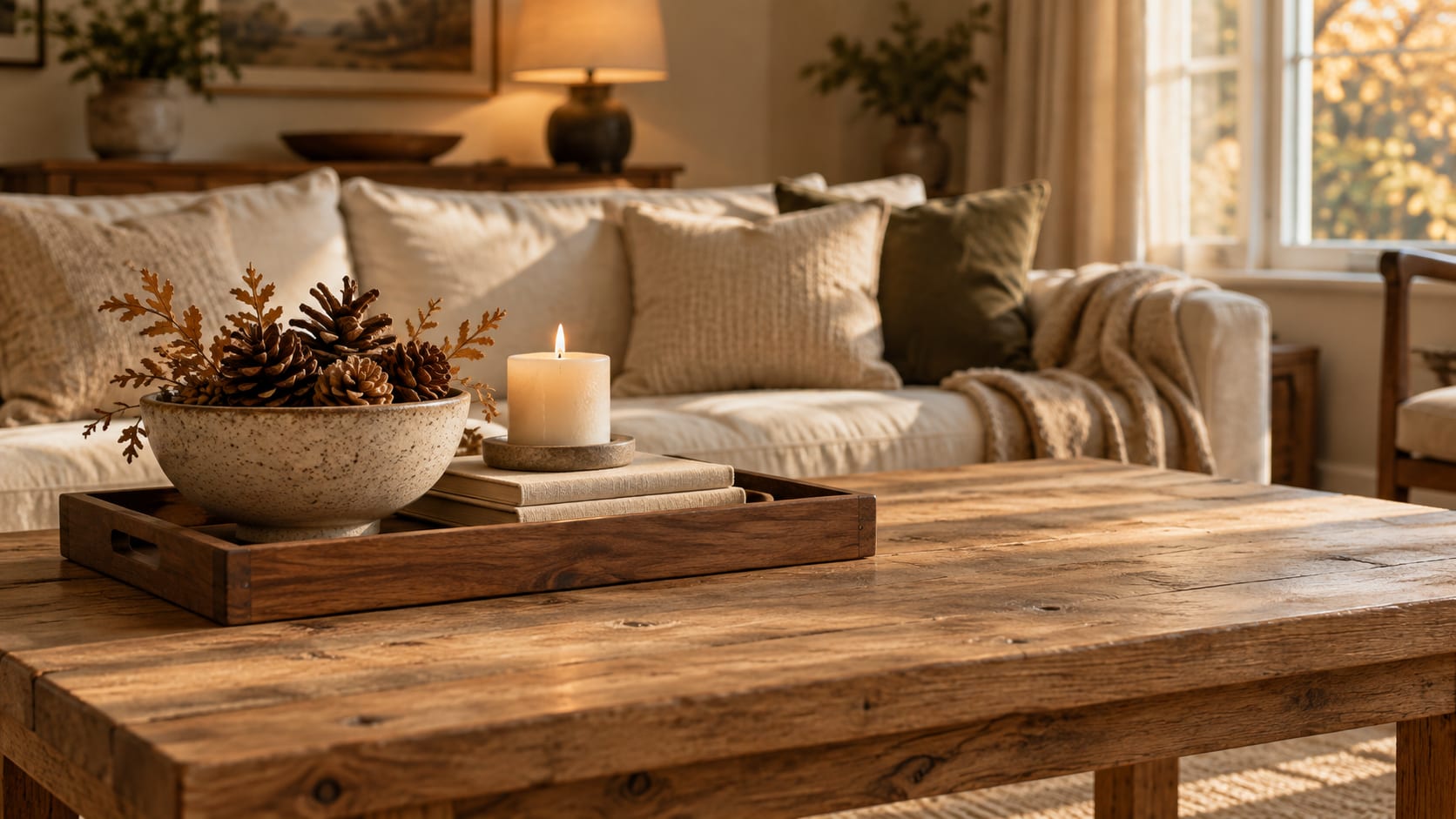
- Coffee table: a tray or wooden board, one low bowl of pale gourds or pinecones, a candle, and a short stack of books. Leave at least half the table clear for mugs.
- Console or entry table: a lamp, one vessel with branches, and a bowl for keys. The lamp matters more in fall than any object, because it is on by five o'clock.
- Mantel: one tall arrangement set off-center, one medium object, and a short line of candles or a small stack of books. Skip the garland unless it is a simple strand of eucalyptus or dried leaves.
- Shelves: swap two or three objects for seasonal ones in the same spots. A brown stoneware jar replaces a white vase; a small branch replaces a trailing plant.
- Sofa: two wool or knit covers in your color story and one throw folded over the arm. Keep the total number of pillows the same as the rest of the year.
Natural stems instead of props
Branches, dried grasses, and seed heads carry fall without spelling it out. They also last: most dried stems hold their shape through November without water.
Good choices include oak or beech branches, dried eucalyptus, wheat, natural or bleached grasses, and dried hydrangea heads. Pick one or two kinds and repeat them rather than mixing six. A single type of branch in two vases, one tall and one low, looks deliberate. Dried stems catch fire easily, so keep them well away from candles and fireplace openings, and use flameless candles if the two must share a mantel.
Leave word signs and figurines out of this room. A neutral living room feels calm because nothing in it is announcing a message. The season can live in material and color alone.
Warm light for a cozy fall living room
By October it is dark before dinner in much of the country, and the living room is seen by lamplight for most of the evening. That makes lighting the most important fall change, and often the cheapest.
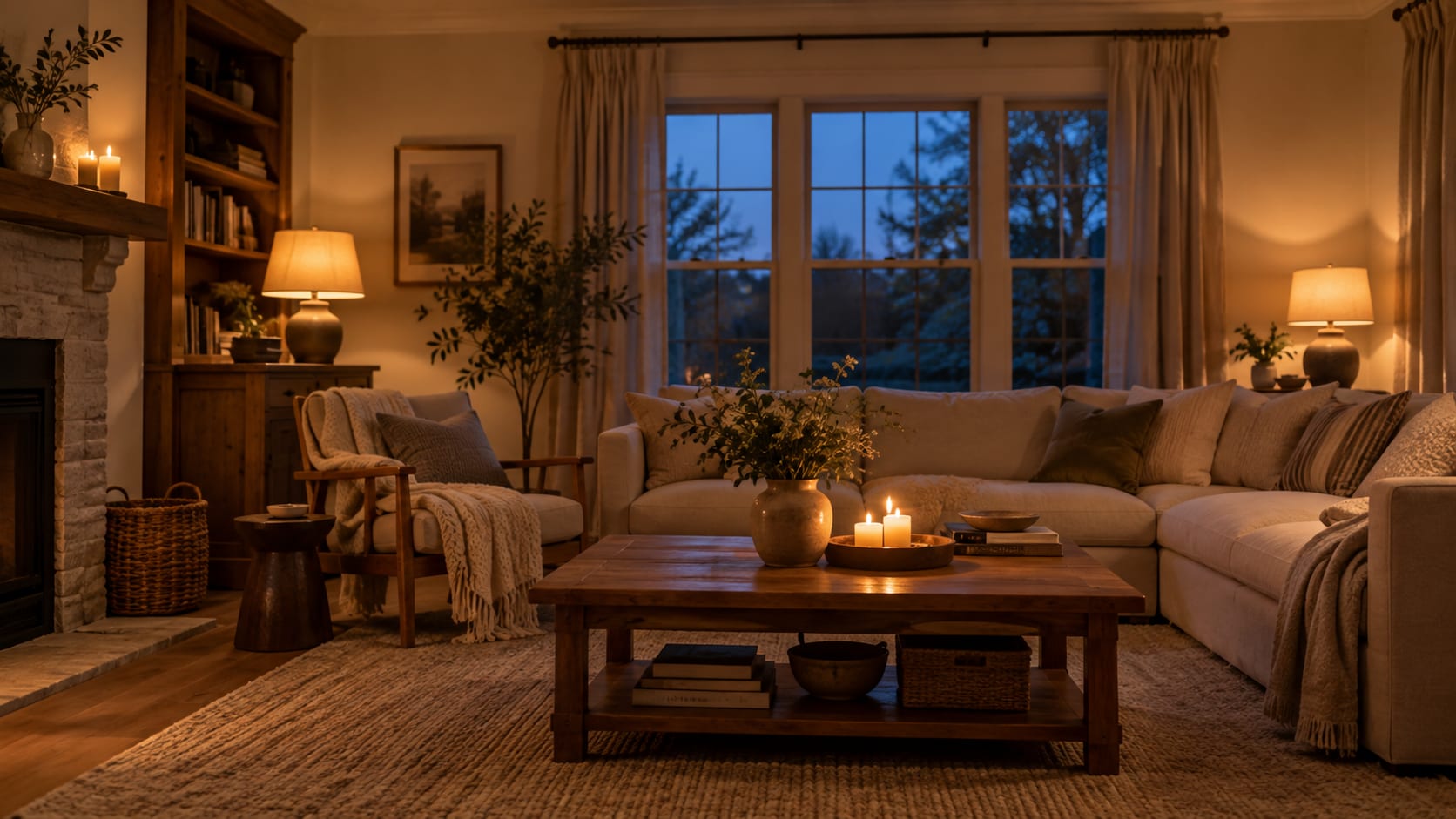
Switch any cool bulbs in lamps to warm white, around 2700K. Add one more low light where the room goes dark first: a small lamp on a bookshelf, a lamp on the console, or a plug-in picture light. Candles help, but they look best gathered in one place rather than scattered.
Check it in daylight and lamplight. A camel throw that looks flat at noon can glow at seven, and a rust pillow that looks right in daylight can turn muddy under a yellow bulb. Make your final adjustments after dark, since that is when the room is used most.
The edit list: what goes away in November
Fall decor should leave as easily as it arrived. When the season turns, work through this list:
- Put away gourds, pinecones, and anything harvest-specific after Thanksgiving, or sooner if you prefer.
- Keep the wool throws and heavier pillow covers; they carry straight into winter.
- Keep the branches if they still look good, or swap them for evergreen cuttings.
- Return shelf objects to their usual places.
Then remove one thing. If the room looks calm and warm without it, it was never needed. What stays through winter is the same core of home decor accents as the rest of the year: good lamps, soft textiles, and a few objects that each do a job.
Frequently asked questions
How do I decorate for fall indoors without it looking tacky?
Use materials and color rather than symbols. Wool, stoneware, dried branches, and a camel or olive color story suggest fall quietly. Skip word signs and figurines, and group seasonal pieces instead of scattering them.
What colors feel like fall in a neutral room?
Camel, cognac, olive, moss, chocolate brown, and muted rust. Choose one family and repeat it three to five times so it looks planned.
How much fall decor is too much?
If every surface holds something seasonal, it is usually too much. One grouped arrangement per surface, on three or four surfaces in the room, is plenty.
When should I put out fall decor, and when should it come down?
Many people start in mid- to late September and put harvest pieces away after Thanksgiving. Wool textiles and warm lighting can stay through the winter.
Related guides
Decor Accents
Modern home decor accent ideas a complete guide to styling a warm polished home
Explore modern home decor accent ideas using color, texture, lighting, rugs, trays, and simple styling choices for a warm, polished home that feels practical.

Decor Accents
How to choose accent pieces for a neutral living room
A practical guide to choosing accent pieces for a neutral living room with calm color balanced texture useful scale and a clean modern look

Decor Accents
Shelf styling ideas for modern home decor accents
Shelf styling ideas for modern decor accents using books vases bowls trays texture and simple balanced groupings.