
Decor Accents
How to choose accent pieces for a neutral living room

Choosing accent pieces for a neutral living room can make the space feel finished without making it feel busy. A neutral room already has a calm foundation. The right accents bring warmth, character, scale, and texture so the room feels personal and complete.
The key is to choose pieces that support the room. Accent decor should repeat colors, materials, or shapes that already exist in the space. A vase can echo the wood tone of a table. A cushion can repeat the shade of the rug. A lamp can bring height where the room feels flat.
A good neutral living room does not need many objects. It needs the right objects in the right places. This guide explains how to choose accents that look calm, modern, and intentional while still making the room warm enough for daily life.
Start with what the room already has
Before buying any accent piece, look at the room as it is. The sofa, rug, curtains, coffee table, and wall color already show what the room needs. A room with many soft pieces may need harder texture through ceramic, stone, wood, or metal. A room with straight furniture may need round shapes through bowls, mirrors, or curved lamps.
This first step prevents clutter. You are not adding decor only because it looks nice. You are adding decor because it solves a visual need. If the room feels cold, choose warm natural accents. If the room feels flat, choose texture. If the room feels empty, choose scale. If the room feels heavy, choose lighter pieces with simple shapes.
Walk around the living room and notice the weak areas. The coffee table might need a low tray and one tall vase. The sofa might need two cushions with texture. The wall might need a mirror or one wide art piece. The corner might need a lamp or plant. For more detailed wall decor ideas, choose the piece by scale and purpose. Each choice should have a job.
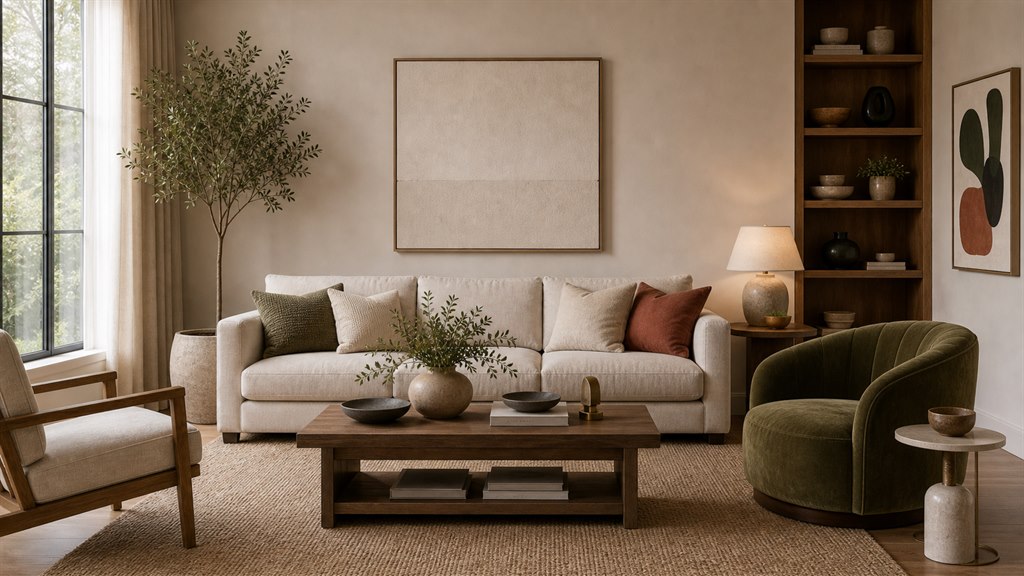
Choose one calm color story
Neutral accent decor works best when the colors are close but not identical. Cream, beige, taupe, oat, greige, clay, pale wood, walnut, charcoal, and soft black can live together when they share a warm or grounded feeling. The palette should feel layered rather than matched.
Pick one light tone one warm tone and one deeper tone. The light tone keeps the room open. The warm tone makes it inviting. The deeper tone gives the room shape. This simple color story helps every accent feel connected, even when the materials differ.
Small color changes can make a large difference. A clay vase can warm a beige room. A black frame can sharpen a cream wall. A walnut tray can ground a pale coffee table. A moss green stem can bring life without making the room colorful. The goal is quiet contrast.
Use texture before adding more items
When a neutral living room feels unfinished, the answer is often texture rather than more decor. Texture gives the room depth while keeping the color palette calm. A woven basket, linen cushion, ribbed vase, wool throw, stone bowl, or wood tray can make a room feel rich without adding visual noise.
Use soft texture where people sit. Use natural texture near the floor and storage areas. Use sculptural texture on shelves and tables. Use smooth texture when a surface needs to feel clean. For more detailed shelf styling ideas, keep the mix comfortable and balanced.
Choose pieces with the right scale
Scale is what makes accent pieces look settled. A small vase on a large table can disappear. A tiny art print above a wide sofa can make the wall feel weak. A narrow rug under heavy furniture can make the seating area feel disconnected. Good scale gives the room confidence.
Use fewer larger pieces when the room feels scattered. One generous bowl can organize a table better than many little objects. One tall lamp can balance a corner better than several small accents. One wide frame can finish a wall better than many weak pieces. The room feels calmer because the eye has fewer stops.
Style each surface with a purpose
Every surface needs a reason. Coffee table decor gathers the center of the room. Consoles create a quiet moment near a wall. Shelves create rhythm and personality. Side tables support light and daily use. When each surface has a purpose, the decor feels natural.
A coffee table can hold a tray, a book, and one vessel. A console can hold a lamp, a bowl, and a mirror. A shelf can hold books, ceramics, and one natural element. A side table can hold a lamp and one useful piece. For focused vase, bowl, and tray styling, keep each group purposeful. Leave space around the objects.
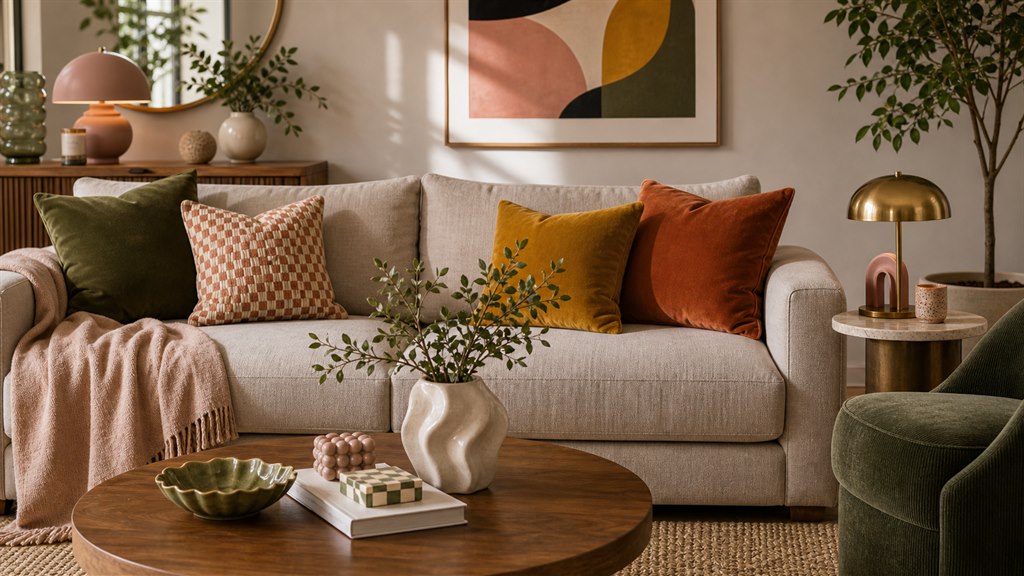
Do not fill every surface because it is empty. Empty space is part of the design. It lets the room breathe and makes the chosen accents look stronger. If a surface looks crowded, remove the weakest item and check the room again from the doorway.
Count the main accent moments before adding more. The sofa can carry one textile story. The coffee table can carry one styled group. The wall can carry one clear focal point. A shelf or console can carry a smaller object story. This gives the eye quiet places to rest and makes the important pieces feel more valuable.
Let the shape of the surface guide the group. A round coffee table can use one centered low arrangement with a small height change. A long table can use one group to one side and open space on the other. A square table can use two small zones without covering the whole top.
Balance timeless pieces with seasonal accents
A neutral living room becomes easier to update when the main accents are timeless and the smaller pieces can change. A large mirror, a good lamp, a simple tray, a natural rug, and strong ceramic pieces can stay for years. Seasonal accents can come through pillows and throws, branches, candles, or one small artwork.
This balance keeps the room fresh without wasting money. In warmer months, use lighter fabrics, glass pieces, and fresh greenery. In colder months, use heavier throws, deeper wood tones, warmer lighting, and textured ceramics. The room changes while the core stays calm.
Repeat materials across the room
Repetition makes accent decor feel intentional. Repeat one material in at least two places. A wood tray can repeat a side table. A ceramic vase can repeat a lamp base. A black frame can repeat a curtain rod. A woven basket can repeat the rug texture.
The repetition should not feel perfect. A room looks warmer when the pieces are related but not identical. Use different finishes within the same family. A pale oak table can work with a darker wood bowl. A matte ceramic vase can work with a smoother ceramic lamp.
Natural materials help quiet contrast feel richer. Wood adds warmth. Stone adds weight. Ceramic adds shape. Woven material adds softness. Glass adds a small reflective note. Use one or two of these materials where the room feels flat instead of adding many unrelated objects.
Check accents in daylight and evening
Accent pieces can change as the light changes. Daylight shows the undertones in a rug, a pillow, a vase, or a wall frame. Evening light shows warmth, shadow, and reflection. A room that looks balanced in daylight can feel cold at night when the lamps are too weak.
Walk through the room in both moments. Check the sofa, the coffee table, the wall, and the shelves as one composition. If one accent looks too dark, too shiny, or too small, move it or remove it. This check keeps pillows, throws, rugs, curtains, tabletop pieces, and wall decor connected through the full day.
Avoid the most common accent mistakes
The first mistake is buying too many small items. Small objects can look messy when they do not have a clear group. Another mistake is choosing accents that do not repeat anything in the room. Using only smooth finishes can also make a neutral room feel cold.
Ignoring function is another common problem. A bowl should hold something or create shape. A tray should gather objects. A lamp should improve the light. A basket should hide clutter. A cushion should make the sofa more comfortable. When accents are useful, the room feels easier and more human.
Avoid strong contrast in every area. One darker frame, one clay vessel, or one deeper textile can give a neutral room shape. If every surface has a bold accent, the quiet base disappears. Contrast works best when it has space around it.
Finish with a simple room edit
After styling the room, take a photo from the doorway. Photos show balance problems quickly. If one area looks heavy, remove one object. If the room looks flat, add one textured piece. If the room looks cold, add wood, linen, or warm light. If the table looks busy, create more empty space.
The best accent pieces make a neutral living room feel calm but not empty. They add warmth without clutter. They add texture without noise. They add personality without breaking the peaceful base. When every piece has a purpose, the room feels modern, comfortable, and complete.
Choose accents that support daily habits
The most useful accent pieces support how the room is used. A tray can keep remotes, candles, and small objects together. A basket can hold throws near the sofa. A side table lamp can make reading easier. A ceramic bowl can collect keys when the living room connects to the entry.
Think about the moments that happen in the room before choosing decor. If people gather around the coffee table, keep the center clear. If the sofa is used every evening, choose pillows that are soft enough to keep. If the shelves collect daily clutter, use boxes or baskets that match the palette.
A neutral living room feels better when the accents help life move smoothly. The room should be easy to tidy, easy to sit in, and easy to enjoy. When an accent piece adds beauty and solves a small practical need, it deserves its place.
Related guides

Decor Accents
Coffee table decor ideas for living rooms
Use coffee table decor ideas with trays books bowls florals candles and scale tips for a polished living room.

Decor Accents
Decorative lighting ideas for a warm modern home
Use decorative lighting ideas to layer warm ambient, task, and accent light with lamps, shades, and practical placement for a calm modern home every day.

Decor Accents
Decorative vases bowls and tray styling ideas
Learn how to style decorative vases bowls and trays with height texture color and balance for a curated modern home.