
Styles
Organic modern design style: what it is and how to use it at home

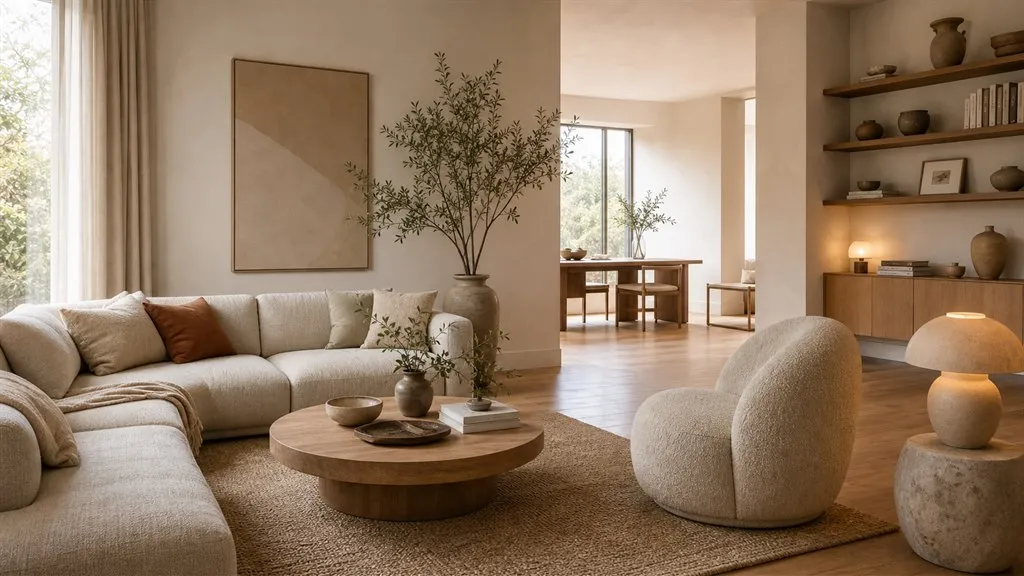
Organic modern design style pairs the clean lines of modern furniture with the soft shapes and raw textures of the natural world. Think of a simple, low sofa beside a chunky wood stool, a curved plaster lamp on a stone table, and a linen curtain moving in front of a large window. The room feels modern, but nothing in it feels hard.
The style is easy to like and easy to blur with its neighbors. Is it the same as Japandi? Warm minimalism? Boho with fewer plants? Not quite. This guide explains what organic modern is, what makes it recognizable, how it works room by room, how it compares with similar styles, and how to mix it with what you already have. It ends with a short style recipe.
Here is what makes the style recognizable.
What is organic modern style?
Organic modern is a blend of two ideas. The modern half brings simple silhouettes, open space, and very little ornament. The organic half brings materials that look like they came from nature, shapes with curves and irregular edges, and a palette taken from stone, sand, clay, and wood.
A few terms come up often:
- Organic shape: a form inspired by nature, such as a rounded edge, a pebble-shaped table, or a sculpted chair back, rather than a perfect square.
- Raw texture: a surface left close to its natural state, such as unglazed clay, rough plaster, or wood with visible grain.
- Plaster finish: a hand-applied wall or object finish with soft, uneven movement, often used on lamps, vases, and walls in this style.
- Boucle: a looped, nubby fabric that has become common on organic modern chairs and ottomans.
Put together, the style feels calm, tactile, and quietly modern. It sits well in houses of many kinds, from new suburban builds to older homes in the Carolinas where wood floors and plaster walls already bring some of the look.
What makes organic modern design style recognizable
Four elements do most of the work. A room with all four reads as organic modern, even if the pieces came from different places.
- Curves beside straight lines: a rounded sofa or a curved chair with a rectangular coffee table, or a round mirror above a straight console. The mix is the point.
- Natural materials, honestly finished: light or mid-tone wood, stone, travertine, clay, linen, wool, jute, and paper. Finishes are matte or oiled.
- An earthy, warm palette: cream, sand, oatmeal, clay, and warm white as the base, with olive, rust, or charcoal as quiet accents.
- Texture over pattern: boucle, nubby wool, rough plaster, and ribbed ceramics take the place of printed patterns.
Organic modern rooms also tend to have fewer, larger pieces and more open floor than a typical living room. The space between objects matters almost as much as the objects themselves.
How organic modern differs from its neighbors
These styles share a love of wood and calm, so it helps to know where they part ways.
- Organic modern vs Japandi: Japandi is more linear, lower, and more restrained, with darker wood accents and paper lighting. Organic modern leans on curves, plaster, and sculptural shapes.
- Organic modern vs warm minimalism: warm minimalism is broader: any calm, warm, low-clutter room fits. Organic modern adds specific cues: curved silhouettes, raw textures, and stone and plaster.
- Organic modern vs mid-century modern: both like wood and clean lines, but mid-century uses tapered legs, walnut, and bolder color. Organic modern is softer, paler, and more textural.
- Organic modern vs boho: both use natural textures, but boho layers pattern, color, and collected objects. Organic modern edits them down.
If a room seems to sit between two of these, look at the shapes. Curves and sculpted forms point to organic modern; low, straight lines point to Japandi.
Organic modern interior design in the living room
The living room is where the style shows most clearly.
- Sofa: a rounded or softly squared sofa in linen, cotton, or boucle, in cream or sand.
- Coffee table: a round or pebble-shaped table in wood, stone, or plaster. Keep the top at seat height or an inch or two lower.
- Seating: one sculptural accent chair, such as a curved wood frame or a boucle tub chair.
- Rug: a wool or jute rug in a soft neutral, large enough that the front legs of the seating sit on it.
- Lighting: a paper, linen, or plaster lamp with a warm 2700K bulb.
- Objects: a few large, matte ceramics and one branch or plant, with plenty of space around them.
Organic modern bedroom decor and kitchens
In the bedroom, the style is calm and tactile.
- Bed: an upholstered frame with a rounded headboard, or a simple wood platform.
- Bedding: washed linen in two or three close neutrals, with a nubby throw at the foot.
- Nightstands: small round tables or stone-topped pieces, with a plaster or ceramic lamp.
In the kitchen, organic modern shows up in materials more than furniture: wood or stone counters, matte cabinet finishes, a plaster or limewash range hood, and open shelves holding a few stoneware pieces. Round pendants in paper or linen soften the straight lines of the cabinets.
Blending organic modern into the home you have
Mix, don't match. Few homes are fully one style, and organic modern blends well with others. Choose one main style for about 80 percent of what you see and one secondary influence for about 20 percent.
- Organic modern as the main style: keep the curves, natural materials, and earthy palette, and let the 20 percent come from a vintage rug, an inherited chair, or art you love.
- Organic modern as the secondary influence: keep your furniture and borrow the details: a curved lamp, a plaster or clay vase, a boucle pillow, and a round mirror.
- With farmhouse: keep the wood and warmth, lose the distressed signs, and add one curved piece and one stone or plaster surface.
- With mid-century: let walnut furniture stay, and soften it with cream textiles and a sculptural ceramic or two.
Borrow the idea, not the theme. The style is about natural materials and soft shapes, not about filling a room with pampas grass and wavy mirrors.
Where organic modern goes wrong
- Every piece curved: without some straight lines, the room loses its modern half and looks soft and shapeless.
- All beige, no contrast: a dark wood stool, a charcoal throw, or a black lamp keeps the palette from washing out.
- Too many trend objects: one wavy mirror is a detail; three are a theme.
- Texture without comfort: a room of rough plaster and stone needs soft wool and linen to feel livable.
- Forgetting light: natural materials look best under warm lamps, not a single cool ceiling light.
Most of these come from buying the look in one go. Organic modern rooms that feel right usually grew slowly, one natural piece at a time, with the old pieces edited out as the new ones arrived.
An organic modern recipe: base, texture, accent
Use this as a starting point and adjust it to your house.
- Base: cream and sand fabrics, a mid-tone wood, and one softly curved sofa or bed.
- Texture: linen, boucle or nubby wool, and one stone, clay, or plaster surface.
- Accent: one sculptural chair or lamp, one dark contrast piece, and one branch or plant.
- Space: fewer, larger objects, with about a third of every surface left empty.
Organic modern is one of several calm, material-led styles, and comparing it with its neighbors in home decor styles for modern homes can help you decide whether it should lead a room or play a supporting role.
Frequently asked questions
What is organic modern decor?
Organic modern decor combines modern furniture shapes with natural materials, soft curves, raw textures, and an earthy palette. It feels calm and tactile rather than sleek.
What makes an organic modern room?
Curves beside straight lines, natural materials with matte finishes, a warm earthy palette, texture instead of pattern, and fewer, larger pieces with open space around them.
Is organic modern the same as Japandi?
No. Both are calm and use natural materials, but Japandi is lower, more linear, and more restrained, while organic modern leans on curves, plaster, and sculptural shapes.
How do you make a living room organic modern on a budget?
Keep your furniture and change the details: a curved or plaster lamp, linen and boucle pillow covers, a jute or wool rug, a large matte ceramic, and one branch in a vase.
Related guides
Styles
Home decor styles for modern homes
Compare the best home decor styles for modern homes and learn how to choose a style direction that feels practical timeless and personal

Styles
Japandi style ideas: what defines the look and how to use it at home
What Japandi style is, the palette, wood tones and low shapes that define it, how it differs from Scandinavian, and a simple recipe for any room.

Styles
Modern tribal living room ideas with warm global style
Design a modern tribal living room with earthy colors natural materials handmade texture pattern and comfortable layout