
Styles
Japandi style ideas: what defines the look and how to use it at home
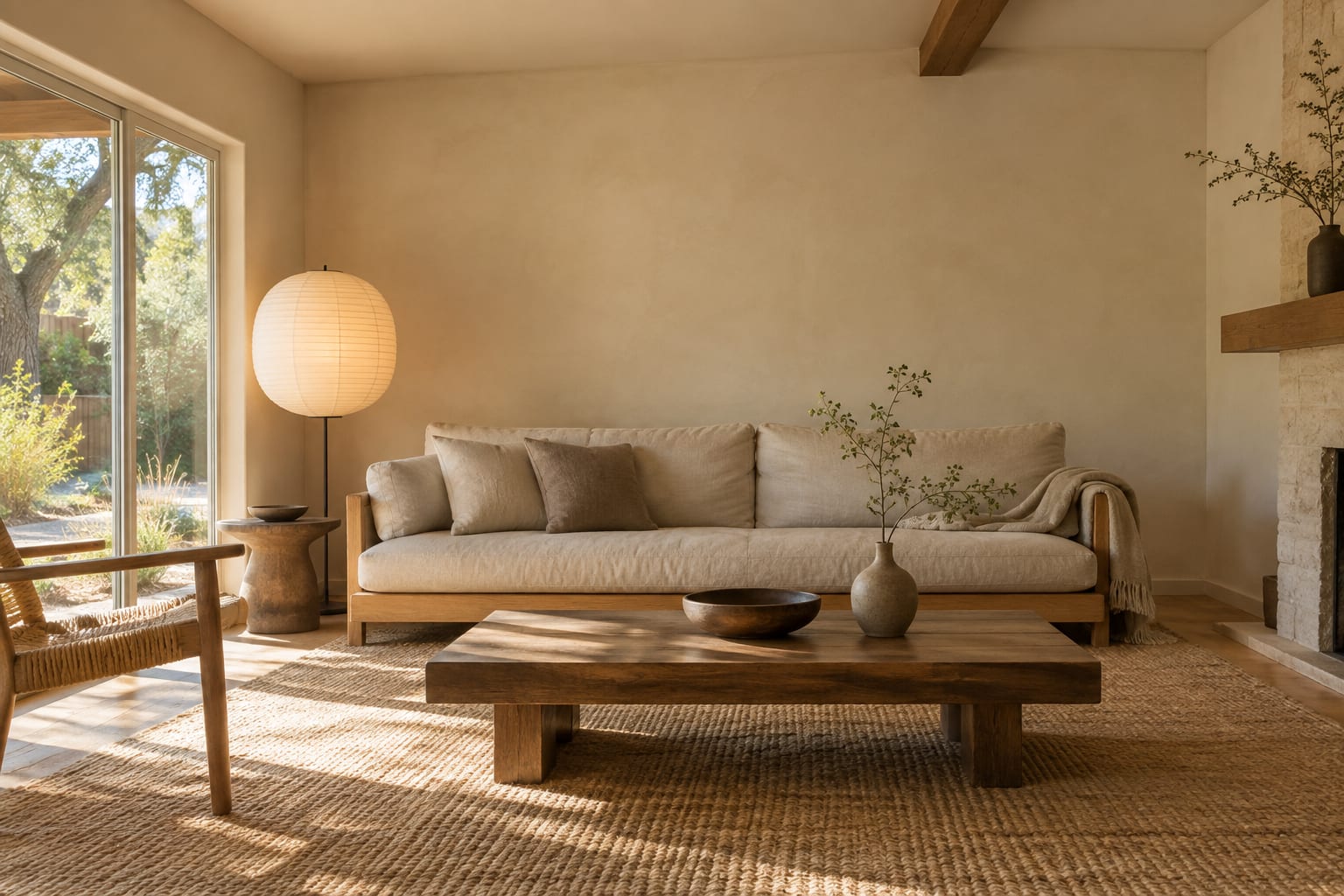
Japandi style is a blend of two design traditions: the quiet restraint of Japanese interiors and the easy comfort of Scandinavian homes. The name is simply the two words joined together. In a room, that blend shows up as low, simple furniture, natural materials, a soft and muted palette, and more open space than a typical living room has.
What makes Japandi useful is that it is a style of editing as much as a style of buying. It asks what each piece is for, then lets good materials and empty space do the rest. That is why it fits ordinary houses as well as apartments, from new suburban builds to the older mill houses of the Carolinas, where a room already has some character to work with.
This guide explains what Japandi style is, what makes it recognizable, how it works room by room, how to mix it with what you already own, and the mistakes that make it feel cold or staged. It ends with a short style recipe you can apply to any room.
What is Japandi style?
Think of Japandi as two neighbors who agree on most things. Japanese interiors bring low proportions, simple joinery, and a respect for empty space. Scandinavian interiors bring pale wood, soft textiles, and a focus on everyday comfort. Japandi keeps the calm of the first and the warmth of the second, and it leaves out the parts that do not fit: the stark emptiness of strict minimalism and the busy coziness of a room full of throws and candles.
A few terms come up often, so here is a short glossary.
- Ma: a Japanese idea of meaningful empty space. The pause between objects is treated as part of the design, not as something missing.
- Wabi-sabi: finding beauty in things that are handmade, worn, or slightly irregular, like a hand-thrown bowl with an uneven rim.
- Hygge: a Danish word for everyday coziness: warm light, soft fabrics, and rooms that invite you to stay.
- Joinery: the way pieces of wood are fitted together. In Japandi furniture it is often left visible, because good construction is part of the look.
Put together, these ideas explain the mood of a Japandi room. It is calm but not bare, simple but not cheap-looking, and warm without being cluttered.
What makes Japandi style recognizable
Here is what makes the style recognizable. Four elements do most of the work, and a room with all four reads as Japandi even if no single piece was bought for it.
- Low, simple silhouettes: sofas, beds, and tables that sit a little closer to the floor, with straight lines, slim legs, or solid bases. Shapes are quiet; nothing is carved or tufted.
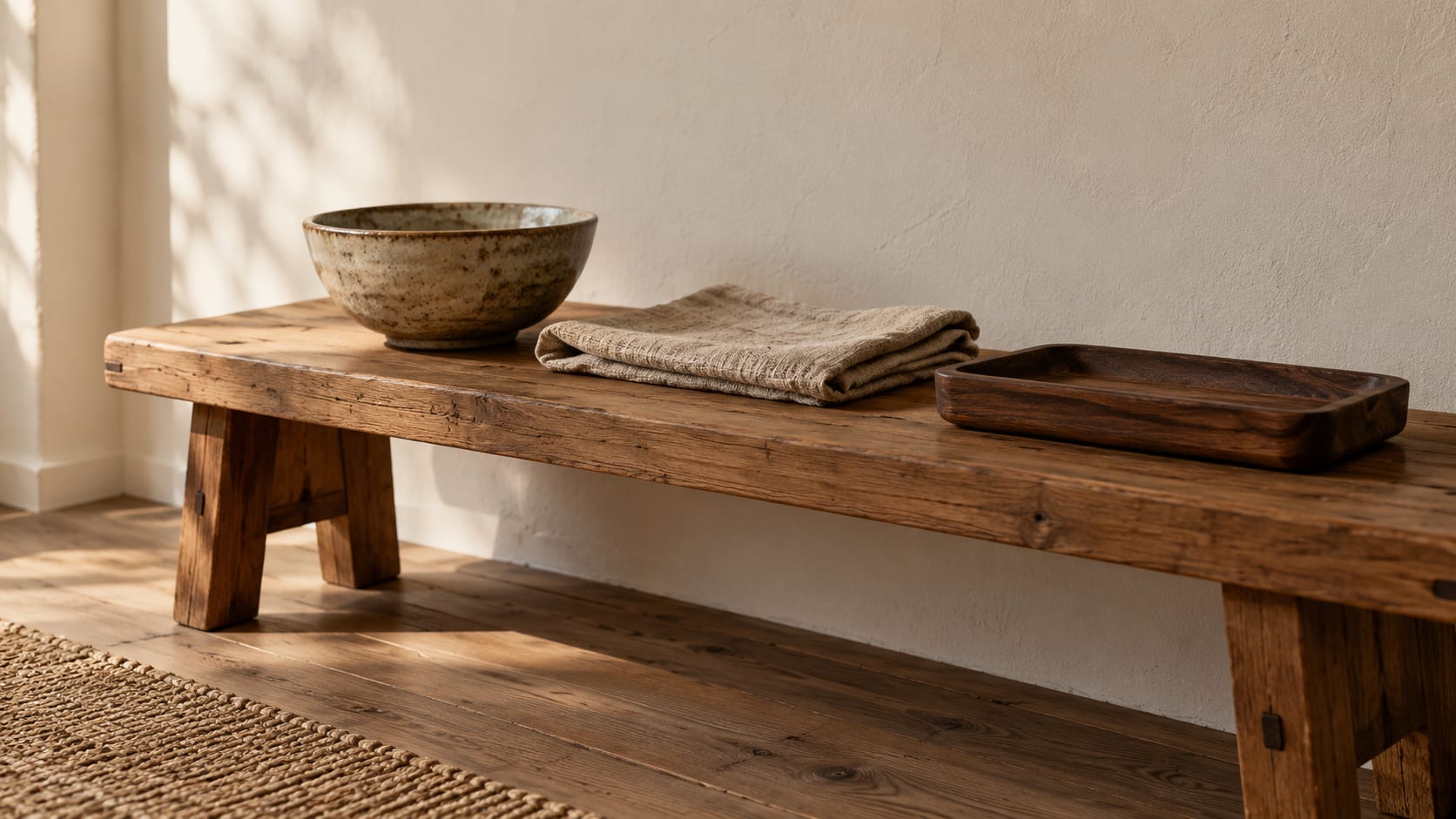
- Natural materials with a matte finish: wood, linen, cotton, paper, stoneware, and stone. Surfaces are oiled or matte rather than glossy, so they look good up close.
- A muted palette: warm white, oatmeal, sand, taupe, and soft gray as the base, with deeper notes in charcoal, dark brown, or a muted green.
- Open space: fewer objects, bare stretches of wall, and surfaces left partly empty on purpose.
Wood tones deserve a closer look, because they set the character of the room. Japandi usually pairs a light wood, such as oak or ash, with a darker one, such as walnut or a charcoal-stained finish. The Scandinavian side brings the light wood; the Japanese side brings the dark contrast. A simple way to balance them is the 60-30-10 idea: about 60 percent of the wood you see in one main tone (often the floor or the largest furniture), about 30 percent in a second tone, and about 10 percent as a dark accent, such as a picture frame, a stool, or a lamp base.
Finishes matter as much as color. A matte, oiled oak and a glossy, orange-toned oak are technically the same wood, but only the first looks Japandi. The same goes for metal: blackened steel or aged brass in small amounts fits, while bright chrome tends to feel out of place.
Japandi vs Scandinavian, warm minimalism, and organic modern
These looks share a lot, so it helps to know where they part ways. Each pair below has the same calm base but different details.
- Japandi vs Scandinavian: Scandinavian rooms are lighter and cozier, with pale woods, white walls, and more layered textiles. Japandi sits lower, shows more restraint, mixes in darker wood, and leaves more open space.
- Japandi vs warm minimalism: warm minimalism is the broader idea. Any calm, warm, low-clutter room can fit it. Japandi adds specific cues: low proportions, paper lighting, visible joinery, and a Japanese sense of balance.
- Japandi vs organic modern: organic modern leans on curves, plaster walls, and sculptural shapes. Japandi is more linear, with straighter lines and simpler forms.
- Japandi vs rustic farmhouse: both love wood, but farmhouse wood is distressed and chunky, with plenty of collected pieces. Japandi wood is smooth and refined, and the room holds far fewer objects.
If a room seems to sit between two of these, look at the shapes. Curves point to organic modern, layered textiles point to Scandinavian, and low, straight lines with dark wood accents point to Japandi.
Japandi living room ideas
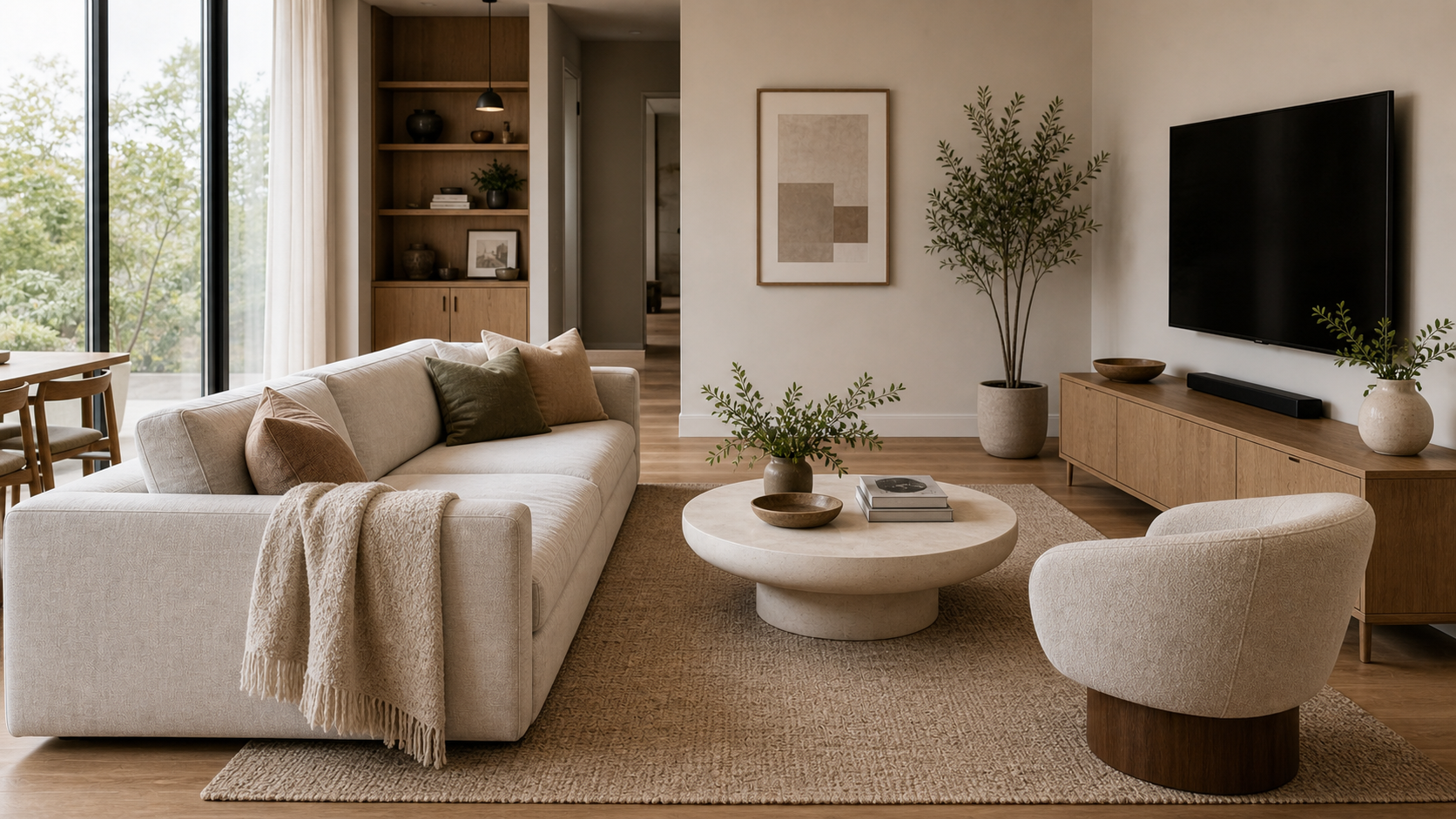
The living room is where most people start, and it shows the style clearly.
- Seating: a low sofa with a visible wood frame, or a slim-armed sofa in linen or a cotton blend. Loose cushions in two or three close neutrals look more natural than a tight, matched set.
- Coffee table: a simple wood table with a solid or slatted base. Keep the top at seat height or an inch or two lower, so it stays practical.
- Surfaces: three objects grouped together on the coffee table, the low end of the usual three to five, with about a third of the surface left empty. A stoneware bowl, a stack of two books, and a single branch in a heavy vase is enough.
- Rug: a flat-weave, wool, or jute rug in a soft neutral, large enough that the front legs of the sofa and chairs sit on it.
- Light: a paper or linen-shade floor lamp and a table lamp with 2700K bulbs. Paper shades are one of the clearest Japandi details.
- Storage: a low, closed media unit in wood. Doors hide the cables and keep the open space calm.
A Japandi minimalist living room still needs comfort. If the sofa is too hard or too low to get out of easily, the room will look right and feel wrong, and the style is meant to do both.
A Japandi style bedroom
The bedroom suits Japandi naturally, because rest benefits from fewer things to look at.
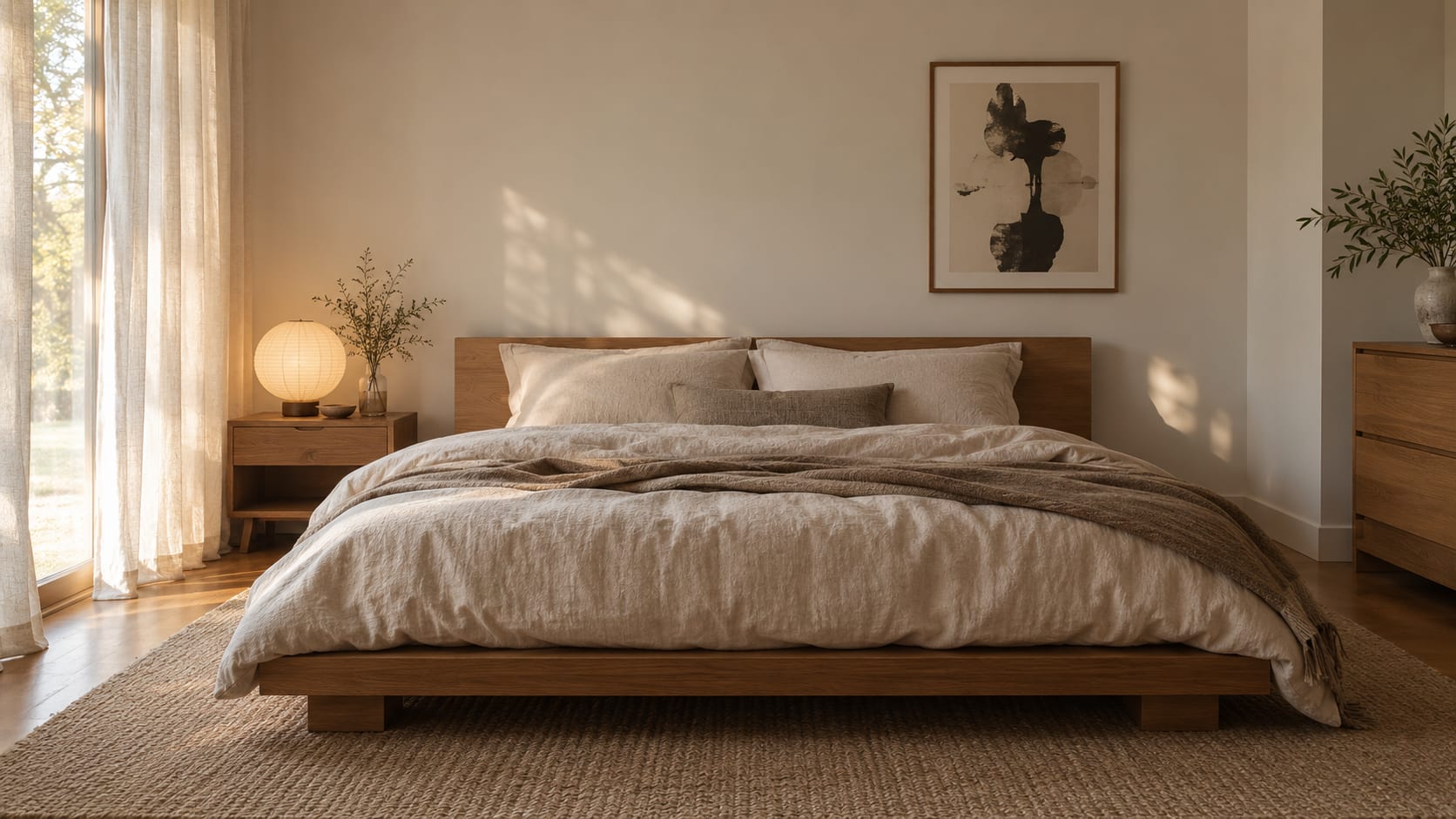
- Bed: a low platform bed in wood, or a simple upholstered frame in a neutral fabric. A headboard of plain wood or slatted panels fits better than a tufted one.
- Bedding: linen or washed cotton in two or three close tones, such as warm white with oatmeal and a darker charcoal throw at the foot.
- Nightstands: small and simple, with the top within about 2 inches of the mattress height. One lamp on each side with a paper or fabric shade.
- Walls: one piece of art or none. A single landscape print, an ink drawing, or a textile panel is enough.
- Storage: closed wardrobes and drawers, so clothes and chargers stay out of sight.
The same thinking carries into other rooms. In a dining area, a solid wood table, simple chairs or a bench, and one paper or linen pendant set the tone. In an entry, a low bench, a few wood or black metal hooks, and a lidded basket for shoes keep the floor clear, which does more for the look than any decor.
How to mix Japandi with other looks
Mix, don't match. Very few homes are fully Japandi, and they do not need to be. A useful approach is to choose one main style for about 80 percent of what you see and one secondary influence for about 20 percent. Japandi works well in either role.
- Japandi as the main style: keep the low furniture, muted palette, and open space, then let the 20 percent come from somewhere personal: a vintage rug, an inherited chair, or art you love.
- Japandi as the secondary influence: keep your current furniture and borrow the details. Add a paper lamp, swap busy pillow covers for linen, bring in one handmade ceramic piece, and clear a few surfaces.
- With farmhouse: keep the wood and the warmth, lose the distressed signs and extra baskets, and add one darker wood accent.
- With mid-century modern: this pairing is easy, since both like wood, low lines, and simple shapes. Let walnut furniture do the talking and keep accessories few.
Borrow the idea, not the theme. Japandi is about restraint, natural materials, and care for how things are made. It is not about filling a room with objects that stand for Japan.
Common Japandi mistakes
Most Japandi rooms that feel off have one of these problems.
- All beige, no contrast: without a darker wood or a charcoal accent, the room looks washed out, especially in strong daylight.
- Buying a matching set: a full set of furniture from one collection looks staged. Mix two wood tones and a few older pieces.
- Using symbols as props: decor that borrows Japanese symbols or characters without meaning misses the point and can feel disrespectful. Choose objects for material and craft instead.
- Seating that is too low: very low sofas and floor cushions can be hard for older family members or anyone with mobility needs. Comfort should win over proportion.
- Bare rather than calm: empty rooms with hard surfaces and no textiles feel cold. Japandi needs linen, wool, and warm light to work.
A quick Japandi recipe
Use this as a starting point for any room, then adjust it to the house you have.
- Base: a light main wood tone, warm neutral fabrics, and one low, simple piece of furniture as the anchor.
- Texture: linen, wool, paper, and stoneware. Aim for at least three natural textures in the room.
- Accent: one darker wood or charcoal element, one handmade object, and one living branch or plant.
- Space: leave about a third of every surface empty and at least one wall mostly bare.
Japandi is one of several calm, material-led looks, and comparing it with its neighbors in home decor styles for modern homes can help you decide whether it should be your main style or a quieter 20 percent influence.
Frequently asked questions
What is the difference between Japandi and Scandinavian style?
Scandinavian rooms are lighter and cozier, with pale woods, white walls, and more textiles. Japandi rooms sit lower, show more restraint, mix light and dark wood, and leave more open space.
How do you Japandi your home on a budget?
Start by editing: clear every surface and bring back only what you use or love. Then change the details that carry the look, such as linen pillow covers, a paper-shade lamp (a simple floor lamp is roughly $50 to $200), and one handmade ceramic piece. Larger furniture can come later, if at all.
Is Japandi style just minimalism?
No. Japandi shares minimalism's love of fewer objects, but it adds warmth through wood, textiles, and handmade pieces. A minimalist room can feel stark; a Japandi room should feel calm and comfortable.
Does Japandi work in a farmhouse or traditional house?
Yes, usually as the secondary influence. Keep the architecture and the main furniture, then borrow Japandi's palette, paper lighting, darker wood accents, and clear surfaces. The house keeps its character, and the rooms feel quieter.
Related guides
Styles
Home decor styles for modern homes
Compare the best home decor styles for modern homes and learn how to choose a style direction that feels practical timeless and personal
Decor Accents
Sofa styling ideas: how to style a sofa and everything around it
Sofa styling ideas for the whole sofa zone: side tables and lamps, the coffee table, the sofa table behind it, the wall above, and the final edit.
Decor Accents
Live edge desk ideas: how to style a natural wood desk
Live edge desk ideas for styling the surface: lamp and task light, materials that suit the wood, hiding cables, the wall above, and simple care.