
Decor Accents
Neutral living room decor plan for calm modern accents
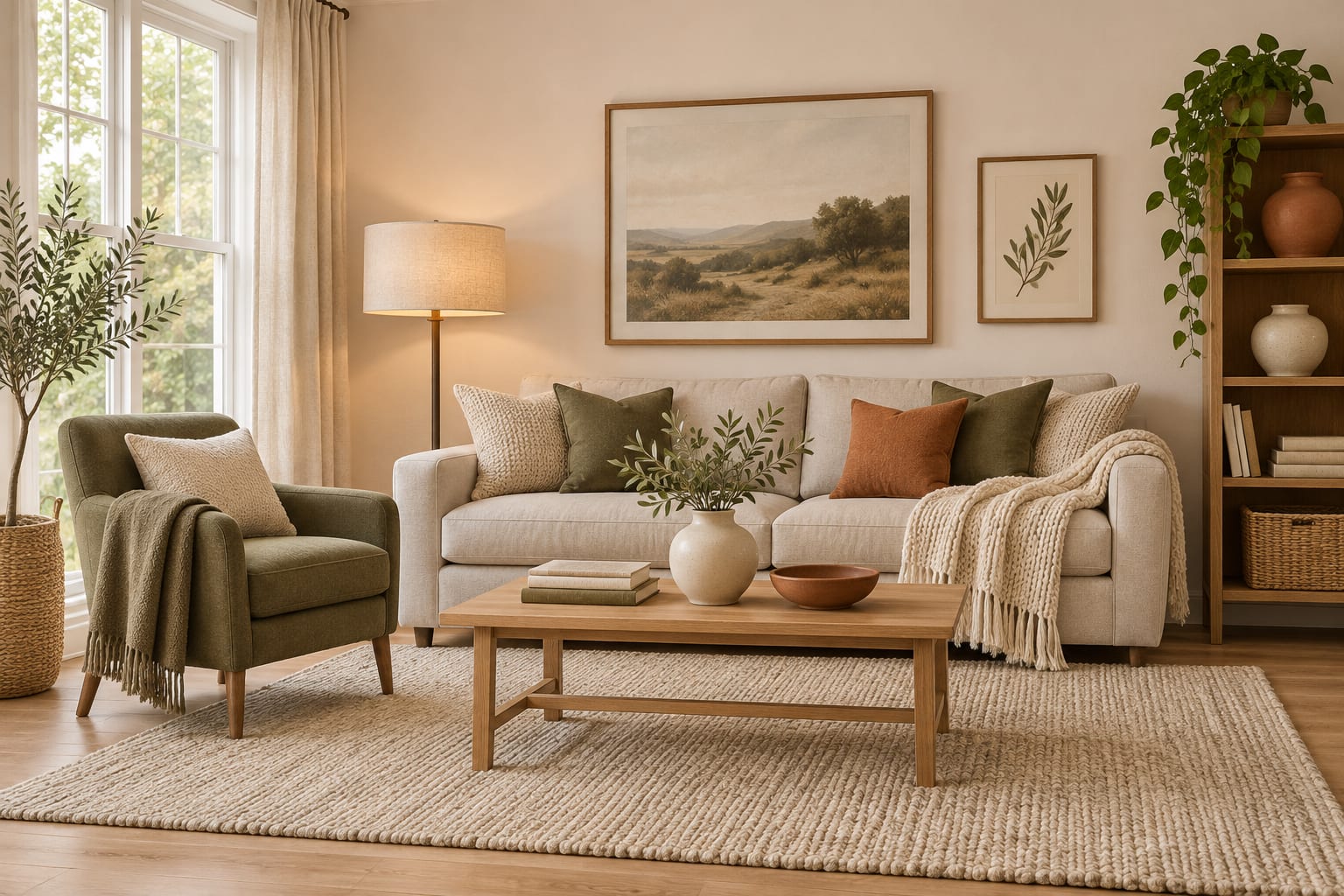
A neutral living room decor plan does not start with more shopping. It starts with the room that is already there. The right accents can add warmth texture and direction without making the space feel busy. A repeated color can give the eye somewhere to rest. A well sized piece of art can connect the sofa to the wall instead of leaving the room feeling unfinished.
The best modern neutral living room accent ideas start with what is already in the room. Look at the sofa the floor the walls and the light before bringing home another small object. Then add accents that improve comfort scale and daily use. The aim is not to fill every surface. The aim is to make a calm room feel considered.
A neutral living room decor plan starts with the existing base
Neutral does not mean one shade. A room may include warm white walls cream upholstery light oak and a gray stone surface. Another room may have beige walls a brown sofa and a cooler rug. These differences matter because every new accent will sit beside them.
Stand at the doorway and identify the three largest colors first. Ignore the small objects for a moment. Notice whether the base feels warm cool pale or deep. An accent that looks soft in a store can look sharp beside a cool gray wall. A warm rust cushion can feel natural beside oak but heavy beside a red brown sofa.
Keep the large pieces quiet enough to live with. Accent decor is easier to change than a sofa or a floor. Let the base carry most of the room and use smaller pieces to add direction.
Choose one accent color and repeat it with restraint
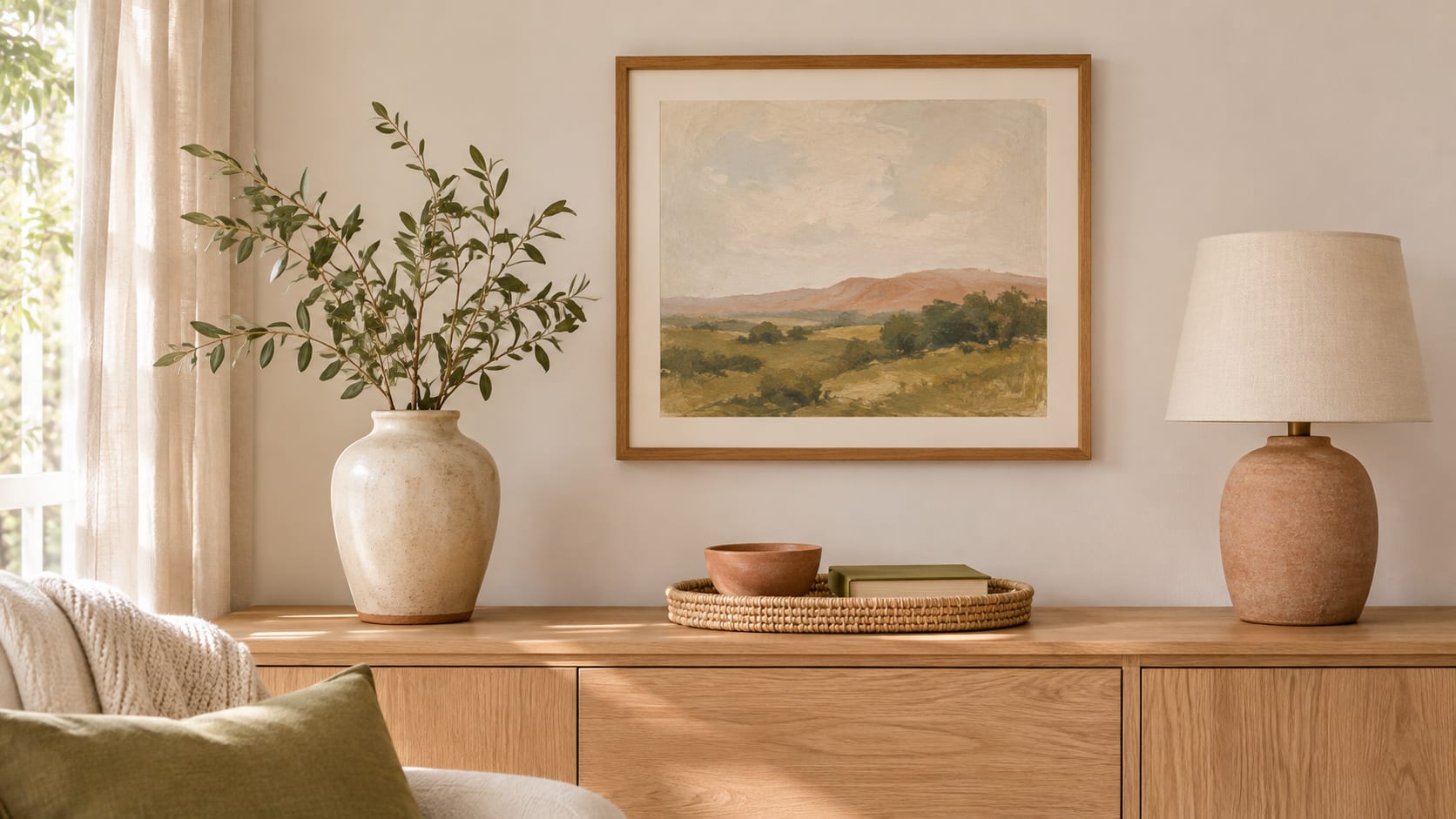
The easiest way to keep a neutral living room calm is to choose one clear accent family. It may be olive green muted blue terracotta or a deep brown. The color does not need to appear everywhere. It only needs to return often enough to look intentional.
Repeat it in two or three different forms. A muted olive cushion can sit near a small plant and a thin line in the artwork. A terracotta throw can relate to a ceramic bowl and a warm detail in the rug. Repetition works better when the objects are not identical.
Do not build the room around a handful of tiny color spots. A small object on every shelf can make the eye jump around. Choose one larger accent first. Then add one medium piece and one small detail only if the room still needs them.
Use texture before adding more color
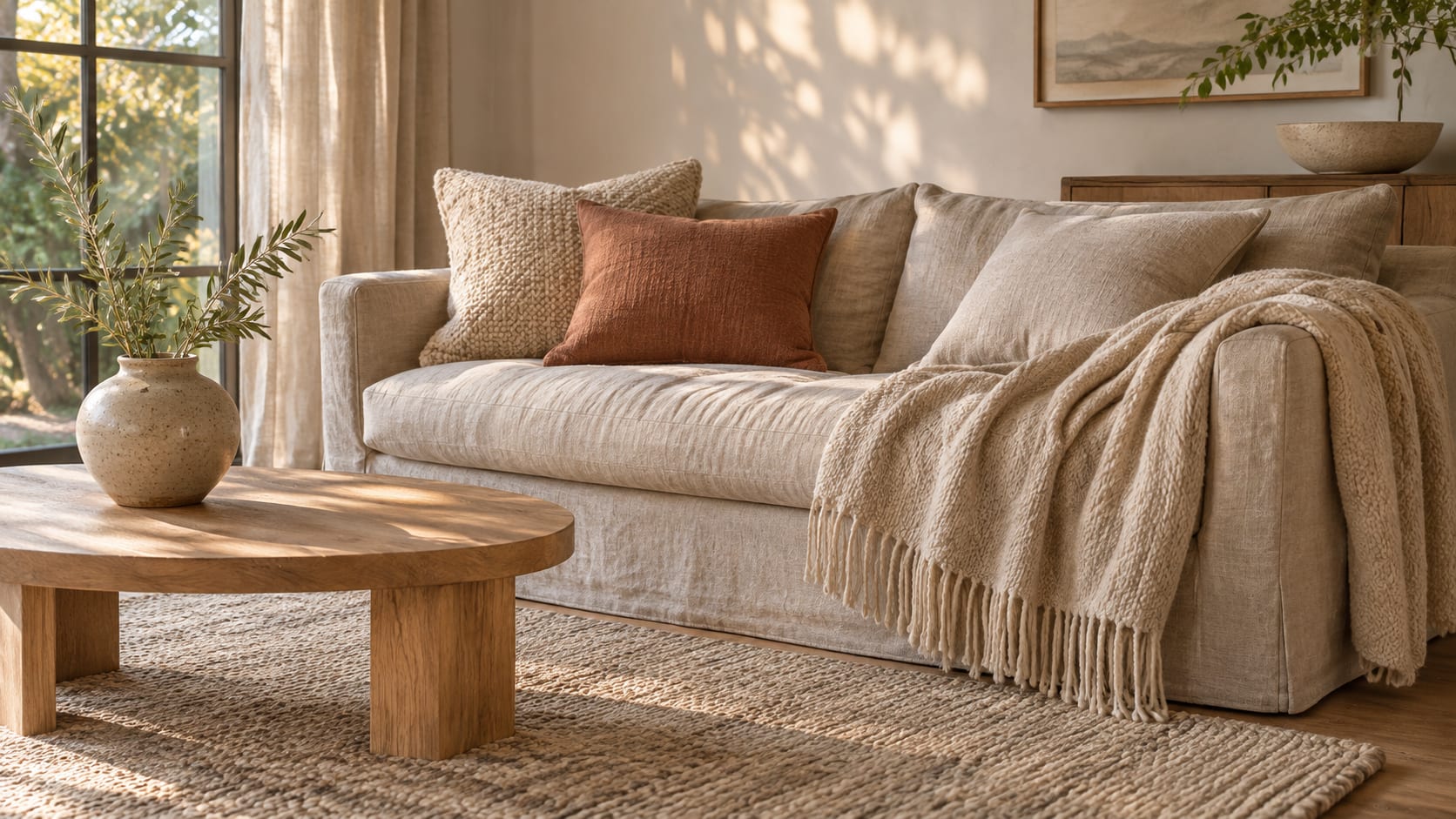
Texture gives a neutral room depth without making it loud. Start with the surfaces that people touch. A linen cushion feels different from a smooth cotton one. A wool throw changes the sofa more than another printed ornament. A woven basket can soften a hard cabinet while still doing a useful job.
Layer textures at different heights. Put a soft throw over the sofa. Let a textured rug ground the seating. Add a ceramic or wooden object on the table. The materials should feel related but not matched.
Three quiet textures can do more than five new colors. If the room feels flat add something tactile before adding another accent shade. If it feels cold add warm wood woven fiber or a softer fabric. If it feels crowded remove small objects and keep the stronger surfaces.
Choose accent pieces by scale and proportion
Small accents are easy to buy and easy to misuse. A room can end up with many objects that are too small for the sofa the wall or the table below them. The result feels busy but still unfinished.
Start with the largest empty area. A wide wall may need one substantial artwork or a group that reads as one shape. A large sofa may need cushions with enough presence to be seen from across the room. A coffee table needs a group that leaves room for a cup a book and normal movement.
Use height variation on open shelves and tables. One taller object can sit with a medium piece and a low piece. Leave part of the surface open so the group can breathe. If everything is the same height the arrangement looks flat. If every object is different in color and shape it loses its calm.
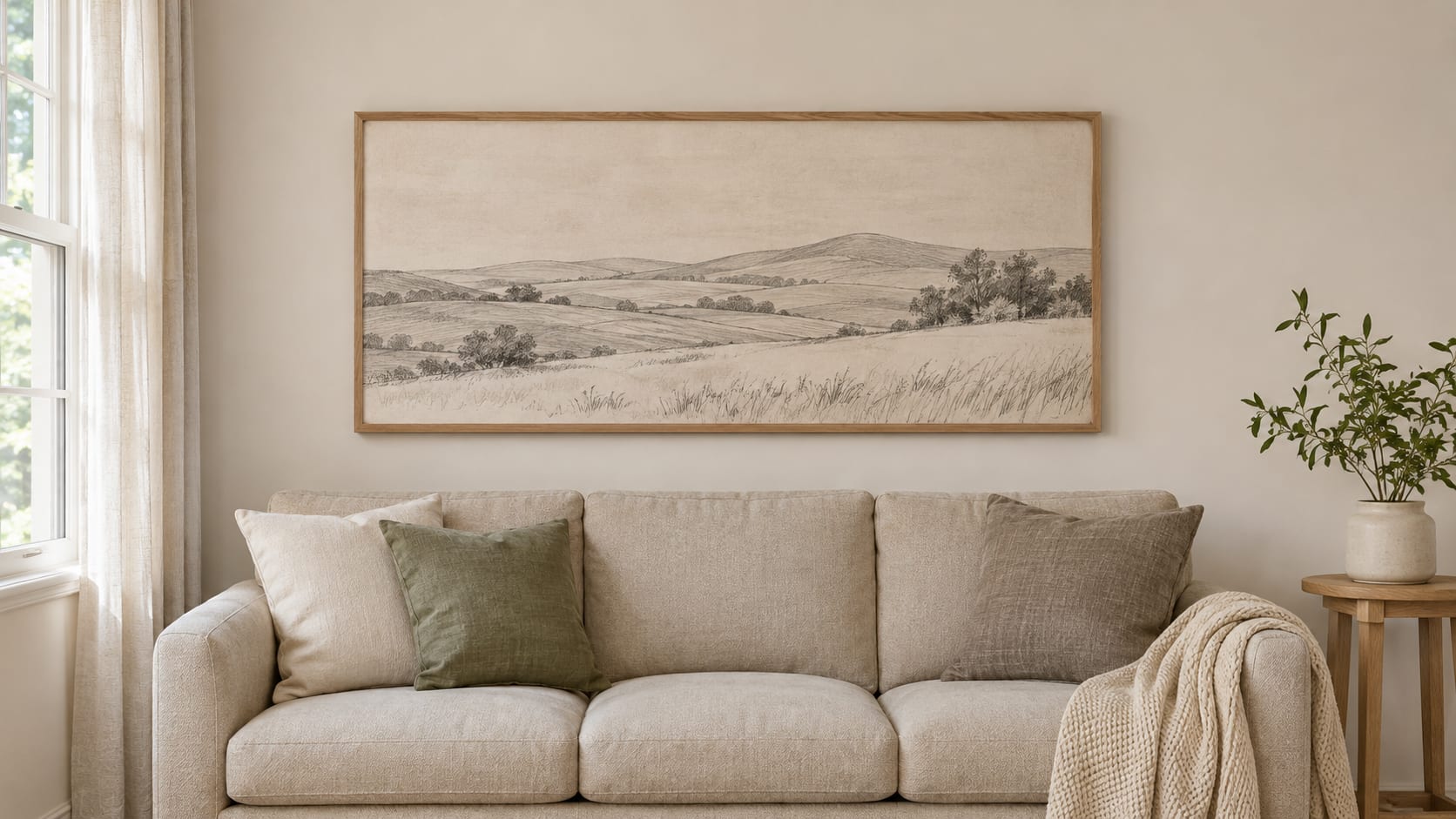
The piece below the accent also sets the scale. Art should relate to the furniture beneath it. A very small frame above a wide sofa will look lost even when the frame itself is beautiful.
Build the wall layer without crowding the room
Wall decor should connect to the room instead of floating above it. Center a single artwork with the sofa or console below. For a group of frames treat the group as one large shape before you hang anything.
Lay the pieces on the floor first. Check the outside edges and keep the gaps consistent. A simple row can feel more modern than a crowded collection when the furniture and the wall already have strong shapes.
Neutral walls do not always need neutral art. A quiet room can carry one deeper line or one muted color. The artwork can be the place where the accent color returns. Keep the frame finish simple if the room already has strong texture.
Renters can use lighter pieces and removable hanging systems where appropriate. Heavier mirrors and large frames need hardware rated for the wall and the weight. The safest choice is always the one that suits the wall material and the maker's instructions.
Ground the room with rugs and textiles
Textiles are the quickest way to make a neutral room feel lived in. Use the rug to connect the seating rather than leaving it as a small island in the middle. The front legs of the main seating can rest on the rug when the size allows.
A plain rug can support a patterned cushion. A subtle rug can carry stronger art. If both the rug and the cushions have busy patterns the room may lose its quiet base. Change one layer first and look again before adding another.
Curtains also belong to the accent plan. Their color can repeat the wall or soften it. Their texture can balance a smooth sofa and hard floor. Keep the treatment simple when the room already has many small details.
Edit the room so the accents support daily life
The final step is subtraction. Walk into the room at different times of day. Sit on the sofa. Look toward the television or the window. Notice whether one object blocks a route or whether a surface has become a place for things that should be stored elsewhere.
Keep the pieces that improve the room's use or its balance. Remove pieces that only fill a gap. A tray can gather small items. A basket can hold a throw. A lamp can make a dark corner useful. An ornament that has no job may still stay if it has personal meaning. The room only needs fewer competing signals.
Seasonal changes should stay small. Keep the base arrangement and swap a cushion a throw or one tabletop piece. This keeps the room connected instead of making it feel like a new theme every few months.
Common mistakes in a neutral living room
- Buying many small accents before choosing one strong anchor.
- Adding color without repeating it anywhere else.
- Using texture only on the sofa and leaving the floor and walls flat.
- Hanging art too high or choosing a piece that is too small for the furniture.
- Styling every surface and leaving no place for daily objects.
- Matching every accent instead of repeating one idea in different materials.
- Keeping objects that block light movement or a useful walking path.
A simple final check
Stand at the entrance and ask what the eye sees first. The answer should be a comfortable room rather than a collection of objects.
Check the main color story. Check the largest accent. Check the softest texture. Check the wall scale. Then clear one surface and live with the room for a few days.
A modern neutral living room feels finished when the accents support the room's use. They should make the sofa more comfortable the wall more connected and the daily routine easier. The calm comes from choosing enough and then stopping.
Frequently asked questions
How do you add interest to a neutral living room?
Start with texture and scale. Add one repeated accent color through different materials and keep the strongest piece large enough for the room.
How many accent colors should a neutral living room have?
One main accent family is usually easier to control. Repeat it in two or three different forms instead of scattering many unrelated colors.
What makes a neutral living room feel less flat?
Layer materials such as linen wool wood ceramic and woven fiber. Use a well sized rug and artwork before adding more small objects.
Related guides

Decor Accents
Neutral fall decor ideas for a living room that does not look themed
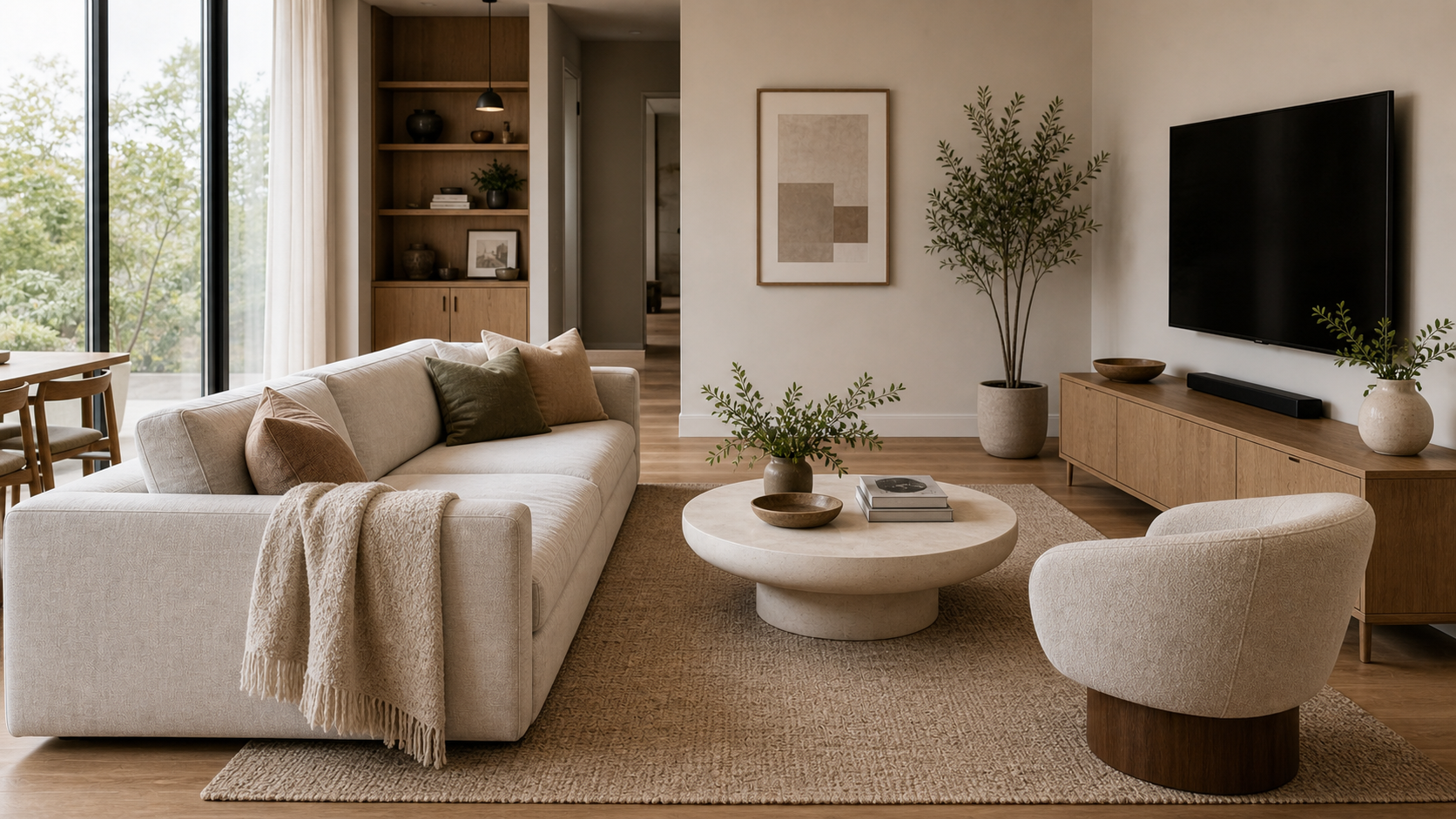
Neutral fall decor for the living room: camel, olive, wool, and lamplight instead of orange props. A calm, surface-by-surface guide.
Decor Accents
Sofa styling ideas: how to style a sofa and everything around it
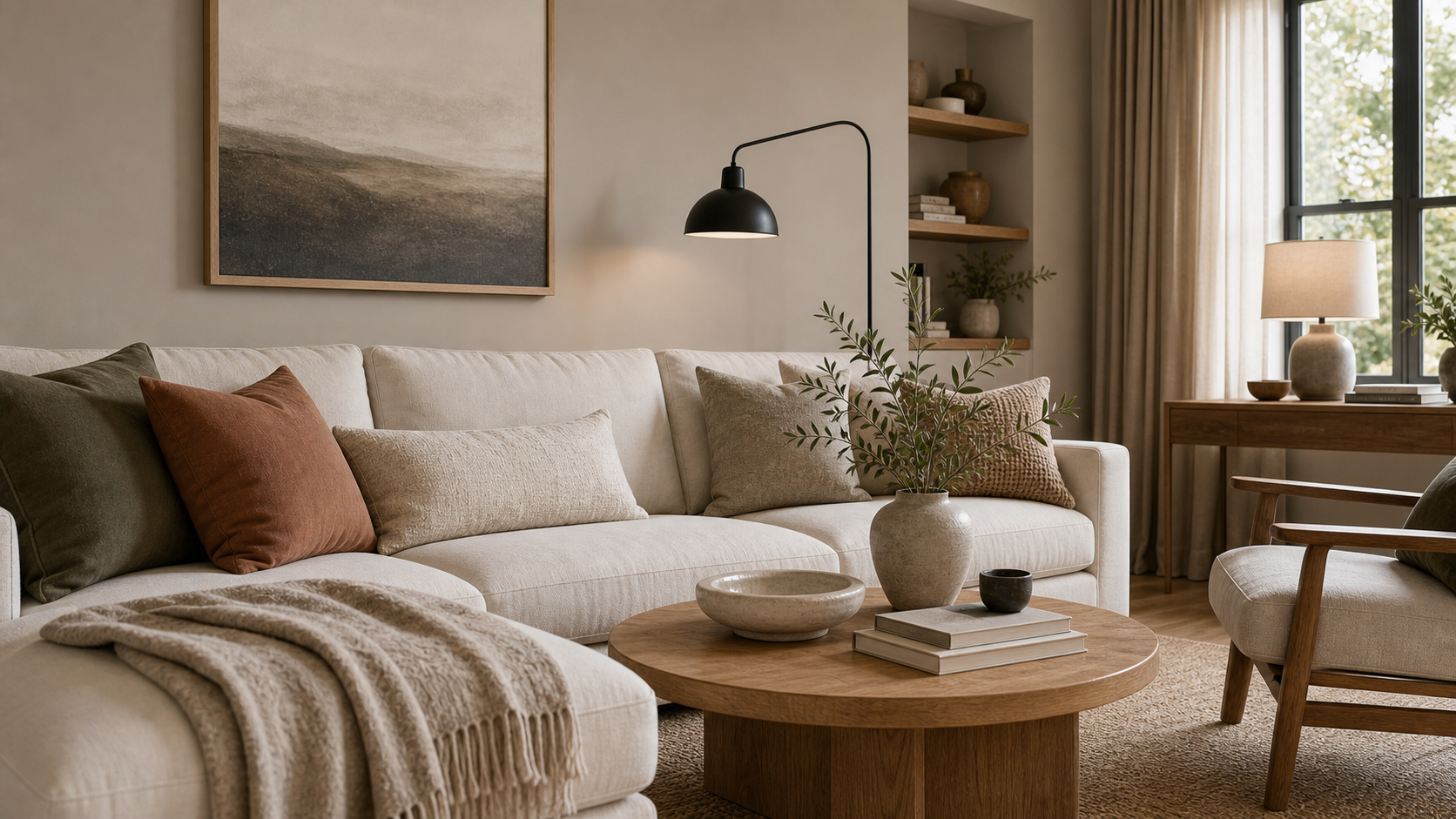
Sofa styling ideas for the whole sofa zone: side tables and lamps, the coffee table, the sofa table behind it, the wall above, and the final edit.
Decor Accents
Live edge desk ideas: how to style a natural wood desk
Live edge desk ideas for styling the surface: lamp and task light, materials that suit the wood, hiding cables, the wall above, and simple care.