
Home Decor Trends
Warm minimalist interior design: is warm minimalism here to stay?

Short answer: warm minimalist interior design is one of the few recent directions worth keeping. It is less a trend than a correction. The stark, white, hard-edged minimalism of the last decade looked clean in photos and felt cold to live in. Warm minimalism keeps the low clutter and adds wood, texture, and softer light. That combination solves real problems, which is why it is likely to last.
Some of its surface details will still date, especially the all-beige rooms and the identical boucle chairs. This guide looks at warm minimalism as a direction: what changed, why it appeals now, how it shows up room by room, how to try it cheaply, what may date, and a keep, try, or skip verdict.
Try it small before you commit.
Warm minimalist interior design: what it is
Warm minimalism is minimalism with comfort added back. The room still has few objects, clear surfaces, and simple furniture. But instead of white walls, chrome, and glossy finishes, it uses warm whites, wood, linen, wool, and soft lamplight.
It is broader than a named style. Japandi, organic modern, and quiet luxury all sit inside it, each with its own details. Warm minimalism is the shared direction underneath them: fewer, better things in warmer materials.
What is changing: from cold minimalism to warm
The shift is easiest to see side by side.
- Walls: from bright white and cool gray to warm white, cream, and soft greige.
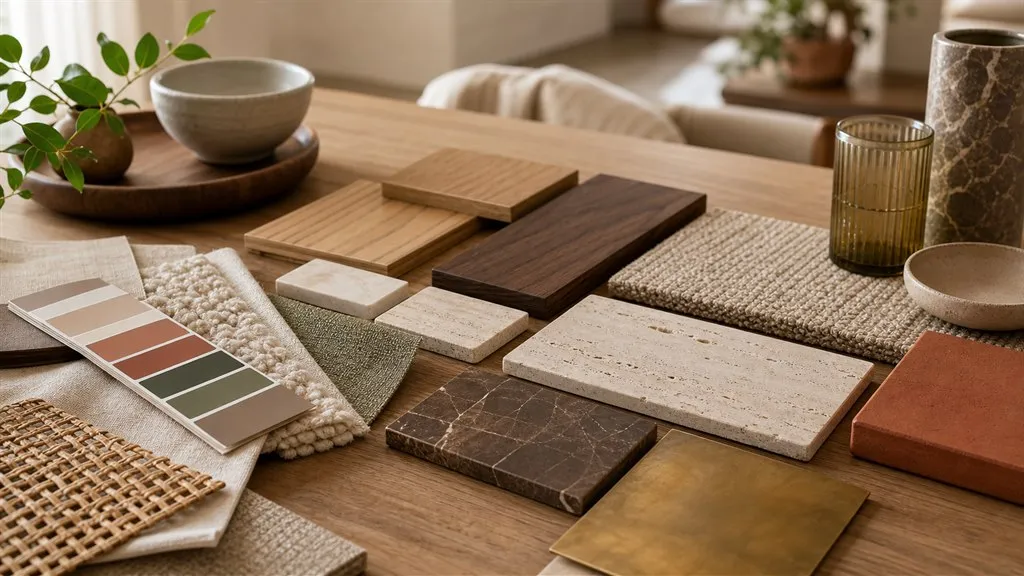
- Materials: from lacquer, chrome, and glass to oak, walnut, linen, wool, clay, and stone.
- Light: from a single cool ceiling fixture to several warm lamps at different heights.
- Furniture: from sharp, hard-edged pieces to softer, slightly rounded ones.
- Objects: from almost nothing to a few handmade pieces with texture.
The signal is not that people want more stuff. It is that they want the same calm with less coldness. That is a durable reason to change a room, not a passing look.
Why warm minimalism appeals now
- It is easier to live with. Fewer objects mean less cleaning and resetting, and warm materials make a sparse room feel welcoming.
- It suits real homes. Most American houses have wood floors, mixed furniture, and imperfect walls. Warm minimalism works with them; stark minimalism fights them.
- It holds value. Wood, wool, and linen age well. Pieces bought for a warm minimalist room usually still work after the room changes.
- It photographs softly. Warm light and texture look good on a phone screen too, which helped it spread.
The risk is uniformity. When every room uses the same beige sofa, the same boucle chair, and the same ribbed vase, the direction starts to look like a catalog.
How warm minimalism shows up room by room
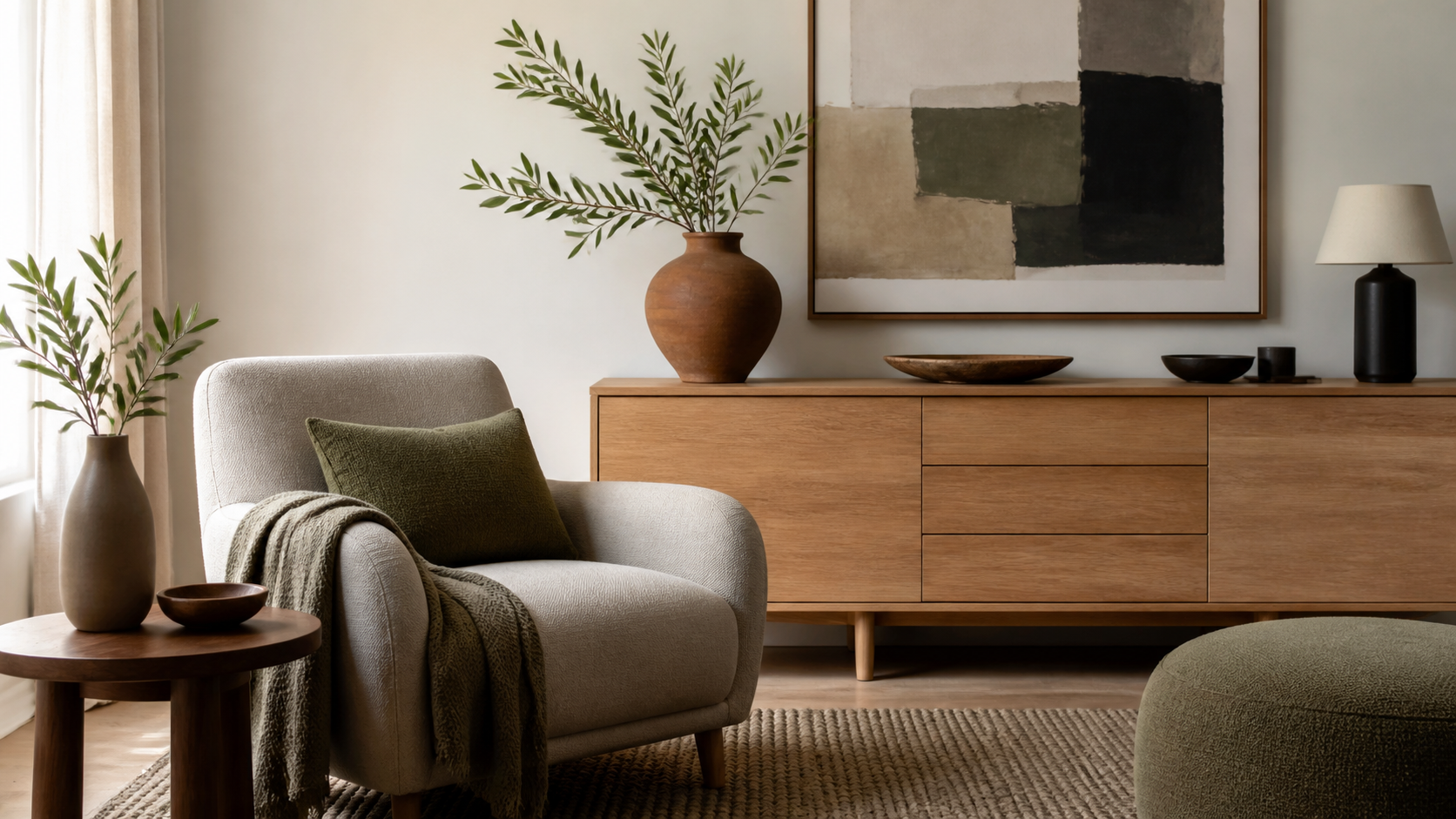
- Living room: a simple sofa in linen or wool, a wood coffee table, a wool rug, two or three lamps with fabric shades, and a few large ceramics.
- Bedroom: a low wood or upholstered bed, linen bedding in close tones, and closed storage so surfaces stay clear.
- Kitchen: wood or warm-toned cabinets, a stone or wood counter, and open shelves with a few stoneware pieces.
- Entry: a wood bench, hooks in one finish, and a closed cabinet for shoes.
In Southern California homes with strong daylight and indoor-outdoor layouts, warm minimalism works naturally: light already warms the room, and the materials connect it to the outdoors. In darker homes, it needs more lamps and a slightly warmer palette to avoid looking flat.
How to try warm minimalism cheaply
Trends belong in the easy-to-change layer, and most of warm minimalism can be tested without buying furniture.
- Edit first. Clear surfaces and keep about a third of each one empty. It costs nothing and does most of the work.
- Warm the light. Swap cool bulbs for 2700K bulbs in lamps, and add a lamp to the darkest corner.
- Change the textiles. Linen or cotton pillow covers and a wool throw, roughly $100 or less each.
- Add one natural material. A wood tray, a clay vase, or a stone bowl.
Keep the big, expensive pieces neutral and calm. If the look still feels right after a few months, move on to a mid-cost change such as a wool rug or a wood side table.
What may date
Warm minimalism as a direction is likely to last. Some of its details are already repetitive.
- Likely to last: natural wood, linen and wool, warm lamplight, closed storage, and fewer, better objects.
- Starting to look repetitive: all-beige rooms with no contrast, the same boucle accent chair in every photo, ribbed and fluted vases in groups, and arches painted onto flat walls.
- Worth watching: very pale, almost white oak everywhere. It looks fresh now but can feel washed out in rooms without much daylight.
The cure for repetition is contrast and personality: one darker wood, one piece of art you chose yourself, and one older object with a story.
Signs a warm minimalist room is going flat
The direction lasts, but individual rooms can drift into blandness. Watch for these signs:
- Everything is the same shade. Sofa, rug, walls, and curtains all sit within one narrow band of beige.
- No dark point. Nothing in the room is darker than mid-tone wood.
- Every object is new. Nothing in the room has a history or a story.
- One light source at night. The room depends on the ceiling fixture after dark.
- Texture without variety. Every fabric is the same weight and weave.
Each has a cheap fix: one darker wood or black accent, one older or handmade piece, one more lamp, and one textile with a different weave. The goal is to keep the calm and lose the catalog look.
Warm minimalism, Japandi, and quiet luxury: how they relate
These three are often mentioned together, and they do overlap. Warm minimalism is the broad direction. Japandi is a specific style inside it, with low furniture, paper lighting, and Japanese proportions. Quiet luxury is another branch, focused on fewer, higher-quality materials and tailored pieces.
In practice, many rooms mix all three: a Japandi bench, a quiet-luxury wool sofa, and warm minimalist editing throughout. That mix is fine, because they share a base: warm materials, few objects, and soft light.
For a trend decision, the question is not which label to choose. It is which of the shared ideas to adopt: fewer objects, warmer materials, softer light. Those are worth keeping whichever label sticks.
Is minimalism going out of style?
Cold, empty minimalism has already faded. Warm minimalism is what replaced it. Maximalism, with more color and collected objects, is growing too, but it is a separate path for people who enjoy more things around them.
For most households, the practical middle is warm minimalism with a personal layer: a calm, warm base, plus a few objects, colors, or collections that make the room yours. That mix is unlikely to look dated, because it is not tied to one season's details.
Keep, try, or skip
- Keep: warm whites, wood, linen, wool, warm lamplight, closed storage, and clear surfaces.
- Try: one darker wood accent, one handmade ceramic, a wool rug, and a curved or softened piece of furniture if you are replacing one anyway.
- Skip: all-beige rooms with no contrast, buying a matching warm minimalist set, and copying one popular chair or vase into every room.
Warm minimalism is the steady base under several current directions. Among the 2026 home decor trends, it is the one most likely to still look sensible in five years, as long as the details stay personal.
Frequently asked questions
How can I achieve a warm minimalist interior design?
Edit surfaces first, then warm the light with 2700K bulbs and more lamps, switch to linen and wool textiles, add wood and clay accents, and keep large furniture simple and neutral.
What is the difference between warm minimalism and minimalism?
Classic minimalism used white, hard, and glossy finishes. Warm minimalism keeps the low clutter but adds wood, natural textiles, warm whites, and soft lamplight.
Is warm minimalism a trend that will last?
The direction is likely to last because it makes rooms easier to live in. Some details, such as all-beige palettes and identical boucle chairs, are already dating.
What does a warm minimalist living room look like?
A simple linen or wool sofa, a wood coffee table, a wool rug, two or three warm lamps, a few large ceramics, and clear, uncluttered surfaces.
Related guides
Home Decor Trends
Interior design styles and home decor trends for 2026
Explore 2026 home decor trends interior design styles colors materials and timeless choices for a stylish modern home
Home Decor Trends
Modern home decor ideas for 2026
Explore modern home decor ideas for 2026 with warm neutrals natural texture layered lighting storage and decor accents for calm rooms

Home Decor Trends
Color trends for home decor choosing palettes that age well
Choose home decor color trends wisely with warm neutrals, earthy tones, richer accents, and practical palette rules for rooms that last.