
Home Decor Trends
Quiet luxury interior design ideas that feel timeless

Start with refined basics
Quiet luxury interior design is not about showing wealth. It is about making a home feel calm, considered, and deeply comfortable. The style depends on good materials, soft proportion, simple lines, and details that look natural in daily life. A quiet luxury room should feel edited but never empty. It should feel polished but never stiff.
The best starting point is the basic pieces. The sofa, the main chair, the rug, the coffee table, the curtains, and the lighting need to feel steady and intentional. When these pieces are chosen well, the room does not need many objects to feel finished. The home starts to feel expensive because the foundation is clean, warm, and balanced.
This style works very well for modern homes because it respects space. It does not fill every surface with decoration. It lets the eye rest. It gives every object a reason to be there. A room can look simple at first and still feel rich when the texture, light, and shape are doing the work.
Choose materials before decoration
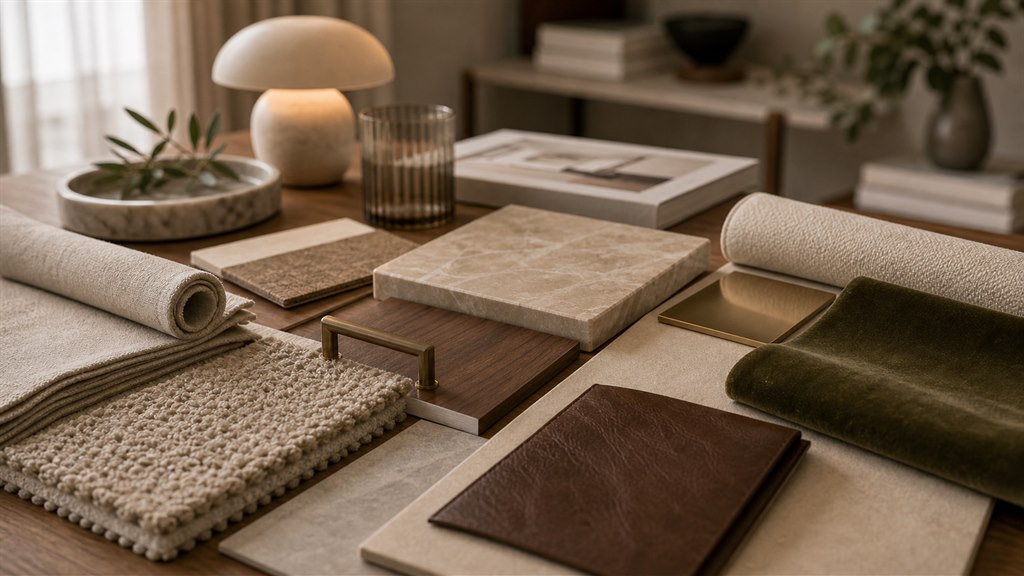
Materials are the heart of quiet luxury. Stone, wood, linen, wool, leather, ceramic, and brushed metal can make a room feel layered without adding clutter. A simple console in warm wood can bring more character than many small accessories. A linen curtain can soften a full wall better than a busy print. A thick wool rug can make the room feel settled before any styling begins.
Look for materials that have a natural surface and a quiet texture. Matte finishes usually feel better than shiny finishes in this style. They absorb light in a softer way and make the room feel peaceful. The goal is not to remove beauty. The goal is to let beauty come from quality rather than from noise.
A good room often repeats the same material family in small ways. Wood can appear in a table, frame, and picture frame. Stone can appear in a tray, lamp base, and side table. Linen can appear in curtains, cushions, and upholstery. This repetition makes the room feel connected without feeling forced.
Build a controlled color palette
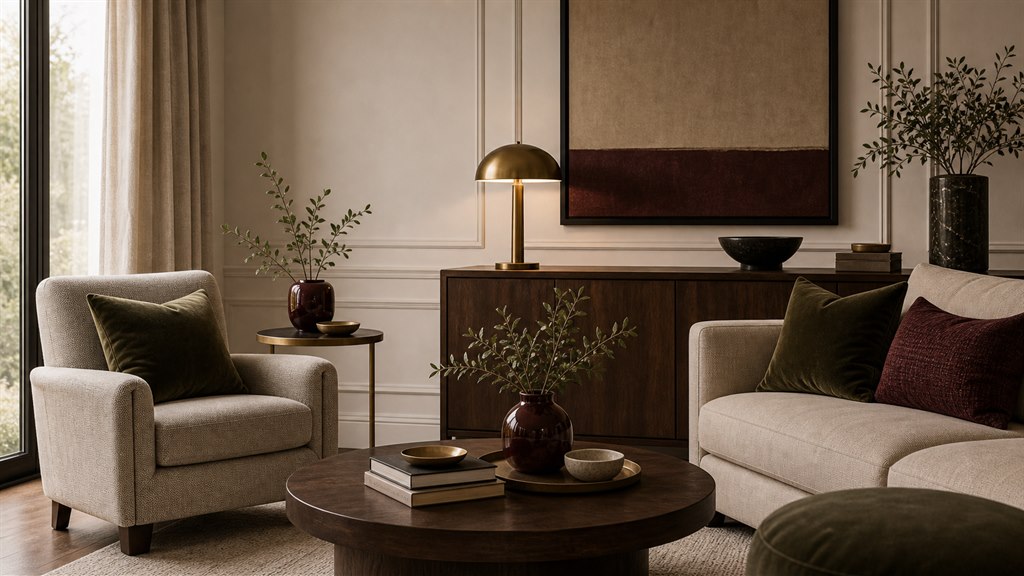
Quiet luxury color is usually soft, but it should not feel flat. Warm white, ivory, mushroom, taupe, greige, clay, soft brown, olive, and muted charcoal all work well. The palette should feel calm in natural light and comfortable in evening light. A strong palette has depth even when it stays neutral.
Use contrast in a gentle way. A pale sofa can sit on a deeper rug. A cream wall can hold dark wood. A soft beige room can use black, bronze, or deep brown as a small anchor. The contrast should make the room feel grounded without stealing attention from the whole composition.
Use touch as the quality test
A quiet luxury room should feel good before it tries to impress anyone. Touch is the simple test. The rug should feel dense. The curtain should fall with weight. The chair should support the body. The table should feel stable. The lamp switch should feel smooth. These small details make the room feel expensive without needing obvious decoration.
When a piece looks beautiful but feels weak, it rarely supports quiet luxury for long. A home with fewer, better pieces can feel more confident than a room filled with decorative items. Choose the details that make everyday use calmer, softer, and more pleasant. This is where the style becomes practical. The beauty is not only in the photo. It is in the way the room works every morning and every evening.
Think about how every surface feels in the hand and how every textile feels on the body. A rough throw can ruin a soft chair. A thin curtain can make an expensive room feel unfinished. A table that shakes can break the calm feeling of the space. Quiet luxury rewards these small decisions because the room has fewer distractions and every detail becomes easier to notice.
Let storage protect the calm mood
Storage is part of the design because clutter quickly weakens a quiet room. Use closed cabinets, woven boxes, built-in shelves, and simple trays to keep daily items under control. The goal is not to hide real life. The goal is to give real life a clear place. When keys, chargers, magazines, remotes, and blankets have a home, the room can stay calm without constant effort.
Connect the room to the wider style plan
Quiet luxury works best when it supports the larger direction of the home. If you are planning several rooms at once, use the home decor trends and interior design styles guide as the main reference, then let this room become one calm expression of that direction.
This is useful because quiet luxury can overlap with warm minimalism, organic modern, and timeless decor. The difference is the level of refinement. Quiet luxury is less relaxed than organic modern and less spare than minimalism. It still feels soft, but the finish is more controlled. The shape of each piece, the weight of each textile, and the spacing between objects matter more.
Use scale to make the room feel confident
Scale is one of the easiest ways to make quiet luxury feel convincing. Small pieces can make a room feel nervous when there are too many of them. Larger, calmer pieces give the room confidence. A wide coffee table, a full-length curtain, a generous rug, and a strong floor lamp can make the space feel more expensive without adding extra decoration.
The rug should be large enough to connect the seating. The curtain should reach the floor and feel full. The artwork should have room to breathe. The sofa should not look lost against the wall. When the scale is right, the room feels intentional before the styling begins.
Quiet luxury also depends on negative space. Empty space is not a mistake. It gives the strong pieces enough room to be seen. A sideboard with one lamp and one vessel can feel more refined than the same sideboard filled with small objects. A table with one tray and one branch can feel more complete than a crowded display.
Style surfaces with restraint
Surface styling should feel calm and useful. Start with one anchor piece, then add one or two supporting pieces. A stone bowl with a linen book and a ceramic vase can be enough. A tray with a candle and a small sculptural object can make a coffee table feel finished. The empty part of the surface is part of the design.
Layer lighting like a designer
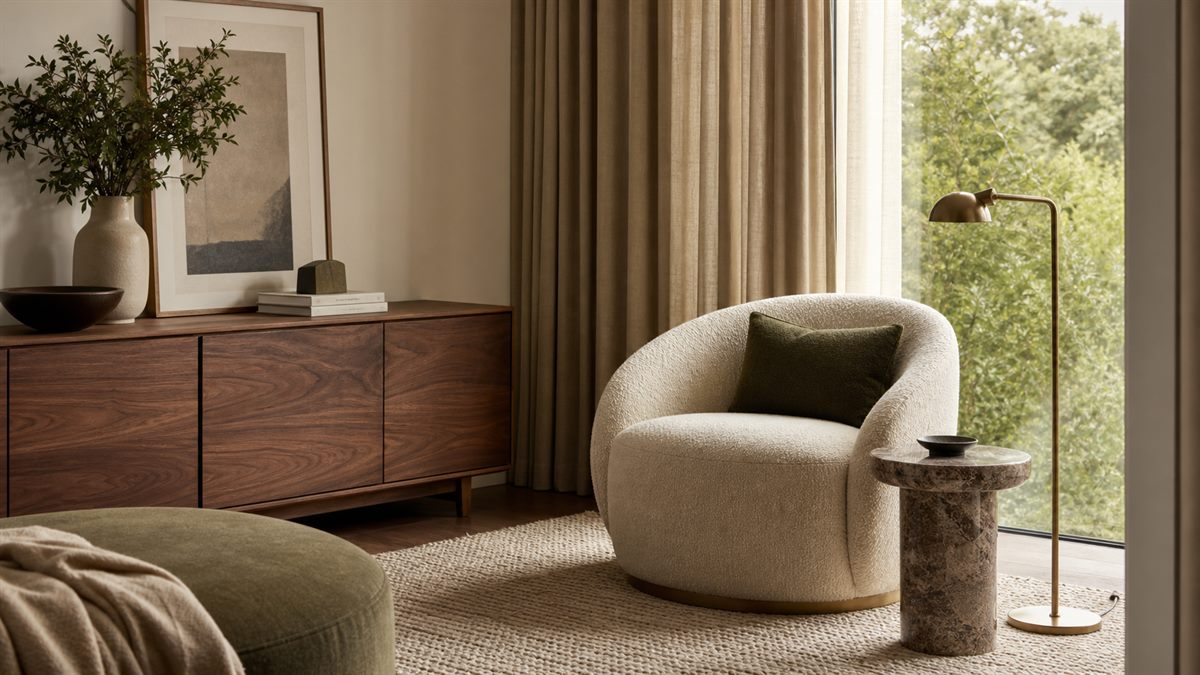
Lighting is a major part of quiet luxury because it changes how materials feel. A room with only one ceiling light can look flat even when the furniture is beautiful. Add layers with a floor lamp, a table lamp, a wall light, and soft natural light from curtains. Each layer should help the room feel calm at a different time of day.
Choose shades that soften the glow and bases that feel like real objects. Stone, ceramic, wood, metal, and fabric all work well. Avoid harsh blue light and very bright exposed bulbs. Warm light makes texture look better and helps the room feel relaxed in the evening.
Keep patterns quiet and intentional
Pattern can exist in quiet luxury, but it should feel controlled. Subtle stripes, soft marble movement, natural wood grain, woven texture, and tonal fabric are enough for most rooms. Large busy prints can pull the room away from the quiet feeling. If you use pattern, keep it close to the color palette so the room still feels calm.
Texture can replace pattern in many places. A boucle chair, a linen cushion, a wool rug, and a stone tray can create interest without making the room feel loud. This is why quiet luxury often photographs well. The details are visible, but the full room still feels peaceful.
Make the room feel lived in
A quiet luxury home should never feel like a showroom. The room needs signs of real life, but those signs should be chosen with care. A beautiful book, a handmade bowl, a soft throw, a branch from the garden, or a framed personal photo can make the room feel human. These details keep the style from becoming cold.
The best personal pieces are the ones that match the calm mood of the room. They do not need to be expensive. They need to feel honest and well placed. A simple object with memory can bring more warmth than a decorative piece bought only to fill a space.
Edit until the room feels quiet
The final step is editing. Stand in the doorway and look at the room as one composition. Remove anything that feels restless. Keep the pieces that add comfort, proportion, warmth, or function. If something does not support the mood of the room, it can move somewhere else.
Quiet luxury is successful when the room feels easy to live in and hard to improve. It should not demand attention. It should make daily routines feel softer and more beautiful. The result is a home that looks timeless because the choices are simple, strong, and deeply considered.
Related guides

Decor Accents
Coffee table decor ideas for living rooms
Use coffee table decor ideas with trays books bowls florals candles and scale tips for a polished living room.
Home Decor Trends
Interior design styles and home decor trends for 2026
Explore 2026 home decor trends interior design styles colors materials and timeless choices for a stylish modern home

Home Decor Trends
Color trends for home decor choosing palettes that age well
Choose home decor color trends wisely with warm neutrals, earthy tones, richer accents, and practical palette rules for rooms that last.