
Decor Picks
Best rug pads for hardwood floors: felt, rubber, or both
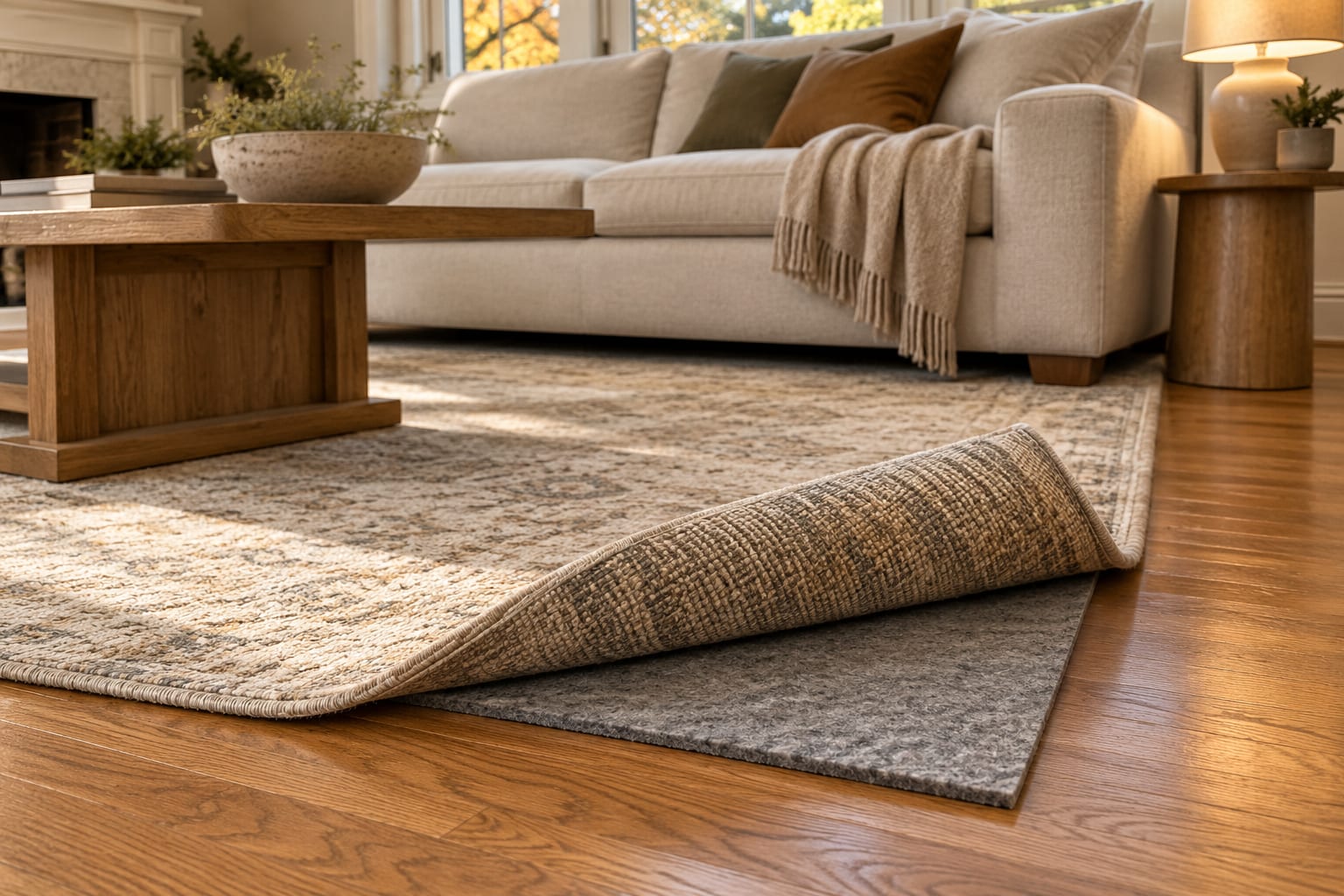
A rug pad is the cheapest part of a rug setup and the one people skip most often. On hardwood, vinyl plank, or tile, the right pad stops sliding, keeps the corners flat, softens the floor underfoot, and protects the finish. The wrong pad can do the opposite and leave marks that outlast the rug.
This guide compares the three main types of rug pad (felt, natural rubber, and felt with a rubber backing), explains how to size them, and lists what to avoid. It is written for busy households with kids, pets, and a rug that gets walked on every day. Fit first, looks second.
Who needs a rug pad, and who can skip one
You almost always need a pad if:
- The rug sits on a hard floor: hardwood, engineered wood, laminate, vinyl plank, or tile.
- The rug slides, bunches, or curls at the corners.
- It is a runner in a hallway or on a landing, where slipping is a safety risk.
- The rug is thin, such as a flat-weave or many washable rugs, and the floor feels hard through it.
You may be able to skip a separate pad if the rug has a built-in non-slip backing and the rug's care instructions say not to use one. Some washable rugs are designed this way. Check the care label before adding anything underneath, since a pad can affect how a washable rug lies or how its backing wears.
What to check before buying
Five details decide which pad is right. Write them down before you shop.
- Floor type: hardwood with a polyurethane finish, oil-finished wood, vinyl plank, laminate, tile, or carpet. Vinyl plank needs extra care; see the section on what to avoid.
- Rug size and shape: exact outside measurements, not the size on the label. Many rugs run an inch or two small.
- Rug thickness: a thin flat-weave needs cushion and grip; a thick pile rug mostly needs grip.
- Door clearance: measure the gap under any door that swings over the rug. The rug and the pad together must fit under it.
- Traffic and furniture: a hallway runner, a rug under a dining table, and a rug under a sofa all have different jobs.
Rug pads for hardwood floors: the types compared
Most rug pads fall into three groups, plus one type worth avoiding.
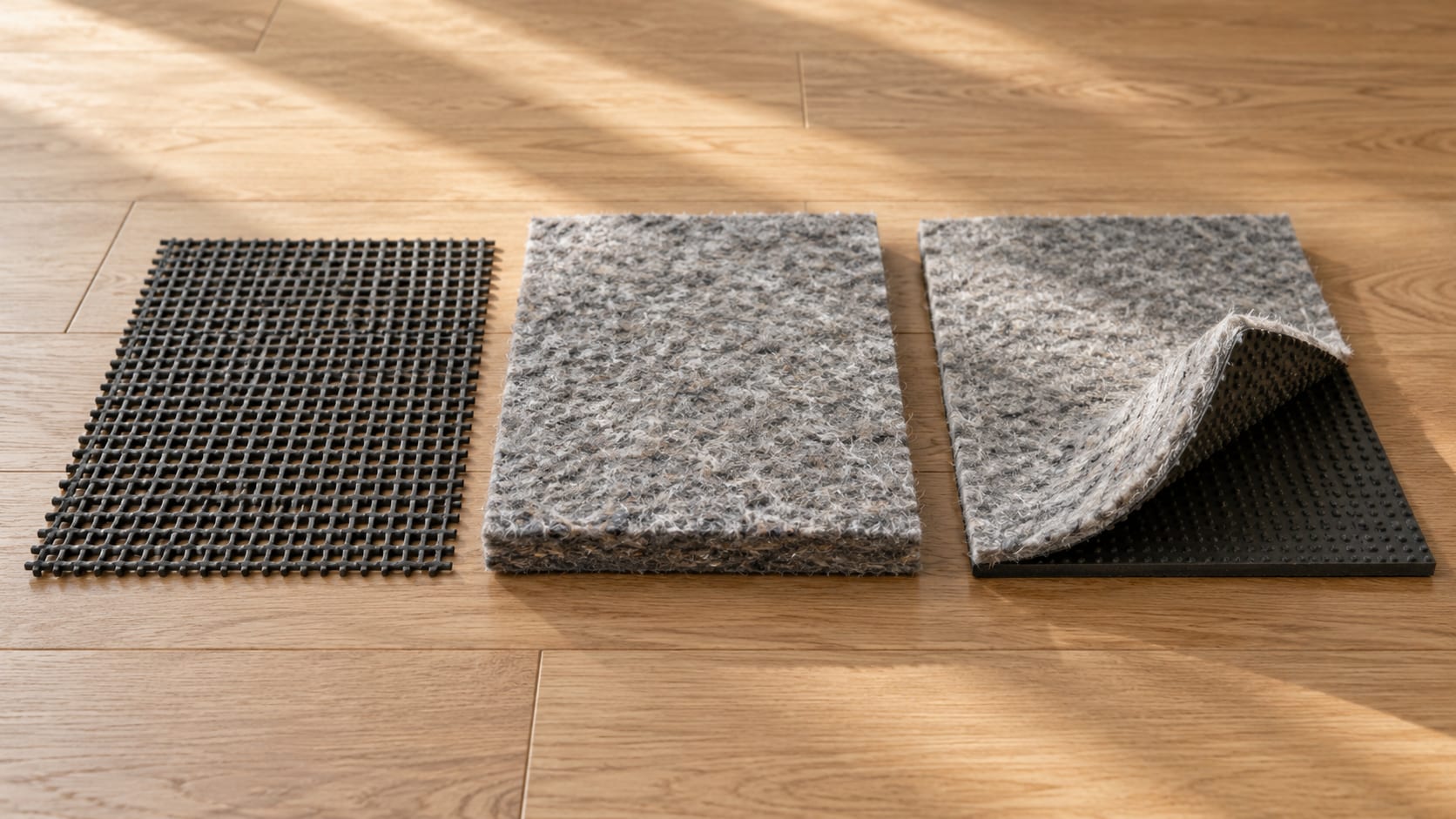
- Felt: dense pressed fibers, usually about 1/4 to 3/8 inch thick. It adds cushion, quiets footsteps, and protects the floor from grit. Felt alone has little grip, so it suits large, heavy rugs held in place by furniture, and rugs laid over carpet. Rough price band: about $40 to $120 for an 8 by 10.
- Natural rubber: a thin grid or solid sheet, usually about 1/16 to 1/8 inch. It grips well and adds almost no height, so it suits runners, small rugs, and rugs near doors. It adds little cushion. Rough price band: about $30 to $90 for an 8 by 10.
- Felt with a natural rubber backing: felt on top for cushion, rubber below for grip. For most area rugs on a hard floor, this is the most balanced choice. Rough price band: about $60 to $150 for an 8 by 10.
- PVC or synthetic "waffle" pads (avoid): thin, cheap, often around $15 to $40. Many are made with plastics or adhesives that can react with floor finishes over time, especially in warm rooms or strong sun, and can leave a grid-shaped mark or stick to the floor.
Prices vary by retailer and change often, so treat these as rough bands, not quotes. Thicker and larger pads cost more.
How to size a rug pad
The pad should be slightly smaller than the rug, so the rug's edges taper down to the floor instead of sitting on a raised ledge.
- Size: about 1 inch smaller than the rug on every side. For an 8 by 10 rug, that means a pad of roughly 7 feet 10 inches by 9 feet 10 inches.
- Trimming: many pads are sold at standard sizes and trimmed with sharp scissors. Lay the rug upside down, place the pad on top, and cut along the rug's edge minus an inch.
- Round and odd shapes: use the same one-inch rule. Trace the rug on the pad before cutting.
- Thickness: about 1/4 inch works for most living room rugs. Choose 1/8 inch or less for runners, rugs near doors, and rugs under dining chairs that slide in and out. Go up to 3/8 inch only when you want extra cushion under a thin rug and there is no door to clear.
Best for common situations
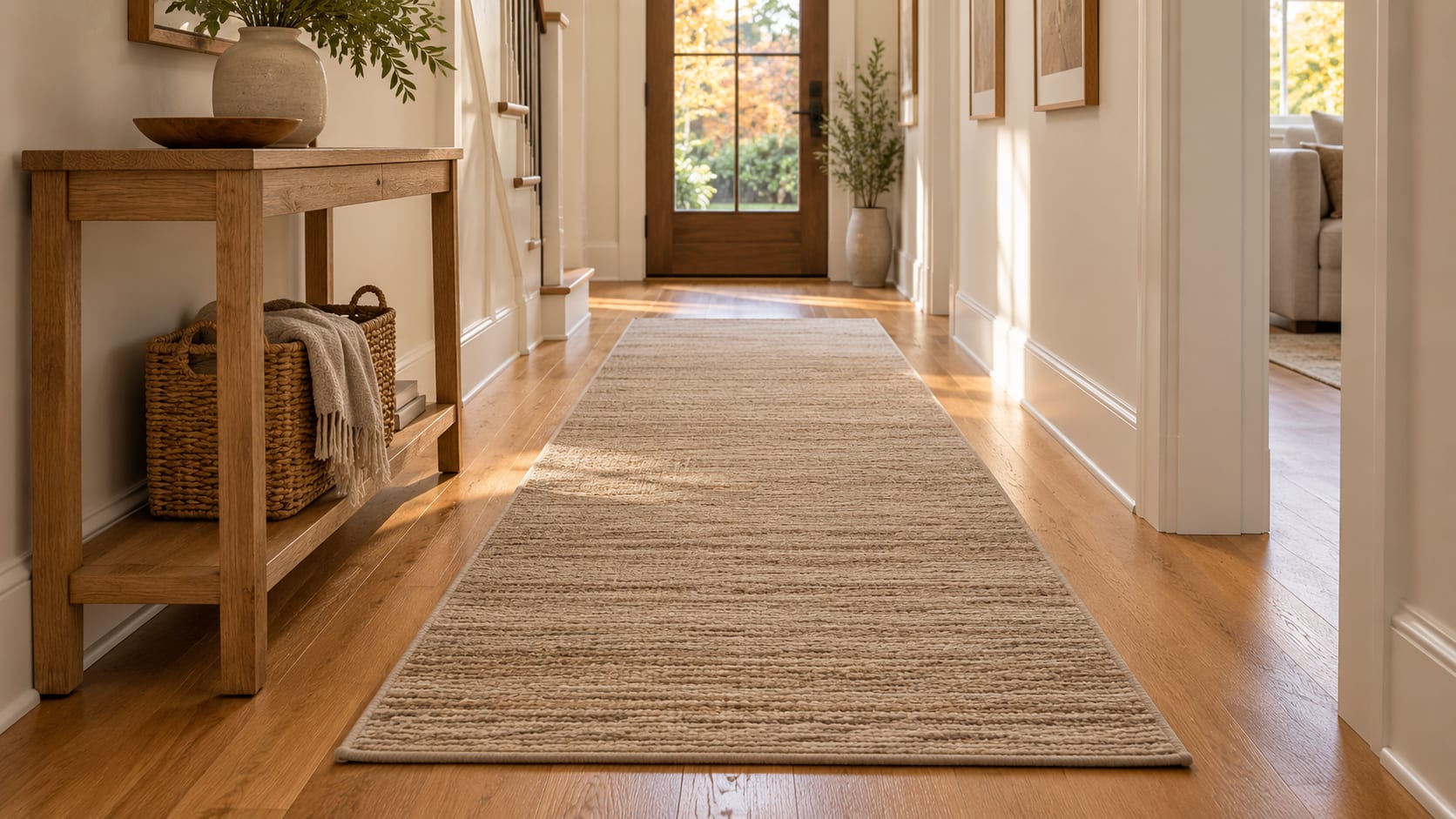
- Best for hallway runners: thin natural rubber. It grips without adding height, so the runner lies flat and doors still swing over it.
- Best for living room area rugs: felt with a natural rubber backing, about 1/4 inch. It adds comfort and stops the rug from creeping.
- Best for rugs under a dining table: a thin pad, 1/8 inch or less, so chairs slide easily and do not catch on a raised edge.
- Best for rugs over carpet: a felt pad made for carpet, or one labeled for rug-on-carpet use. A rubber grip pad does not grab carpet fibers well.
- Best for homes with kids and pets: felt with a rubber backing, which cushions falls and keeps corners flat so little feet and paws do not trip. Choose a pad that tolerates vacuuming through the rug.
- Best for sunny rooms: natural rubber or felt with a natural rubber backing rather than PVC. Heat and strong sun through large windows are hard on cheap synthetic pads.
If you are still choosing the rug itself, check whether a washable rug already has a non-slip backing before you add a pad under it.
What to avoid
- PVC, vinyl, or unknown "non-slip" materials on finished wood or vinyl plank. If the listing does not name the material, skip it.
- Rubber of any kind on vinyl plank or luxury vinyl tile until you have checked the flooring maker's care guide. Some vinyl floor makers advise against rubber or latex backings because they can discolor the surface. When in doubt, choose a felt pad made for vinyl floors.
- Pads larger than the rug. An exposed edge is a trip hazard and looks unfinished.
- Pads that are too thick for a doorway. Measure before you order.
- Waterproof pads under indoor rugs unless you need them for a specific reason. They can trap moisture against the floor.
Care, cutting, and returns
Lift the rug and pad every few months, vacuum the floor underneath, and let the floor breathe for an hour before relaying them. Do not machine-wash a felt or rubber pad unless its care label says you can. If a pad starts to crumble, smell, or leave residue, replace it.
Know the return window before you order. Many sellers will not accept a pad back once it has been cut to size, so measure twice and trim once. Keep the pad uncut for a day or two while you check the fit and the grip, and keep the packaging until you are sure.
Final pre-purchase check
- Floor type confirmed, and the floor maker's care guide checked for vinyl plank.
- Rug measured edge to edge, and the pad size set about 1 inch smaller on every side.
- Thickness chosen, and door clearance measured.
- Pad material named in the listing: felt, natural rubber, or both, with no PVC.
- Return terms read, including what happens after cutting.
A good pad makes an inexpensive rug feel better and helps a good rug last longer.
Frequently asked questions
Is a rug pad necessary on hardwood floors?
In most cases, yes. A pad keeps the rug from sliding, keeps its corners flat, adds cushion, and protects the floor finish from grit and friction.
Felt or rubber rug pad: which is better?
For most area rugs on hardwood, a felt pad with a natural rubber backing gives both cushion and grip. Thin natural rubber suits runners and rugs near doors. Plain felt suits large rugs held in place by furniture and rugs over carpet.
What size rug pad do I need for an 8 by 10 rug?
About 1 inch smaller than the rug on every side, so roughly 7 feet 10 inches by 9 feet 10 inches. Many pads are sold at full size and trimmed to fit.
Can a rug pad damage hardwood or vinyl floors?
Yes, the wrong one can. PVC and some synthetic pads can discolor or stick to finishes, and some vinyl floor makers advise against rubber backings. Choose felt or natural rubber, and check your flooring maker's care guide.
Related guides
Decor Picks
Best Washable Rugs for Small Homes Under $150
Find washable rugs for small apartments under $150 with practical guidance on sizing, low-pile comfort, texture, and easy everyday care.

Decor Picks
Best round wood wall mirrors for small entryways
Choose a round wood wall mirror for a small entryway with the right size frame tone depth and placement for a calm useful first impression
Decor Picks
Best vertical garden planters for small balconies
Choose vertical garden planters for small balconies with smart size drainage material and layout ideas for herbs flowers and compact outdoor decor