
Decor Picks
Best round wood wall mirrors for small entryways

Choosing a round wood wall mirror for a small entryway comes down to three things: diameter, frame depth, and where the door swings. This guide is for renters and homeowners with a tight entry and a lot of daily traffic, often with kids and pets, who want the space to feel brighter without adding furniture. It compares mirror types, gives sizing numbers, and covers care and returns before you order.
Who this guide is for
This guide fits you if your entry is a narrow hall, a short wall beside the door, or a small landing with no room for a bench. A mirror adds depth and light without taking floor space. It also gives you a last check before you leave. In the same busy entry, a washable rug below the mirror takes the daily dirt and goes straight into the machine.
It is less useful if the entry has no free wall at all. In that case, a slim hook rail or a mirror on the inside of a closet door may be the better buy.
What to check before buying
Fit first, looks second. Before you compare frames, measure the wall and check these points.
-
Free wall width: measure between the door trim, light switches, and any corner. Leave at least 4 to 6 inches of bare wall on each side of the mirror.
-
Door swing: the mirror should sit outside the arc of the front door and any closet door, so a handle never reaches the glass.
-
Frame depth: in a hall narrower than about 4 feet, a frame deeper than 2 inches can catch bags and shoulders.
-
Weight: check the listed weight and the included hanging hardware before checkout. The wall anchor matters as much as the mirror.
-
Light: note where daylight comes from. A mirror beside or across from a window bounces light into the entry. A mirror that reflects only a blank wall adds less.
Round wood mirror types compared
Most round wood mirrors fall into three groups. The words "wood frame" can describe any of them, so read the materials line, not only the product title.
-
Solid wood frame: oak, walnut, acacia, mango, or pine. It has real grain and the warmest look. Trade-off: it is heavier, usually costs more, and can move slightly in humid air. Rough price band: about $80 to $250 for 20 to 30 inches.
-
Wood veneer over MDF: a thin layer of wood on engineered board. It is lighter and more stable, with an even grain. Trade-off: chipped edges are hard to repair. Rough price band: about $50 to $150.
-
Wood-look resin or plastic: molded to look like wood. It is the lightest and easiest to hang. Trade-off: it can look flat up close and in bright light. Rough price band: about $30 to $80.
Prices vary by retailer and change often, so treat these as rough bands, not quotes. A cheaper veneer mirror can be the better choice in a rental or in a busy entry where a bump is likely.
How to size a round mirror for a small entry
-
Wall with no furniture: a diameter of 20 to 24 inches usually looks planned without crowding the door.
-
Above a console or shelf: aim for about two-thirds of the console width. A 30-inch console suits a mirror of roughly 20 inches. A 36-inch console can take 24 inches.
-
Hanging height: place the center of the mirror about 57 to 60 inches from the floor. Above a console, leave 6 to 10 inches between the console top and the bottom of the frame.
-
Frame width: a thin frame of 1 to 2 inches keeps a small mirror from looking heavy. Wider frames suit mirrors of 28 inches and up.
Before you order, cut a circle of paper or cardboard to the diameter you want and tape it to the wall for a day. Walk past it with a bag and open the door next to it. That free test settles most size questions.
Best for common entryway situations
-
Best for rentals: a light veneer or resin frame hung on a single hook or two D-rings. Check your lease before drilling, and skip adhesive strips for anything with glass.
-
Best for kids and pets: a mirror hung high enough to stay clear of tails, toys, and backpacks, with a safety backing film on the glass so it holds together if it breaks.
-
Best for dark entries: a larger diameter placed to catch light from a window, a glass door, or a lamp.
-
Best for sunny entries: in homes with strong sun through a glass front door, as in much of Texas, choose a sealed or lacquered finish. Raw wood can fade or change tone in direct light.
Hanging hardware and safety
Check what comes in the box. Many mirrors ship with a single sawtooth hanger, which is fine for light frames but easy to knock crooked. Two D-rings or a small cleat keep the mirror level.
Use wall anchors rated for well over the mirror's weight, and use a stud when you can. Drywall alone is not enough for a heavy solid wood frame. If the product page does not list the weight, ask the seller or choose another option.
Care and returns
Dust the frame with a dry or slightly damp cloth. Spray glass cleaner onto the cloth, not onto the mirror. Liquid that runs behind the glass can damage the silver backing and leave dark edges over time.
Know the return window before you order. Glass and large frames can be costly to send back, and some sellers charge return shipping or restocking fees on oversized items. Open the box the day it arrives, check for cracks and chips, and keep the packaging until the mirror is hung and you are sure it works.
Finishes that age well
Natural-looking finishes usually age better than very shiny or very trendy finishes. A medium oak or walnut tone works with most floors, doors, and trim. Very orange stains and heavy distressing tend to date faster.
If your floor is wood, choose a frame a little lighter or darker than the floor rather than a near match. A near match can look like a mistake. Black or brass details nearby are easy to repeat with a thin inner rim or a visible hanging detail.
How to style it after delivery
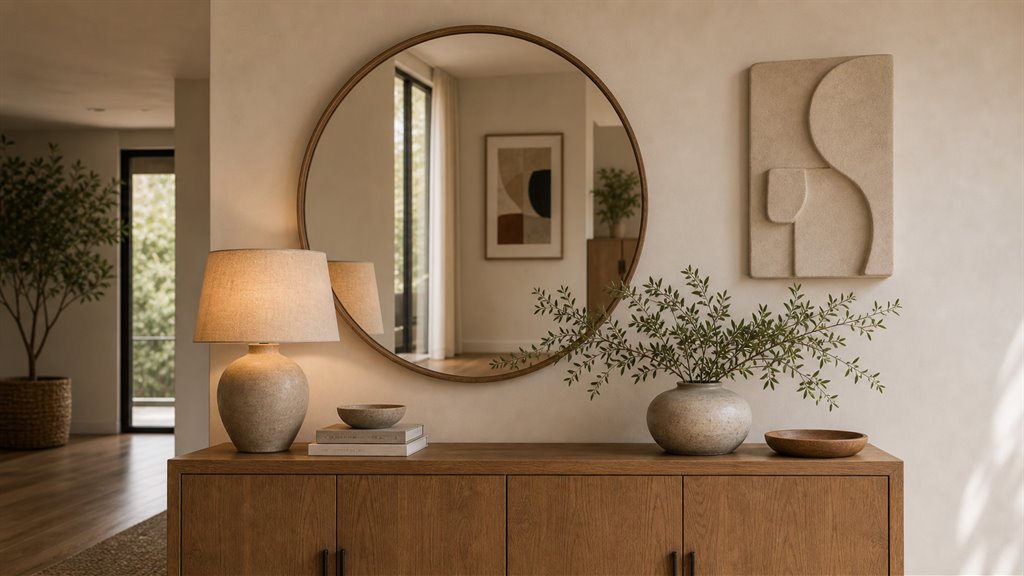
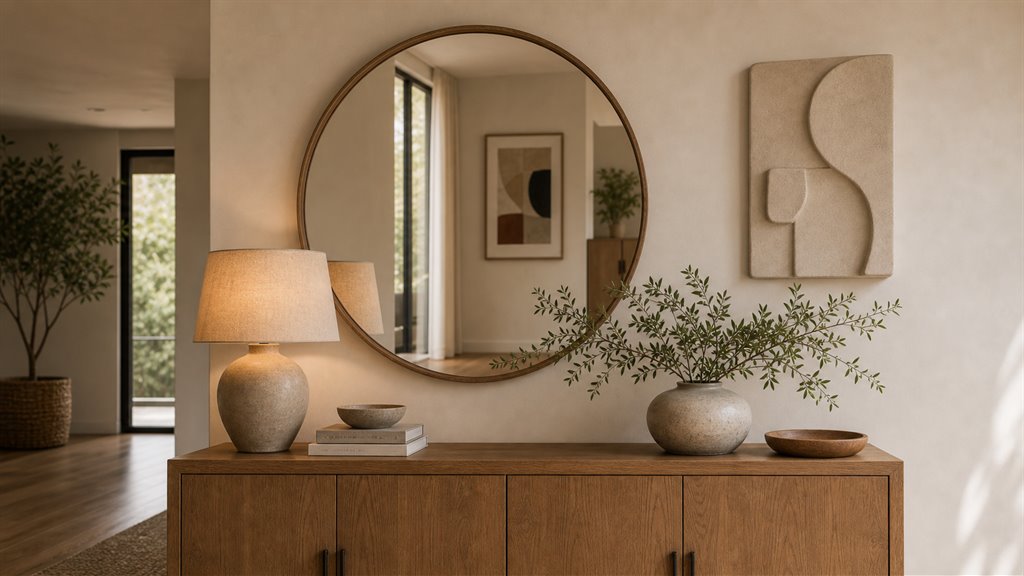
Hang the mirror first and live with it for a few days. Then add one or two supporting pieces: a small tray or bowl for keys, a slim lamp, or a plant. Repeat the wood tone once, for example in a tray or picture frame, so the mirror feels connected.
Leave some empty wall around it. In a small entry, a mirror with breathing room looks more expensive than one crowded by hooks and frames.

Mistakes to avoid before ordering
-
Buying from one product photo. Studio photos hide scale and true wood color. Look for dimensions, a materials line, and customer photos taken in real rooms.
-
Choosing by diameter alone. Frame depth and door swing matter just as much in a narrow entry.
-
Ignoring weight. A heavy frame on the wrong anchor is a safety problem, not a style problem.
-
Skipping the return terms. Read them before checkout, not after the box arrives.
Final pre-purchase check
-
Wall measured, with 4 to 6 inches clear on each side and outside the door swing.
-
Diameter tested with a paper template on the wall.
-
Frame depth under about 2 inches for a narrow hall.
-
Material confirmed: solid wood, veneer, or wood-look resin.
-
Weight listed, and anchors rated well above it.
-
Finish suited to the light in your entry.
-
Return window and return shipping terms checked.
A round wood mirror is one of the easiest ways to make a small entry feel brighter and more finished. Get the size, depth, and hanging right, and the style choice becomes the easy part.
Related guides

Decor Picks
Best vertical garden planters for small balconies
Choose vertical garden planters for small balconies with smart size drainage material and layout ideas for herbs flowers and compact outdoor decor

Decor Picks
Best washable rugs for modern homes that look calm
Best washable rugs for modern homes with calm neutral style practical sizing easy cleaning and decor tips for living rooms bedrooms apartments and family spaces

Decor Picks
Best Washable Rugs for Small Homes Under $150
A practical guide to choosing washable rugs for small apartments under $150, with advice on size, pile, texture, and everyday care.